Get Full Government Meeting Transcripts, Videos, & Alerts Forever!
Get email alerts on the Senior Housing topic
No spam. Unsubscribe anytime.
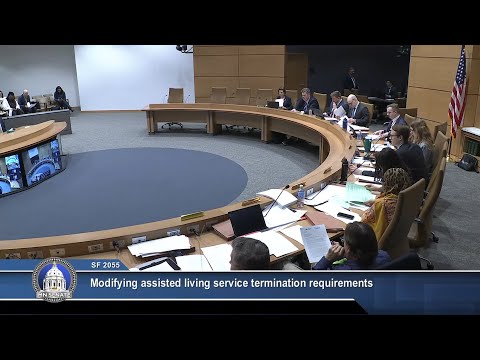
Senate considers limits on assisted‑living price hikes and restrictions on requiring guardianship at admission
Summary
Senate File 2522 would restrict assisted‑living facilities from conditioning admission on a guardian, require documentation when private‑pay price increases exceed CPI, and bar eviction solely upon conversion to elderly‑waiver public pay; the committee re‑ferred the bill to the housing committee without recommendation.
A bill intended to protect assisted‑living residents from sudden price hikes and admission conditions drew strong interest and was re‑referred to the Housing and Homelessness Prevention Committee for further work.
Senate File 2522, introduced by Senator Mann and amended in committee, would prohibit facilities from requiring a guardian as a condition of admission or as a condition for continued residence, create documentation requirements when housing or services charges increase by more than the Consumer Price Index, and bar facilities from evicting a resident solely because they switch from private pay to public assistance (elderly waiver).
Supporters described families whose savings were exhausted after moving to higher‑cost assisted living and then faced forced transfers once they converted to public pay. Don Varney described his mother’s experience: after choosing a facility that advertised "age in place," his family found fees rising and uncertain progress on elderly‑waiver applications; he warned of the emotional and financial costs of relocations for very old residents. Susan Baster testified she watched her mother exhaust more than $400,000 and then be asked to move when Medicaid would have paid.
Provider advocates expressed concerns about unfunded cost increases and operational constraints. The Long Term Care Imperative and other provider groups said some sections — especially those that alter guardianship or limit pricing changes — require more analysis. Aaron Hubert of the Imperative said guardianship and conservatorship are complex tools that sometimes are the appropriate response for people with serious medical or behavioral needs, and the association asked for additional negotiation.
Committee action: Senator Mann moved and the committee re‑referred SF 2522, as amended, to the Housing and Homelessness Prevention Committee without recommendation. Sponsors and opponents said they will continue stakeholder discussions; the Department of Health flagged that the bill would create at least some administrative costs and a fiscal note has been requested.
Why it matters: proponents said the bill would protect seniors from being displaced by rising private‑pay charges or by being forced into guardianship to secure housing. Opponents cautioned that a number of operational and legal issues (including definitions, fiscal impacts and appropriate use of guardianship) need further, cross‑stakeholder work.
The bill will next be considered in the housing committee.