Get Full Government Meeting Transcripts, Videos, & Alerts Forever!
Get email alerts on the Assisted Living topic
No spam. Unsubscribe anytime.
Debate over assisted‑living contract termination: providers, ombudsman and residents press competing views
Summary
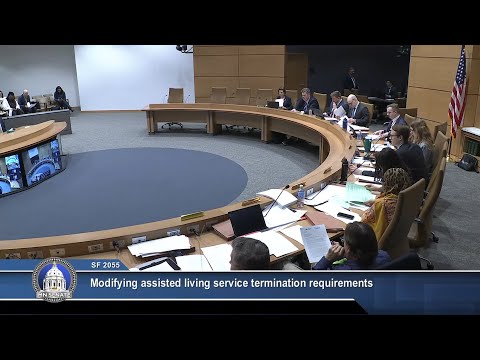
Senate File 2055, a bill to modify assisted‑living contract termination procedures, drew testimony from providers who say the 2019 law is inadequate for small high‑acuity homes and consumer advocates who warned the bill would weaken protections for residents.
The committee heard competing testimony on a bill that would change the statutory process by which assisted‑living facilities may terminate a resident’s contract and relocate residents.
Senate File 2055, carried by Senator Fatai, responds to provider concerns that the 2019 assisted‑living law (the Elder Care and Vulnerable Adult Protection Act) does not give some smaller residential providers sufficient tools to address residents whose behavior poses safety risks to roommates, staff or the broader community. Provider groups including the Residential Providers Association of Minnesota and the Long Term Care Imperative argued the current process can be slow and leave staff and other residents at risk while legal appeals proceed.
Matthew Bergeron, a lawyer who represents small assisted‑living facilities, described a case in which a single resident’s escalating behavior — including harassing and threatening comments and an assault on a process server — led to nearly 19 months of litigation despite an administrative law judge affirming the facility’s termination. "One resident with an acute or unmanaged mental health need or violent outbursts can put the safety and well‑being of everyone in the facility ... at risk," Bergeron said.
Provider witnesses said the bill would add procedures for expedited pre‑termination meetings and other changes intended to make contract termination workable for small, high‑acuity settings.
Opponents — including the State Long Term Care Ombudsman and consumer advocates — urged caution. Cheryl Hennen, State Long Term Care Ombudsman, said the 2019 statute has reduced the number of terminations through early intervention and pre‑termination conferences: "This law is working," she told the committee, noting that only seven appeals reached an administrative law judge in 2024 and that in many cases the pre‑termination process resolves the issues. Ombudsman testimony and a first‑person account from resident Elizabeth Henderson stressed that residents sometimes face relocation without adequate notice or explanation and that consumer protections should not be weakened.
Survey data presented by the Long Term Care Imperative showed many assisted‑living providers reported losing staff and confronting residents whose conduct they considered to warrant termination; the group recommended statutory fixes to make the process feasible while maintaining resident protections.
Committee action: the bill was laid over for possible inclusion in the omnibus human services package; sponsors and opponents said they plan continued discussion to refine any changes.
Why it matters: assisted‑living facilities balance resident rights with safety for roommates and staff. Advocates for stronger provider tools said small settings are especially vulnerable to disruptive, violent behavior that can force other residents into relocation; consumer advocates and the ombudsman warned that the 2019 law’s protections remain important to guard against wrongful evictions and unnecessary displacement.
The committee deferred further action and will consider possible language changes during omnibus negotiations.