Get Full Government Meeting Transcripts, Videos, & Alerts Forever!
Get email alerts on the Minors Reproductive Consent topic
No spam. Unsubscribe anytime.
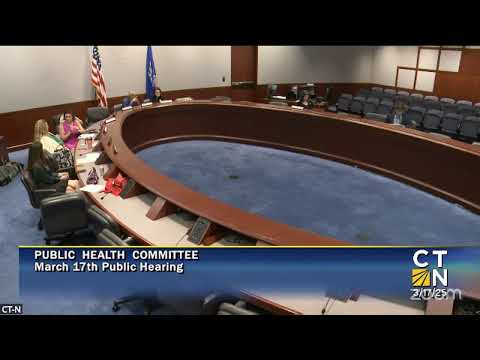
Providers, advocates urge Connecticut to codify minors' access to reproductive care; attorney warns of secrecy risks
Summary
At a Public Health Committee hearing, health centers and reproductive-rights advocates urged lawmakers to clarify that minors may consent to contraception and pregnancy-related care without parental notification; an attorney warned the bill's language could permit secrecy and broaden protections beyond intent.
Tricia Orozco, vice president of strategic implementation at InterCommunity Healthcare, told the Connecticut General Assembly's Public Health Committee that her community health center wants statutory language clarified so minors can obtain reproductive health care without parental consent.
"As a federally qualified health care center, InterCommunity supports access to care and believes that all people have a right to quality health care, including minors," Orozco said during testimony. She described InterCommunity's operation of nine school-based health centers in East Hartford Public Schools and one in the Manchester Public Schools and said the organization seeks to "codify current practice to include the rights of minors to obtain reproductive health care, including but not limited to contraception counseling and services, pregnancy testing, and treatment related to pregnancy without parental consent."
The witnesses said Connecticut guidance and agency materials already allow minors to consent to particular protected services, such as HIV treatment, certain mental-health services, substance-use treatment and sexually transmitted infection screening and treatment, but that statutory language does not explicitly name contraceptive and pregnancy-related care. Supporters told the committee the change is intended to reduce barriers and delays to care for adolescents who may not seek parental help.
"We are asking for language clarity, which will ensure we, as medical providers, can support our minor patients in becoming responsible and healthy members of the community," Orozco said.
Not all testimony supported the change. Attorney Robert Hale, speaking in opposition, said the proposed definitions are expansive and could allow minors to receive certain services in secret, which he argued raises safety concerns. "You are putting these children at risk by prohibiting notice to their parents," Hale said, adding that he interprets the bill's language as potentially covering gender-affirming care and as repealing existing regulations. He referenced existing state regulatory citations during his remarks.
Reproductive-rights organizations also testified in support. Liz Gustafson, Connecticut state director of Reproductive Equity Now, cited the U.S. Supreme Court's Dobbs v. Jackson decision and national trends that have restricted abortion access as additional reasons Connecticut should clarify protections. Rosanna Ferrara, policy director at the Universal Healthcare Foundation of Connecticut, and other witnesses said explicit statutory language would reduce confusion among providers and protect minors' access to timely care.
Witnesses and committee members discussed limits on authority and confidentiality; proponents said the change would align law with current medical practice and guidance, while opponents asked for tighter definitions and safeguards.
The hearing record shows testimony and references to Connecticut guidance and to specific state regulations discussed by opponents; no formal committee vote or final action on the bill was recorded during the session.