Get Full Government Meeting Transcripts, Videos, & Alerts Forever!
Get email alerts on the Parking topic
No spam. Unsubscribe anytime.
Bay Meadows residents press San Mateo council to pause enforcement and hold neighborhood meeting on two‑hour parking limits
Summary
Several Bay Meadows residents told the San Mateo City Council on March 17 that a two‑hour on‑street parking rule approved for the transit‑oriented neighborhood is creating hardship for families, nannies and hourly workers and asked the city to pause enforcement and meet with community leaders to seek solutions.
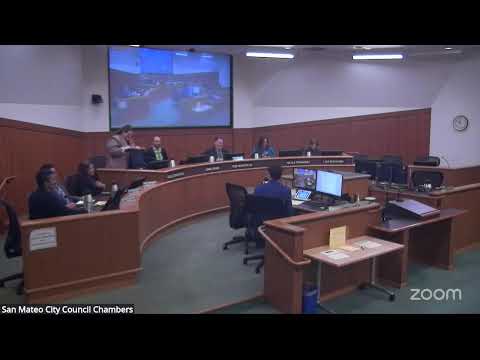
San Mateo — At the March 17 City Council meeting, seven Bay Meadows residents urged the council to address new two‑hour on‑street parking limits that they say are creating daily hardships for families, childcare providers and workers.
Residents said the restrictions — part of the parking management rules approved for Bay Meadows as a transit‑oriented development — leave nannies and home health aides without reliable parking and force parents to change work schedules or give up on local care. Crystal Mondejar, who identified herself as a Bay Meadows constituent and a nurse, told the council: “It has caused a disruption ... there's parking limits of just 2 hours, and it has been affecting the residents.”
Why it matters: Speakers said the policy affects childcare and caregiving arrangements, regular shopping and jobs held by hourly workers. Multiple speakers asked the council to pause enforcement while the city and neighborhood pursue a fix and requested an expedited meeting between residents and staff.
What residents said: Kathy Kwan said her infant’s nanny has no safe place to park and asked Mayor Robert Newsom to visit the neighborhood. Kieran (recorded in the transcript as Kieran Gudyanka) told the council the change ‘‘impacted 2,000 residents’’ and criticized the lack of prior community engagement. Ed Wong described family parking constraints in a four‑bedroom household with five drivers. Raf Say warned that hourly workers are being ticketed, and Mahir Patel asked the council to “commit to a meeting with the residents in the next two weeks” and to “kindly consider pausing enforcement until this meeting takes place.”
Staff and next steps: City staff told the council members that the parking rules were originally approved as part of Bay Meadows’ transit‑oriented development approvals and that the city manager temporarily relaxed some parking rules during the COVID pandemic. Staff described the formal process for changing on‑street restrictions: an updated parking management plan prepared by a traffic engineer, a planning application (usually advanced by the homeowners’ association or the property owner), staff review and, if needed, Planning Commission review. Staff said certain interim relief — for example, lengthening two‑hour limits in specific blocks — could be considered at the director level, but broader changes would require the management‑plan process.
Public engagement and council response: Mayor Newsom said he would address the item later in the meeting during reports and announcements. During that reports segment a council member said they had already been speaking with the city manager and would set up a neighborhood meeting in the coming weeks; staff said they would attend and work with residents on the process. City staff also confirmed notifications were previously sent to the neighborhood when the parking restrictions were re‑established.
What’s next: Councilmembers and staff said they will organize a local meeting between residents and city staff to discuss potential short‑ and long‑term fixes, and staff outlined the formal steps needed should the HOA or property owner seek a permanent change to the parking management plan.
Community notes: Bay Meadows was originally approved as a transit‑oriented development with limited on‑street parking. Residents said the neighborhood’s needs have shifted since project approval and the pandemic, and they asked the council for a timely, practical solution that balances transit goals with day‑to‑day family needs.