Get Full Government Meeting Transcripts, Videos, & Alerts Forever!
Get email alerts on the Education Student Survey topic
No spam. Unsubscribe anytime.
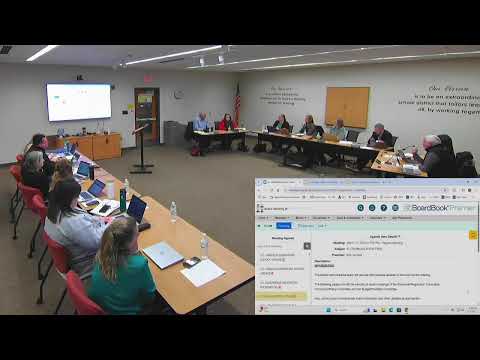
Alexandria board debates state Minnesota Student Survey, directs staff to craft district questionnaire
Summary
Board members debated whether to administer the statewide Minnesota Student Survey and moved to commission a district-specific survey; a motion to skip the state instrument was made and seconded and an amendment on broader local control of assessments was proposed but not decided in the transcript.
At a meeting of the Alexandria Public School District board, a motion was made to not administer the statewide Minnesota Student Survey this year and to direct district administrators to create a district-specific questionnaire instead.
Board members debating the measure said the statewide survey — which the board heard is offered every three years — provides data used by partners such as Horizon Public Health and by grant programs, but they raised concerns about the state instrument's fixed questions and about specific items some members called potentially harmful to vulnerable students.
The motion, introduced by a board member identified in the transcript as the mover, said: "I'd like to move that we do not administer the Minnesota student survey for this school year and that we direct our administration to put together a survey that's specific for our school district to use." A second board member promptly seconded the motion, and the board spent the subsequent portion of the meeting discussing the proposal.
Supporters of the motion argued for local control. A district speaker summarized prior briefings with public-health partners and said the district and Horizon Public Health had provided feedback to the Minnesota Department of Education and the Minnesota Department of Health about the format of the state survey. That speaker said the board could make a rational case on either side but emphasized the value of local oversight of questions and data use.
Other board members voiced concern about particular content in the state survey. One board member said questions published in the press "can be very damaging to students," citing items on gender and a question about forced sexual activity as examples the member believed posed risks for traumatized or otherwise vulnerable students.
During debate a board member proposed an amendment to the motion seeking a broader review of district assessment strategy, including alternatives to statewide tests such as the Minnesota Comprehensive Assessments (MCAs). That amendment's sponsor said the district should study locally devised, real-time assessment approaches used by other districts and consider moving toward assessments that deliver actionable results to teachers and families sooner. The amendment was seconded and discussed; no final vote on the primary motion or the amendment is recorded in the provided transcript.
Administrators and at least one board member referenced Horizon Public Health's presentations to the board about how survey data have been used to target grants and prevention work in neighboring communities. Board members who opposed using the state survey in its current form did not dispute the usefulness of student data but said the board should control the phrasing of sensitive questions and the district's ability to consent or decline items that make some members uncomfortable.
The board earlier in the meeting had approved an item to add the student survey to the agenda; that procedural motion passed by voice vote. The later motion to decline the statewide instrument and commission a district-specific survey was moved and seconded and was under active debate at the end of the transcript. No final, recorded roll-call vote on the decline motion or on the assessment-amendment appears in the transcript provided.
Next steps discussed included directing staff to draft a district questionnaire drawing on Horizon Public Health's experience and to return in January (as part of other items mentioned in the meeting) with recommendations about whether to adopt a local instrument or change assessment practice. Several board members said they were open to studying alternatives used successfully in other Minnesota districts before making a final decision.