Get Full Government Meeting Transcripts, Videos, & Alerts Forever!
Get email alerts on the Master Plan And Funding topic
No spam. Unsubscribe anytime.
Master plan presentation highlights maintenance standards, grant eligibility and cost-recovery options; teen bonfire event draws about 100 participants
Summary
Consultants and parks staff reviewed the Highland Village parks, recreation and trails master plan and related program priorities, and staff reported the pilot teen bonfire — funded from a program seed budget — attracted about 100 participants.
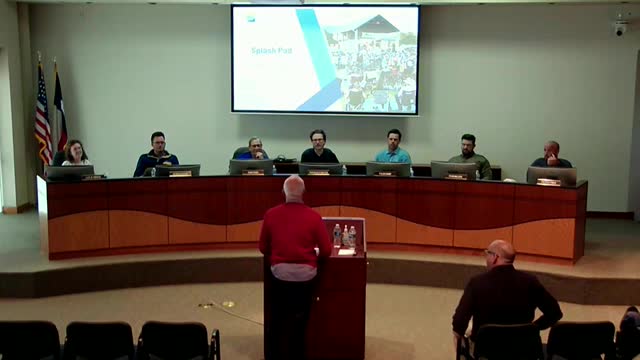
A consultant and Parks staff briefed the Parks and Recreation Advisory Board on March 17 on the city’s comprehensive parks, recreation and trails master plan and on early program work that grew from the plan — including a free teen bonfire that drew roughly 100 participants.
Ron Stewart of McAdams reviewed the master plan’s scope and purpose: inventory of park acreage and amenities, maintenance-level analysis, service-level benchmarks vs. peer communities, and recommended action items. Stewart and Phil said the plan documents maintenance standards and analytics used to compare Highland Village to similar communities and national benchmarks. The master plan was completed and adopted in early 2023 and includes a maintenance-hours analytics section that the consultant said helps the city apply for grants from the Texas Parks and Wildlife Department and prepares the city to pursue CAPRA (Commission for Accreditation of Park and Recreation Agencies) accreditation.
Staff noted that Highland Village has high maintenance standards relative to national norms and peer cities but that maintenance and program costs must be weighed against other municipal priorities. Phil said the city has received about $800,000 in state grant funding connected to parks projects to date; Stewart and Phil said CAPRA accreditation could strengthen future grant and federal funding applications but would require additional time and resources.
The presentation highlighted these topics for board consideration: level-of-service benchmarks, available land for future parks (limited), program cost-recovery opportunities, and action items listed in the plan (pages 96–98). Staff said some maintenance costs recorded in the report reflect city responsibilities that might appear in other jurisdictions’ public works budgets — e.g., irrigation, street reconstruction inside parks — and warned that apples-to-apples comparisons require checking how other municipalities allocate costs.
Programs and cost recovery: Phil and Stewart said the plan identifies opportunities to increase fee recovery for recreation programs and partnerships (for example, adult leagues, camps and special events). Phil said city leaders expect to seek a professional cost-recovery consultant in a future budget to perform a community-informed analysis and that the department will also pursue sponsorship and other non-tax revenue strategies where feasible. Phil said some internal efficiency changes (for example, in-house maintenance for certain trail segments and robotic equipment purchases) have already reduced labor hours and freed budget dollars.
Teen event: Staff recapped a pilot teen-engagement event organized under the plan’s programming priorities. The free event — a bonfire with hayrides, s'mores and games — was held in early March, used seed recreation-program funding (about $10,000 was available for new programs), and drew about 100 teenagers, staff said. Phil and staff described the pilot as successful; they plan to expand the event and locate future editions at DoubleTree Ranch Park with food trucks, a game room in the barn and additional programming. Staff said funding for broader program expansion will require sponsorships, foundation support or future budget requests.
Ending: Staff advised the board that the master plan is a living strategic document designed to guide action, grant applications and budgeting; staff will return to the board as the city seeks CAPRA accreditation, selects cost-recovery consultants, or advances specific capital or program actions identified in the plan.