Get Full Government Meeting Transcripts, Videos, & Alerts Forever!
Get email alerts on the Downtown Development topic
No spam. Unsubscribe anytime.
Garland council agrees to reopen talks with developer on Owl Ice House at 519 State Street
Summary
After public comment and a presentation from the development team, the Garland City Council on March 17 reached consensus (8–1) to resume negotiations with the Owl Ice House development team on the sales and development agreement for 519 State Street and to continue competitive matters in executive session.
The Garland City Council voted by consensus at its March 17 work session to return to the negotiating table with the development team proposing the Owl Ice House at 519 State Street, the council said, with one member opposed.
Why it matters: The building at 519 State Street, long owned by the city, is the focal point of competing visions for downtown revitalization. A decision to re-engage preserves the prospect of a privately financed restoration but does not guarantee a final agreement; councilors said any specific terms would be discussed further in executive session.
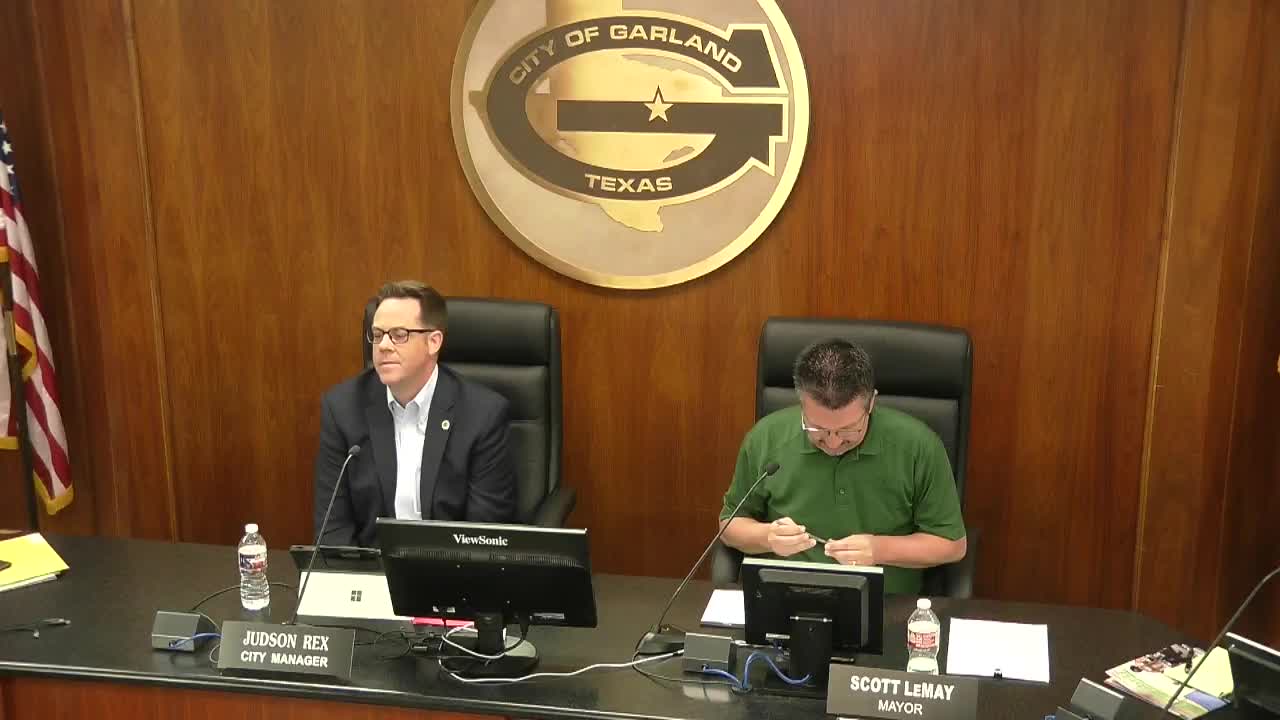
The item opened with Mayor LeMay telling the council the purpose of the night’s discussion: to determine whether there was consensus to take the developer back to the table, not to reapprove prior votes.
Developers Don Day and partners summarized their concept and the building’s condition and finances. Don Day said the restoration would attract visitors and benefit nearby merchants and argued restaurants “do not cannibalize each other. They feed each other.” Developer Mike Luther described structural and cost concerns, saying renovation could cost “in excess of $3,000,000” and that additional hidden repairs could raise costs further; he described visible structural issues and said “that building is dangerous.”
Members of the public and downtown business owners gave mixed feedback. Several speakers praised the concept’s family‑friendly orientation and support for downtown vitality. Others, including business owner Carrie Hodson, asked for more public discussion, questioned whether a single use would be financially viable for the full building, and urged expanded marketing of the property to attract more proposals.
Council questions focused on financing structure and scale. Council member Williams asked whether a ground lease would be acceptable; developer Day said ground leases are possible but present financing challenges because banks are reluctant to finance ground‑lease projects when developers are relying on significant tenant and construction financing. Developers said artsful renderings submitted earlier overstated scale and that more accurate renderings would be prepared if talks continue.
After public comment and follow‑up, the mayor asked whether there was consensus to resume negotiations. The mayor recorded “eight in favor, with council member Dutton in opposition.” Council members said substantive competitive and negotiation details would be handled in executive session that night and that reengagement did not guarantee an agreement would be finalized.
Council members also asked staff for more administrative review: Deputy Mayor Pro Tem requested Administrative Services Committee review of the city’s process for considering economic development agreements going forward.
The council set no final economic terms during the open session; staff and the development team were scheduled to return after executive session for further action.