Get Full Government Meeting Transcripts, Videos, & Alerts Forever!
Get email alerts on the Transit Dart topic
No spam. Unsubscribe anytime.
DART officials brief Garland on governance bills, transit-oriented development and funding risks
Summary
Dallas Area Rapid Transit officials told Garland council members on March 17 that proposed state bills changing board representation and diverting sales tax revenue could cut roughly 25% of DART's sales-tax receipts and sharply reduce operations; DART also described ongoing transit‑oriented development work in Garland and available local funding.
Dallas Area Rapid Transit officials told the Garland City Council on March 17 that state legislation under consideration could change DART board representation and divert a quarter of DART's 1¢ sales tax to a new general mobility fund, a move they said would sharply reduce the agency's available operating funds.
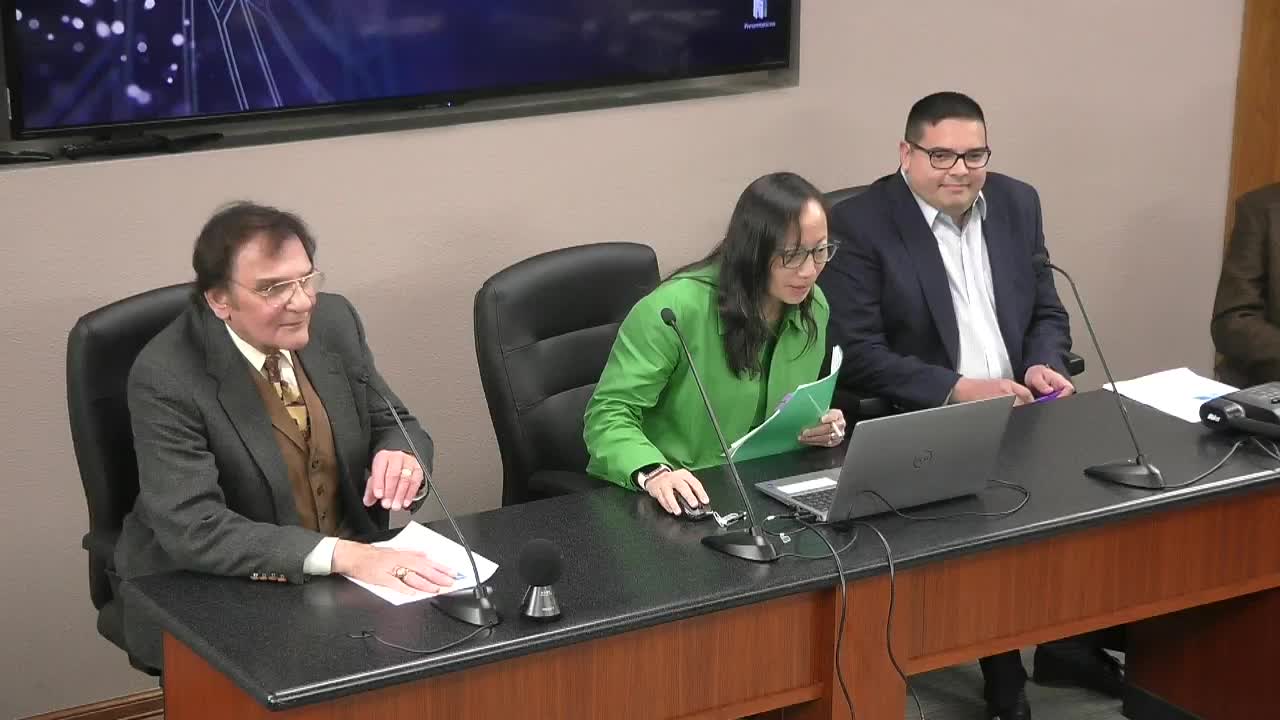
The update, led by DART Board Chair Gary Slagle and CEO Nadine Lee, summarized months of outreach to member cities and detailed a planning pipeline that includes transit‑oriented development (TOD) proposals around three Garland transit centers.
Why it matters: DART says the bills would shrink the amount of sales-tax revenue available for operations after debt service, forcing deep cuts to service and capital projects the agency and cities use for planning and economic development.
Slagle, chairman of the DART board, told council members the board has been meeting city leaders to explain a study on how DART dollars flow to member cities and to seek cooperative solutions. “We are a transit authority. We're here to provide transit and we should spend our money on trying to make improvements to transit,” Slagle said.
Nadine Lee, DART chief executive officer, identified the governance and funding measures by number and described likely effects. Lee said Senate Bill 2118 would change board apportionment to one representative per city (with Dallas' representative carrying multiple weighted votes), and that companion funding bills — House Bill 3187 and Senate Bill 1557 — would reserve 25% of the sales tax in a general mobility fund and expand eligible uses beyond current law. Lee said DART is treating the two funding measures as companion proposals.
DART staff outlined local projects and funding already committed to Garland. The agency cited a 2023 interlocal agreement (ILA) and a funding swap that programmed roughly $15 million in local funds and about $21 million in public transportation improvement (PTI) funds for the South Garland Transit Center TOD; DART said it had also executed an ILA last August to relocate the transit center and support the city's TOD plan.
Board member Mark Enoch described potential compromises the DART board is considering to respond to legislative pressure, including a DART resolution that would set aside a short-term portion of sales tax revenue to repay “donor” cities for perceived imbalances. Enoch said a possible two‑year set‑aside of roughly 5% would be discussed by the DART board; he said DART faces “very aggressive legislation” and that the agency needs proposals it can present to lawmakers as proof of compromise.
Council members pressed DART officials on safety and operations. Council member Dutton said safety concerns and equipment problems shape public perception and ridership: “If you don't feel safe getting on DART, you're not gonna ride it.” DART board and staff described initiatives including increased fare enforcement officer patrols, a system modernization program (called DART Transform) to replace fleets and update signaling, and a budget/finance committee review to quantify the effect of possible funding cuts.
DART officials asked Garland to consider a council resolution supporting full funding of the 1¢ sales tax; the transcript records informational discussion but no formal Garland vote during this work session. Mayor Pro Tem and other council members said Garland has been engaged in DART discussions and encouraged DART to continue the arbitration/working‑group process with member cities before legislative outcomes are finalized.
The DART presentation also noted ongoing TOD activity at Lake Ray Hubbard (Anthem Development has begun construction on private parcels adjacent to DART property) and that RFP responses for DART-owned land were due the week of March 17; DART staff said they would participate with city staff in evaluating those proposals.
DART officials provided several near‑term askings: public support or testimony in Austin, timely negotiation with donor cities, and cooperation on economic development tools such as DART participation in tax‑increment reinvestment zones (TIRZs). Officials said the DART board planned further committee votes and a board resolution to position the agency for negotiations with state lawmakers.