Get Full Government Meeting Transcripts, Videos, & Alerts Forever!
Get email alerts on the Land Use Rezoning topic
No spam. Unsubscribe anytime.
Las Vegas Sands asks Irving to rezone Texas Stadium site for a ‘destination resort’ that would include gaming
Summary
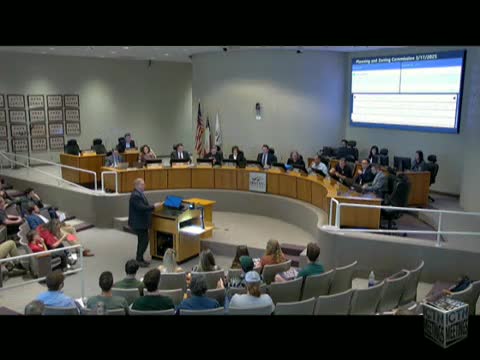
Las Vegas Sands Corporation urged the Irving Planning and Zoning Commission on March 17 to revise PUD 6 to allow a high‑density, mixed‑use “destination resort” on the former Texas Stadium site, saying the 75‑acre parcel could support a multibillion‑dollar project that includes hotel, meeting, retail and entertainment components and, if legalized by the state, casino gaming.
Las Vegas Sands Corporation urged the Irving Planning and Zoning Commission on March 17 to revise PUD 6 to allow a high‑density, mixed‑use “destination resort” on the former Texas Stadium site, saying the 75‑acre parcel could support a multibillion‑dollar project that includes hotel, meeting, retail and entertainment components and, if legalized by the state, casino gaming.
Philip Sanders, assistant city manager, introduced Mark Bokenheid, senior vice president of global real estate for Las Vegas Sands, who presented the company’s vision and answered commission questions. Bokenheid described the site as “ideal and perfect for large scale development,” highlighted nearby highway access, a planned DART station and the Trinity River buffer, and said the company has spent about $2 million to clean and secure the property since acquiring it in 2022–23.
The company presented projected local economic impacts tied to its preferred model. Bokenheid said the first phase of a destination resort could be about a $4,000,000,000 investment and estimated roughly 9,000 full‑time jobs. He gave a revenue breakdown the company projects if the full resort is built: roughly $25 million a year to the city of Irving, $40 million to the school district, $8.5 million to Dallas County, about $4.25 million to the community college district, and $8.5 million to Parkland Hospital District, for a total the company estimated in the $85–$90 million a year range.
Bokenheid repeatedly emphasized that Sands’ integrated resorts are more than gaming floors and showed examples such as The Venetian and Marina Bay Sands, saying “gaming is 1 component of a significant amount of entertainment venues.” He also said plainly, “We only do destination resorts. We don’t we will not develop a hotel project or resort project that does not have gaming,” and later, “I will not move forward with the site work until I have a zoning change.”
Commissioners and residents pressed the company on multiple fronts. Commissioners sought clarity about timing, noting that any casino component depends on action by the Texas Legislature and likely a statewide referendum and additional implementing legislation. Bokenheid said site preparation would require about a year to 18 months of approvals and remediation (including relocation of a drainage ditch and easements) before major construction could start, and that the company needs certainty now to begin master planning and potential non‑resort components.
The company provided minimum project metrics that it asked be included in the zoning language: a minimum of 1,750 hotel rooms, 500,000 square feet of meeting space, and a minimum 4,000,000 square feet of total development; a live entertainment venue of at least 4,000 seats was also discussed, and an arena was described as optional. Bokenheid said those figures are intended to set a scale for a destination resort and that Sands would work with city planning staff to develop site‑specific design and development standards.
Several commissioners said they wanted more data before recommending a zoning change that explicitly permits casino gaming. They raised questions about how state law could define gaming, whether a future state gaming regulator would impose limits, and how the city could enforce quality or community protections over time. Commissioners also pressed the company on traffic modeling, public safety and police staffing, the potential impact on nearby neighborhoods and institutions such as the University of Dallas, and what enforceable commitments the company was willing to make. Bokenheid said the company has met with TxDOT and believes highway access is feasible but that detailed traffic studies and mitigation would be required.
Public comment during the work session and a later public hearing was extensive and sharply divided. Supporters, including former state representative Rodney Anderson, told commissioners the rezoning is a land‑use decision that could unlock long‑stalled redevelopment and generate tax revenue and jobs. Anderson said, “This is a simple zoning change case. This is not a vote to approve a casino.”
Opponents argued the proposal is premature, that casino gaming is illegal in Texas today and that rezoning to accommodate gaming before state legalization would in effect pre‑approve an activity residents have not authorized. Many residents said the project would bring social harms, increased crime and traffic and called for more study or a public referendum. “The residents of Irving do not want a casino,” one speaker said during public comment, summarizing a frequently voiced view.
The commission did not take a final vote on rezoning during the work session. Commissioners discussed whether to recommend the PUD 6 amendment to city council now, to delay until the legislature and voters act in Austin, or to seek additional studies and written commitments from the developer on issues such as traffic mitigation, public safety resources, minimum project metrics and enforceable development standards.
Next steps identified in the discussion include further city review of the proposed PUD language, follow‑up meetings with public safety and transportation agencies, additional community engagement sessions (the company committed to more town halls), and a formal public hearing and council consideration of any recommendation the commission forwards. The transcript records multiple requests from commissioners to staff and the applicant for more specific, documented commitments and traffic and public‑safety analyses before council action.