Get Full Government Meeting Transcripts, Videos, & Alerts Forever!
Get email alerts on the Economic Development topic
No spam. Unsubscribe anytime.
Developer outlines $370 million resort proposal for 70-acre site in Fulshear
Summary
Project Long Development presented a proposal for a 70-acre entertainment resort in Fulshear featuring a 300-room hotel, a 90,000-square-foot indoor sports facility, a 30,000-square-foot family entertainment center, and a 90,000-square-foot indoor water park; the developer asked the city and EDC to fund early-stage studies to derisk the project.
Project Long Development presented a concept master plan for a mixed-use resort and sports-entertainment destination to the Fulshear Development Corporation, proposing an integrated hotel, indoor water park, sports courts and event space on a roughly 70-acre parcel near Westpark Tollway and Fulshear Trace.
Alex Long, an architect and principal with Project Long Development, described the planned core components as a 300-room hotel, an indoor water park, a 90,000-square-foot indoor court facility convertible between eight basketball courts and 16 volleyball courts, a 30,000-square-foot family entertainment center, 24,000 square feet of food and beverage/retail facing a public fountain, and convention and ballroom space. Long said the current conceptual cost estimate for the full master plan is about $370,000,000 and that the figure does not include potential rebates, subsidies or incentives.
Long described the project as a public-private partnership in which the city would hold beneficial title to the land and asset, and the developer's special-purpose entity would take a ground lease, finance, build and operate the asset. "Everything is owned by the city," Long said when asked who ultimately holds title. Long said the development team would operate the asset and remit revenue shares back to the city under the lease model.
Long presented a high-level revenue case and said the developer's analysis anticipates direct revenue to the city over the life of the project, citing an example of roughly $135,000,000 of direct revenue back to the city across multiple tax lines (presented by the developer as aggregate direct revenue from the project) and a later breakdown the developer described as approximately $44,000,000 in hotel occupancy tax (HOT) receipts, $23,000,000 in sales tax, and about $11.5 million each to two economic-development funds over 25 years. Long said the water park would be the primary demand driver and that the project's operations must cover lease payments and reserves.
The developer requested that the EDC consider funding independent studies: a third-party demand study, an independent appraisal of the land, a phase I environmental/wetlands review, and an economic-impact analysis. Long said Project Long Development had advanced roughly $200,000 on concept design and studies to date and that any EDC or city funds used for early-stage studies would be refunded by the developer at financial close.
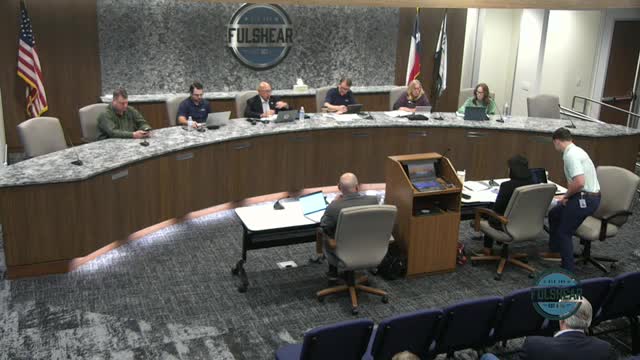
Board members asked for more specific financials, legal and schedule details. Several board members said they wanted staff and counsel to review the financing model and legal implications before any decision. The corporation moved into executive session to deliberate economic development negotiations, including the resort engagement, and returned to regular session with no immediate public action recorded on the proposal.
The developer and staff said next steps include third-party demand and cost estimates, detailed architectural drawings, and further due-diligence work that staff and council would need to review in future meetings.