Get Full Government Meeting Transcripts, Videos, & Alerts Forever!
Get email alerts on the Transportation topic
No spam. Unsubscribe anytime.
Maryland House rejects amendment limiting Transportation Trust Fund transfer to WMATA
Summary
An amendment that would have blocked new annual transfers from the Transportation Trust Fund to WMATA unless TTF revenue rose by 2% failed on a roll call in the Maryland House of Representatives. Supporters said the change would protect local road and bus funding; opponents said it could undermine long‑term WMATA financing.
Annapolis, March 7, 2025 — The Maryland House of Representatives rejected an amendment intended to limit new annual transfers from the state Transportation Trust Fund (TTF) to the Washington Metropolitan Area Transit Authority (WMATA).
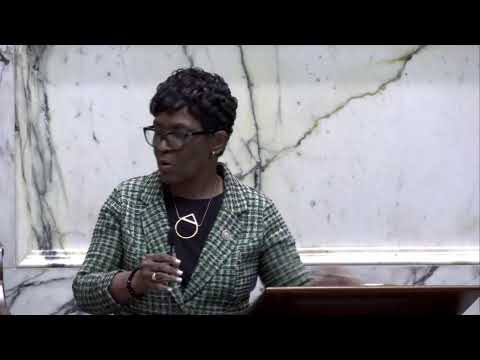
The amendment, offered from the floor as Amendment 48302 O/1, would have prohibited the additional roughly $50 million annual transfers to WMATA unless TTF revenues increased by at least 2% from fiscal 2026 levels. “If our TTF revenues remain flat, we’re not gonna steal money from every other objective of the TTF for more money for WMATA,” the Member who offered the amendment said on the floor. The amendment failed on a roll call; the clerk announced there were 98 votes in the negative.
Supporters of the amendment argued the change would prevent diverting funds from other TTF priorities, such as roads, bus lines, and infrastructure in Baltimore City, Baltimore County, Western Maryland and other jurisdictions. One supporter summarized the proposal as a “guardrail” that would allow additional WMATA funding only if overall TTF revenues rose.
Opponents said the amendment was unnecessary and could undermine the stability that dedicated funding provides WMATA. The floor leader noted that flexibility already existed in past years to fund WMATA from sources other than the TTF and that predictable, dedicated funding helps WMATA access bond markets. “One of the most important things ... is provide stability for the future so that WMATA can bond the money,” the floor leader said, adding that WMATA carries millions of annual rides by Marylanders and relies on subsidized funding from multiple jurisdictions.
The amendment’s sponsor disputed assertions that the proposal would cut WMATA out of funding entirely, saying it would simply prevent diverting existing TTF dollars if revenues did not increase. After the vote, the underlying bill remained on track; the House ordered the measure printed for third reading.
Why it matters: WMATA operates across Maryland, Virginia and the District of Columbia and carries tens of millions of rides annually. How Maryland structures its contributions affects local transportation projects and budget priorities across the state.
Discussion points on the floor included: the size of the TTF transfer (described repeatedly as “50‑some million dollars”), whether WMATA could become self‑sufficient, whether TTF dollars have been and should be flexibly used, and whether a revenue trigger was an appropriate constraint.
No formal follow‑up direction to staff was recorded on the floor related to the amendment; the amendment failed and the bill proceeded to the next step in the legislative process.