Get Full Government Meeting Transcripts, Videos, & Alerts Forever!
Get email alerts on the Bicycle Network topic
No spam. Unsubscribe anytime.
Manhattan CB2 committee backs call for a connected temporary bike network amid pandemic
Summary
Manhattan Community Board 2Traffic & Transportation Committee members and residents urged the city to create a connected, temporary bike network and asked DOT for clearer, map-based plans and interim protected treatments to support new cyclists and essential workers during COVID-19.
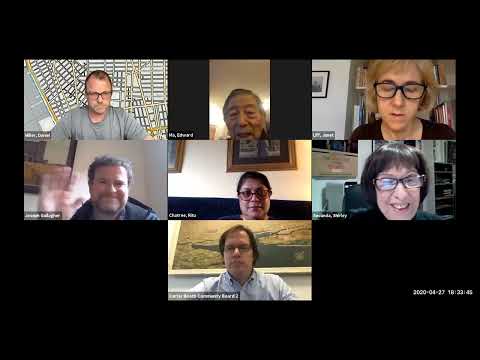
Shirley (chair, Manhattan Community Board 2 Traffic and Transportation Committee) opened a committee meeting about street safety during the COVID-19 pandemic by asking the panel and attendees to weigh in on a proposal for a bicycle network that would provide safer, protected space for cyclists across the district.
Committee members, business improvement district representatives and residents said a connected network would help essential workers and new cyclists avoid crowded subway cars and narrow sidewalks. “The city doesn’t have a network of protected bicycle lanes that enable people to navigate the city safely on a bicycle,” Shirley said, summarizing the committee
The discussion focused on two questions: whether to ask for a broad, citywide bike-network commitment or to press DOT for specific street completions (several speakers urged asking for both). Janet Liff (committee member) and Ryan Smith (attendee) argued that naming particular corridors could produce action: Liff asked whether the board should call out Sixth Avenue for completion north of Canal Street, while Smith said that Community Board 8's decision to name Park Avenue had helped win DOT consideration for temporary open-street measures.
Several residents and business representatives described local constraints and tradeoffs. David Cantile, a longtime cyclist, recommended design changes on narrow cross streets where protected lanes with parked-car buffers had become permanent placard parking and blocked commercial deliveries. He suggested keeping bike lanes but moving them into the travel lane and reserving parking buffers for commercial parking so deliveries could still happen. Mark Dicus (SoHo Broadway Initiative) and Cordelia Person (NoHo Business Improvement District executive director) said businesses need walking and cycling options to survive a phased reopening; Dicus said some retail and restaurant operators are considering driving instead of transit if they or their employees don
Transportation Alternatives' Chelsea Yamada recommended interim, low-cost materials for protection and urged that “pedestrian safety should come first” when bicycle treatments are added. Several speakers asked the board to request that DOT return with a mapped plan, not only a general endorsement, and to limit early actions to temporary materials that could be implemented quickly and adapted later.
The committee did not vote on a formal resolution at the meeting. Members agreed to draft language urging a connected, temporary bicycle network, to recommend interim, low-cost protected treatments where feasible, and to follow up with DOT and affected block associations for map-based proposals and targeted local outreach. The committee also flagged completing the Sixth Avenue corridor as a parallel item for separate follow-up.
Residents and business representatives said the network should be coordinated with adjacent community boards and with open-streets proposals to avoid creating pinch points that would harm deliveries or emergency access. The meeting closed with the committee agreeing to prepare draft language reflecting those points for a later meeting.