Get Full Government Meeting Transcripts, Videos, & Alerts Forever!
Get email alerts on the Property Tax Change In Ownership topic
No spam. Unsubscribe anytime.
Assessment board to deliberate on whether 2005 deed triggered tax reassessment for Oxnard home
Summary
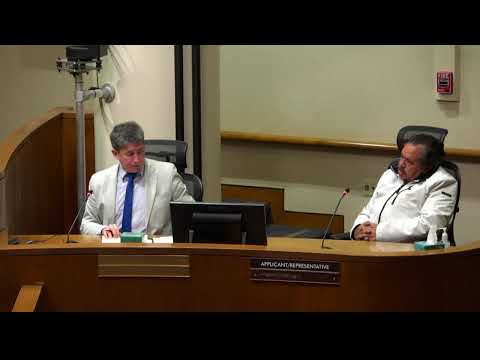
Ventura County Assessment Appeals Board No. 2 heard testimony March 17, 2025, in an appeal by Jose G. Reveles challenging a recorded deed dated April 8, 2005, and moved the case to closed-session deliberations after hearing evidence from the applicant and the assessor.
Ventura County Assessment Appeals Board No. 2 on March 17, 2025, heard competing evidence in an appeal by Jose G. Reveles that a grant deed recorded April 8, 2005, should not have been treated as a change in ownership for a house in Oxnard. After presentations from the applicant and the Ventura County Assessor's Office, the board closed the public portion of the hearing and sent the case to closed-session deliberations; the clerk will notify the parties of the board’s written decision.
The question before the board was whether the recorded deed created a legally cognizable change in ownership that would reset the property's base-year value for property-tax purposes, or whether the names removed and added on recorded deeds between 1989 and 2005 should be treated as “bare legal title” with no beneficial ownership change. The outcome will determine whether the 2021 lien date value under appeal stands or must be adjusted.
The applicant, Jose G. Reveles, represented in person by attorney Dionacio Costales, presented a packet of documents he said supported his claim that other family members listed on earlier deeds did not hold beneficial ownership. Costales and Reveles provided multiple sworn statements, bank and mortgage documents, insurance paperwork and multiple years of federal and state tax returns for Reveles and his spouse, and argued those records show Reveles used and paid for the property during the period the assessor treated as a transfer.
Joe Phillips of the Ventura County Assessor's Office disputed that the evidence met the statutory and regulatory standard to rebut the “deed presumption” — the legal rule that names appearing on a deed are presumed to have ownership interests unless clear-and-convincing evidence shows otherwise. "The assessor finds the evidence provided lacking and does not meet the criteria of clear and convincing proof," Phillips said during his presentation. He told the board that key documentary elements required by Board of Equalization guidance and county practice were missing or insufficiently tied to the subject parcel for the full 1989–2005 period, including (1) written agreements executed at or before conveyance showing the parties agreed that some names had no equitable interest; (2) consistent canceled checks or bank records showing who paid mortgage and tax obligations across the entire period; and (3) tax documentation such as Form 1098s that identify which property mortgage interest deductions relate to.
Phillips also noted evidence in county records that supported beneficial ownership by another family member, including a homeowners’ property-tax exemption claim signed in 1984 and phone-call notes from county staff in 1990 indicating that a co-owner lived at the property and that multiple co-owners existed. The assessor’s presentation cited Property Tax Rule 4.62.200(b), Revenue and Taxation Code provisions, and Board of Equalization annotation guidance as the legal framework for what documentary proof is needed to rebut the deed presumption.
Reveles acknowledged gaps in the historic paperwork and said some original documents were lost or damaged (he told the board that records were affected by flooding). "I did my best to provide," Reveles said. His attorney emphasized the sworn declarations and other materials submitted and asked the board to weigh the totality of the evidence when considering whether the recorded deeds reflected only bare legal title.
The assessor also addressed deeds recorded in October 2024 that the applicant filed as "rescission" deeds. The assessor advised the board those rescissions, even if later found valid by county property-transfer staff, operate prospectively and would not alter the 01/01/2021 lien date under appeal. County guidance and Board of Equalization practice note rescissions restore a prior base-year value only prospectively; they do not produce retroactive refunds for taxes already vested.
After hearing testimony and document-based argument from both sides, the board did not vote on the merits. Instead, the chair directed deliberations to closed session for the members to determine whether the applicant met the required clear-and-convincing standard. The clerk will issue a written decision to the parties when it is available.
The county assessor asked the board to sustain the assessor’s determination that a full change in ownership occurred on April 8, 2005. The applicant sought reversal or exclusion under the “bare legal title” doctrine. The board’s closed-session deliberation will resolve which view the panel accepts.
Next steps: the board’s written decision will be mailed to the parties. If either side disagrees with the board’s final action, they retain any appeal rights provided under state law and the board’s rules.