
Navajo County Sheriff's Office wins state accreditation, says department will keep annual proofing
Get AI-powered insights, summaries, and transcripts
Subscribe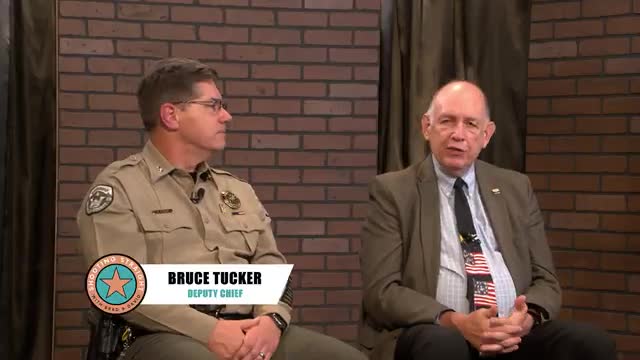
Summary
The Navajo County Sheriff's Office has received accreditation through the Arizona Law Enforcement Accreditation Program (ALEAP), and officials said the agency also holds certification from the National Institute of Jail Operations.
The Navajo County Sheriff's Office has received accreditation through the Arizona Law Enforcement Accreditation Program (ALEAP), and officials said the agency also holds certification from the National Institute of Jail Operations.
Deputy Chief Bruce Tucker said the sheriff's office is "the only sheriff's office in the state of Arizona to be accredited. We are the first." He told hosts of the office's podcast that the ALEAP accreditation is administered by a commission tied to the Arizona Chiefs of Police Association and requires meeting a broad set of standards.
ALEAP's requirements include what Tucker described as "176 basic standards" and roughly "410 subsections" that agencies must document. Lieutenant Whipple and accreditation manager Judy Wallace described the scale of the effort: the office compiled proofs across a workforce of about 160 people, including 63 deputies, who operate across nearly 10,000 square miles of Navajo County.
"It was a big undertaking," Lieutenant Whipple said, noting agencies typically have up to two years for initial accreditation and may request extensions. Wallace, who was hired as a full-time accreditation manager after the department won grant funding to create the post, said her prior work in property and evidence and on the sheriff's auxiliary helped her assemble required documentation and dated proofs.
Wallace described how proofs are submitted: policies and supporting materials are uploaded into a management program; acceptable proofs include dated photographs, emails and annual reports that link to a written directive and the ALEAP standard. The ALEAP accreditation runs for four years, Tucker said, and the office must provide annual proofs that standards are being met.
The accreditation review included an on-site assessment by outside reviewers. Tucker said Assistant Chief O'Neil of the Tempe Police Department and Chief Carney of the Paradise Valley Police Department conducted an on-site review, interviewed command staff and submitted a report that ALEAP's commission reviewed in Flagstaff. Tucker added that members of the ALEAP commission can include attorneys who represent the Arizona Counties Insurance Pool, and he said that pool's attorney had voiced support for the accreditation because it can reduce liability exposure.
Officials also said ALEAP covers many patrol and policy topics but addresses only a small portion of detention-specific standards; the department therefore pursued the jail-focused certification from the National Institute of Jail Operations. Tucker said the county is one of the very few agencies in the state to hold both accreditations.
Looking ahead, Wallace and Whipple said the department will continue annual documentation and watch for ALEAP standard updates. Whipple said the office intends to consider emergency communications accreditation next, to cover dispatch more fully.
Officials cited practical benefits from accreditation: Tucker said it can improve report quality, evidence security and interagency communications, and Wallace said the standards require more consistent victim services and documentation. Tucker added that accredited status can make agencies more competitive for some grant programs because it demonstrates adherence to best practices.
The department credited volunteers and an internal coalition for helping begin the work, and Tucker acknowledged the accreditation required a sustained staffing commitment. "It takes a team," Whipple said.
No formal vote or action by an elected governing body was recorded in the podcast excerpt; the discussion described the department's completed accreditation, the staffing and grant used to fund the accreditation manager role, annual proofing deadlines and possible future accreditation steps for dispatch.
The department gave a July commission appearance in Flagstaff as part of the final review; Wallace said the office must collect year-one proofs by July 15 of the next calendar year and repeat annual proofing throughout the four-year cycle.