Get Full Government Meeting Transcripts, Videos, & Alerts Forever!
Get email alerts on the Rural Housing topic
No spam. Unsubscribe anytime.
Northeast Michigan group urges state seed funding to build workforce housing
Summary
Lenny Avery of Target Alpena Development Corporation asked the Michigan House Appropriations Subcommittee on Labor and Economic Opportunity for first-year funding to launch a regional community development corporation to build for-sale workforce housing, citing an urgent rural shortage and barriers to private development.
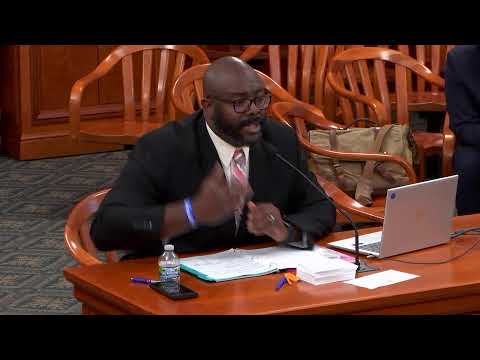
Lenny Avery, economic development coordinator for Target Alpena Development Corporation, told the House Appropriations Subcommittee on Labor and Economic Opportunity that Northeast Michigan needs state seed funding to launch a regional community development corporation (CDC) to build workforce housing.
Avery told the committee that housing in Northeast Michigan is “no longer just a quality of life issue, it's an economic” issue and urged the subcommittee to treat housing as infrastructure similar to roads and water systems. He said a regional housing needs assessment shows a shortage of housing units across the region and that employers in health care, education, manufacturing and public safety report difficulty attracting and retaining workers because housing is unavailable or unaffordable.
Avery described a CDC model that would focus on workforce housing, infill development and rehabilitation projects that engage local contractors and builders, support site readiness and coordinate zoning across multiple counties. He said the CDC would prioritize for-sale single-family homes rather than operating as a rental company and would offer repair programs, home-buyer assistance and rental stabilization to help families remain in place.
"What we need in Northeastern Michigan and what we have found through our housing needs assessment is we need over 10,000, almost 11,000 units across the region, with the majority being for-sale homes," Avery said to the committee. He also said the region's vacancy rate is "an alarming 1.2%," with some larger communities showing far lower vacancy.
On building methods, Avery said the CDC would pursue modular and traditional construction, citing modular manufacturers such as Richcraft and Champion Homes as examples that can reduce on-site construction time. He told the panel modular homes in the plan would be permanently sited on foundations and are distinct from manufactured trailer homes: "These are traditional Boca-style homes that's gonna be on an attached foundation," he said.
Avery described a target price range and market approach: projected home prices in the region's "sweet spot" would be roughly $200,000 to $325,000, with profit margins intentionally modest to keep costs low. He said the CDC would aim to serve households from roughly 60% of area median income (AMI) up to 120% AMI and would prioritize establishing a revolving line of credit to build homes, sell them and repeat the process.
Asked about land, Avery said the CDC plans to use municipally owned land where possible, working with townships that have parcels in trust. "We're proposing taking municipally owned land that they currently already have in trust," he said, adding that local officials have signaled willingness to partner and that increased housing would raise tax rolls.
Avery also discussed prior state appropriations and administrative barriers. He told members he has sought to use LEO (Labor and Economic Opportunity) appropriations and similar programs but that capacity and site-readiness requirements have limited rural communities' ability to use funds. "Over the last two years, we've been given $1,500,000 in appropriation funds from LEO, and we haven't been able to use it. This year, we were given over $7,500,000, and I think we barely touched 1.2 of it," he said, urging the subcommittee to invest in a model that builds local capacity and turns funds into projects.
Avery said the Office of Rural Prosperity's rural readiness grants funded the region's housing needs assessment and called that office one of the more helpful partners. He also mentioned challenges working with other state entities and encouraged targeted, non-one-size-fits-all approaches for rural places, warning that large multiunit projects could exceed local absorption capacity.
Committee members thanked Avery for traveling from Alpena to present and asked several questions about construction timelines, market demand, partnerships with MSHDA and MEDC, and whether homes would be built on speculation, to individual specifications, or both. Avery said the CDC would pursue a mix of speculative building and buyer-directed homes after outreach and first-time homebuyer education.
The subcommittee approved routine business without objection during the same meeting: Rep. Cabot moved to approve the minutes of the May 21 meeting and the chair recorded that there were no objections and the minutes were approved. Later, Rep. Robinson moved to excuse absent members; the motion prevailed by unanimous consent and the meeting was adjourned.
Avery asked the committee for first-year funding to start the CDC and said he requested an initial $3 million to launch the effort, adding he would work to secure additional resources if the state funded a first year. He characterized the proposal as a locally driven, regionally coordinated investment intended to create homeownership opportunities and strengthen workforce stability in sparsely populated counties.
The committee did not take a formal vote on funding for the CDC during the meeting.