Get Full Government Meeting Transcripts, Videos, & Alerts Forever!
Get email alerts on the Urban Forest Plan topic
No spam. Unsubscribe anytime.
Citywide urban forest plan seeks public input to reach 30% canopy; city groups outline timeline and concerns
Summary
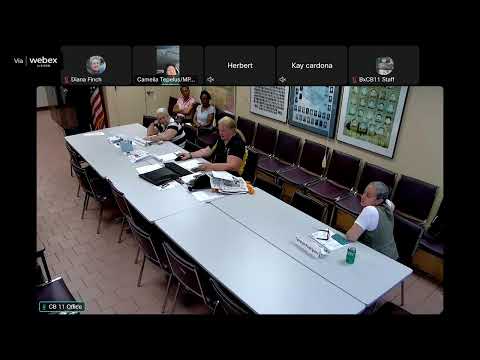
SARAH BALASCHERI, urban forest program manager at Partnerships for Parks, briefed the Community Board 11 Parks Committee on June 12 about a city-led effort to develop an urban forest plan and solicited public input.
SARAH BALASCHERI, urban forest program manager at Partnerships for Parks, briefed the Community Board 11 Parks Committee on June 12 about a city-led effort to develop an urban forest plan and solicited public input.
The plan, which the mayor's office of climate and environmental justice is leading with a core project team, aims to outline strategies to protect, care for and equitably expand tree canopy citywide to 30 percent, Balascheri said. "The plan doesn't exist yet," she told the committee, calling the current work a public-input phase prior to writing recommendations.
The plan team includes nonprofit and agency partners and a consultant. City Parks Foundation, Partnerships for Parks, Natural Areas Conservancy and The Nature Conservancy are part of the core project team, Balascheri said. The Parks Department, which manages most public trees, is also involved; WXY, a design firm, was retained to help with research, writing and an outreach website. Advisory groups convened by the mayor's office include stakeholder and technical advisory committees with representatives of business improvement districts, nonprofit groups, private landowners and members of the public.
Why it matters: Tree canopy influences heat, air quality and stormwater management. Balascheri said trees reduce urban heat and help keep stormwater out of sewers. The presentation emphasized environmental justice findings that canopy is lower in lower-income neighborhoods and communities of color; the transcript cited an "EJNYC" report from 2024 that documented such disparities.
Key data and timetable shared at the meeting
- Current canopy: 23.4 percent citywide, derived from 2021 lidar analysis; that canopy equates to roughly 7,000,000 trees and about 45,000 acres, Balascheri said. - Target: 30 percent canopy cover set out in the city's 2023 sustainability report referenced in the presentation (referred to in the meeting as "plan y c getting sustainability done") and later codified by City Council in a local law cited in the presentation as "Local Law 148." - Data collection: Canopy estimates derive from lidar flights conducted approximately every five years, the presenter said. - Public input: The initial public engagement period opened with borough kickoff events and workshops earlier in the year and remains open through June 30; Balascheri said the questionnaire is available in 10 languages and that there were "less than 2,000 responses" as of the most recent update she cited. - Next steps: After the June 30 public-input window, the project team plans a writing phase over the summer with phased releases of recommendations and a fuller report expected in winter 2025 or into 2026.
Questions and concerns from board members and residents at the meeting
Committee members and neighborhood residents pressed several operational and maintenance questions often raised in public input: causes of canopy loss in particular neighborhoods, the durability of past tree-planting initiatives, and capacity for long-term maintenance.
On causes of canopy loss, Balascheri said borough-level analysis is ongoing. She told the committee the large loss seen in eastern Queens is primarily attributable to development, though the causes in any given area are often mixed. She noted in some coastal areas losses are believed to reflect saltwater damage following Hurricane Sandy. "In any of these areas where there's loss, it's not going to be a hundred percent one cause," she said.
Several residents described local problems with tree maintenance and vandalism. Kate Cardona, a longtime Bronx resident and former tree steward, said many trees planted during previous municipal initiatives reached the end of their expected lives without scheduled replacement and that vandalism and misuse have damaged plantings in some neighborhoods. "These trees have lived many years beyond what they were supposed to," Cardona said.
Balascheri acknowledged that past city planting efforts sometimes lacked long-term maintenance funding, creating higher mortality for newly planted trees. "There are a lot of resources and money spent putting trees in the ground, and then there's a higher mortality rate than we would normally see because they're not watered, they're not pruned, they're not taken care of properly," she said.
Resources and next steps mentioned at the meeting
- Report problems: Balascheri and others urged residents to use 311 and the New York City tree map to report damaged street trees; the presenter demonstrated that the tree map allows users to select individual street-tree records and file a "report problem" for that tree. - Stewardship and training: The Parks Department's stewardship program and non-profits such as Trees New York were identified as continuing resources; Balascheri said Partnerships for Parks will launch programming focused on tree care. - Questionnaire: Balascheri asked board members and residents to complete and promote the urban forest questionnaire at inform.urbanforestplan.nyc; she offered to share a social-media kit from the mayor's office of climate and environmental justice.
What the presentation did not decide
The meeting was informational: the committee did not conduct votes on the plan. Balascheri repeatedly framed the session as an opportunity to gather input before plan drafting rather than to announce final policy measures.
Ending
Balascheri closed by encouraging members and neighbors to submit the questionnaire before the June 30 deadline and to spread the link. She said the team will review public responses and incorporate them into the plan-writing phase scheduled for the summer and fall.