Get Full Government Meeting Transcripts, Videos, & Alerts Forever!
Get email alerts on the Street Vending topic
No spam. Unsubscribe anytime.
Charlotte council weighs higher fines, NoDa pilot and citywide permitting for street vendors
Summary
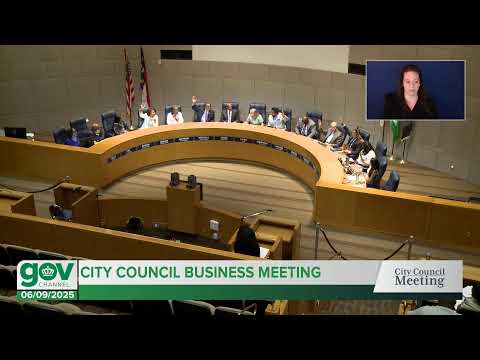
Charlotte City Council members spent a majority of an action‑review discussion on proposals to change how the city regulates street vending, focusing on enforcement in the Tryon Street Mall (Uptown), a permit‑based pilot in NoDa and whether permitting should be required citywide.
Charlotte City Council members spent a majority of an action‑review discussion on proposals to change how the city regulates street vending, focusing on enforcement in the Tryon Street Mall (Uptown), a permit‑based pilot in NoDa and whether permitting should be required citywide.
City planning and transportation staff presented the background and committee recommendations and urged using a measured rollout. Charlie Jones of the Charlotte Department of Transportation told the council that street vending is governed by Chapter 6 of the Charlotte Code of Ordinances and noted a practical enforcement gap: “CMPD doesn’t at this time have a technological solution to track civil citation offenses at the individual level,” and staff therefore recommended setting an upper fine comparable to other cities and pairing an increase with a public education campaign.
The Housing, Safety and Community Committee unanimously approved two motions last week: one to develop an escalated fine structure (staff suggested “a fine not to exceed $500 per violation”) for the Tryon Street Mall and another to develop a permit‑based pilot for NoDa. Jones described timing options: a June 23 ordinance vote could lead to mid‑July implementation, or council could ask staff for more planning and launch the pilot in September–October.
Why it matters: vendors, brick‑and‑mortar businesses and residents told staff during public input that the current rules and low fines are not producing consistent compliance in high‑activity corridors. Staff said fines in many peer cities average about $500 for illegal vending; Charlotte’s civil penalty has historically been as low as $50. Business owners and some council members described impacts on pedestrian circulation, public safety and sales for permitted vendors.
Council concerns and proposals
Council members debated speed versus thoroughness. Councilmember Lorna Mayfield (at‑large) said she supports action but pressed staff on practical effects for nearby homeowners and small businesses, including long‑term maintenance and liability after construction work. Councilmember Dimple Ajmera (at‑large) and others urged an expedited pilot because summer events will increase vendor activity.
Several members, including Renee Johnson (District 4), argued for a citywide permitting requirement in time, not only concentrated enforcement in the congested business district. Johnson said the permitting process must be “affordable and attainable” and recommended a visible, simple permit form so enforcement officers can quickly identify compliant vendors.
Councilmember Malcolm Graham (District 2) emphasized preserving informal entrepreneurship: “We don’t want to lose that entrepreneurial spirit when someone is selling books out of the back of his car.” Several members said any pilot should be designed so small vendors have equitable access to permitted slots, including a rotating schedule and support to learn the permitting process.
Staff implementation details and enforcement tools
Staff identified four preliminary sites in NoDa that could host a permit pilot but said they still require field checks for right‑of‑way width, ADA access and safety. The pilot concept would temporarily treat the area as part of the congested business district so vending outside permitted sites would be illegal and subject to fines. Jones said Charlotte Center City Partners would be willing to help communicate changes in the Tryon Street Mall, and staff recommended an education campaign before any fine increase goes into effect.
On enforcement, staff said CMPD and code enforcement will continue to use verbal warnings and compliance tools, but noted operational limits: current tracking across officers is limited. Councilmembers urged staff to coordinate with the county health department on food safety for mobile food vendors.
Next steps
Council did not adopt an ordinance at the meeting. Staff offered two tracks: (1) a June 23 ordinance and a July pilot launch, or (2) additional development with an August council discussion and a September–October pilot start. Council members asked staff to return with a clearer rollout plan that includes enforcement resource needs, permit fee proposals (staff said Tryon fees will be updated in FY26 and a comparable affordable fee structure is required for broader permitting), and vendor outreach and training.
Ending note
Councilmembers broadly supported more teeth for enforcement while urging caution to avoid excluding small entrepreneurs. Staff and committee leaders said they will refine pilot site selection, enforcement plans and an outreach strategy for vendors and brick‑and‑mortar businesses before returning with ordinance language and an implementation timeline.