Get Full Government Meeting Transcripts, Videos, & Alerts Forever!
Get email alerts on the Special Session topic
No spam. Unsubscribe anytime.
Minnesota leaders say special session likely Saturday as health, human services bills remain under review
Summary
Legislative leaders said final drafting and technical reviews of the health and human services bills are delaying a special session; transportation language is nearly finished. Leaders aim to complete work before a June 10 deadline to avoid additional layoff notices for state employees.
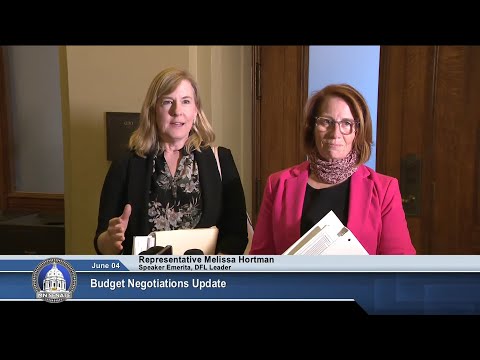
A legislative leader said Monday that final drafting and technical review of Minnesota’s health and human services budget bills is delaying a special legislative session that lawmakers hope can be held Saturday.
The leader said the health and human services bills are “very, very complicated” and require multiple rounds of review by the reviser, committee chairs from both parties and implementing agencies before the bills can be posted in final form. “For these very long bills, that takes a huge amount of time,” the leader said.
Those bills, along with the transportation bill, are typically listed explicitly in any special session agreement, and legislative leaders said the agreement is not likely to be negotiated until the bills appear in final posted form. “Traditionally, we haven’t negotiated the special session agreement until all those bills have been posted online in final form,” the leader said.
Why it matters: leaders said finishing the bills before June 10 is urgent to avoid additional layoff notices to state employees. The leader said nurses received roughly 750 to 950 layoff notices scheduled to arrive June 1, and that a further round of notices could affect “between 10 and 20000 employees, I believe.” The leader framed completing the bills as a way to prevent more notices from going out.
Process and timing
The leader described a multi-step drafting and recirculation process: the reviser drafts language, sends it to the GOP and DFL house chairs, the senate chair and the implementing agency, each provides feedback, and the group recirculates revisions. That iterative review, the leader said, requires specialists familiar with implementation, not only legislators.
The leader said transportation language was close to finished but delayed by technical wording. On timing, the leader said a special session is “far outside” possible on Thursday (about a 5% chance) and that Saturday is a realistic expectation. “The agreement will probably require it to be 1 day,” the leader said, adding the hope that lawmakers would avoid overnight floor debates.
Votes and procedural thresholds
The leader spelled out vote thresholds legislators need: 68 votes in the House and 34 in the Senate to pass bills; 90 in the House and 45 in the Senate to suspend rules and speed action. The leader said caucuses have committed to deliver votes to pass bills, but that not every bill has been caucused yet because drafting is unfinished.
Other remarks and context
A second legislator, speaking briefly, urged patience with the pace of drafting and offered a one-line characterization of the process: “It is as slow as molasses, but molasses is good.”
A third speaker asked whether leaders were negotiating with holdouts and whether the delays were technical or policy driven. The leader said both health and human services account for a growing share of the state budget—“billions and billions of dollars”—and affect vulnerable populations, which is why accuracy and time for review are necessary. The leader also said bipartisan work has produced negotiated provisions that leaders hope members will support once the bills are available to unpack.
What was not decided
No final votes or formal actions were recorded in the discussion. The leader said caucus commitments exist to provide votes once bills are finalized, but multiple bills still needed drafting and caucusing before lawmakers could be asked to vote.
Next steps
Legislative leaders said they will continue drafting, recirculating and caucusing bills with the goal of holding a one-day special session and finishing work before June 10 to prevent additional layoff notices.