Get Full Government Meeting Transcripts, Videos, & Alerts Forever!
Get email alerts on the Cdbg Home Funding Allocations topic
No spam. Unsubscribe anytime.
Abilene advisory council recommends CDBG and HOME allocations, including $140,000 for Salvation Army
Summary
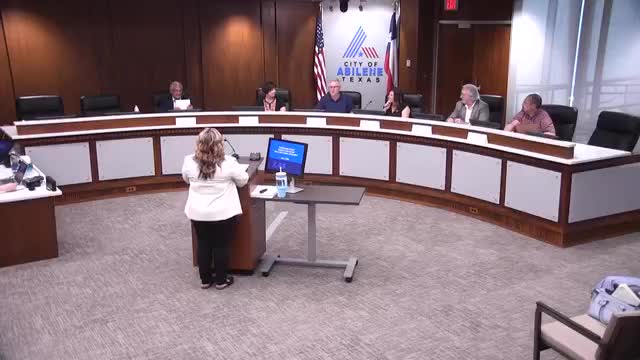
The Neighborhood Services Advisory Council voted to recommend Community Development Block Grant and HOME funding allocations for Abilene projects — including $140,000 for the Salvation Army and roughly $71,008 for Dignity Health Management Center — and forwarded the recommendations for final action by the City Council.
The Neighborhood Services Advisory Council recommended distribution of Community Development Block Grant (CDBG) and HOME program funds for local housing and nonprofit projects, approving funding recommendations for city-run programs and nonprofit applicants and forwarding the package for final action by the City Council.
The council recommended CDBG funding for the city’s condemnation/demolition program and a critical-repair program, and recommended HOME funding for single-family rehabilitation and first-time home-buyer assistance. The advisory body also recommended awarding $140,000 to the Salvation Army and about $71,008 to Dignity Health Management Center; Habitat for Humanity was designated to receive the Community Housing Development Organization (CHDO) set-aside of roughly $70,008.
Leticia Reeves, division manager for the Office of Neighborhood Services, told the council the office must meet HUDs national objectives and the citys consolidated plan and that Abilene is an entitlement city. Reeves said the city follows a council policy that restricts CDBG capital funds to capital projects for nonprofits rather than operating expenses. "Every year, we get our entitlement from HUD. So this is just going over the applications we received for this year for this coming year," Reeves said.
Reeves outlined the principal requests: a city condemnation/demolition program (approximately $150,000), a city critical-repair program (about $282,000), nonprofit requests from Dignity Health Management Center (original request ~$96,793, reduced in the staff recommendation to roughly $71,008.30) and the Salvation Army (original request ~$184,490, recommended at $140,000). Reeves also described HOME program proposals: single-family rehabilitation (rehabs typically range from about $66,000 to $80,000 per unit), a first-time homebuyer assistance grant of up to $5,000 per household, and the CHDO set-aside (15% of HOME allocation), which staff reported as approximately $70,008.28. Reeves said the HOME requests totaled about $420,008.22.
Council members and other advisory members questioned program capacity and timing. Reeves said the CDBG and HOME funds are not available until Oct. 1 and that, in the interim, the office keeps a list of alternative agencies that may provide limited or temporary assistance. She also noted verifications for applicants must be current within 60 days of application.
A Dignity Health representative said the organization relied on full funding to complete required ADA compliance work after a Lubbock inspection that identified items needing correction. "Full funding would be highly desirable," the representative said, adding the group would consider other grants and seek board approval if internal funds were to be reallocated. The representative also said some of the organizations funds are restricted by contract and need legal clearance before they could be repurposed.
Staff described program operations and eligibility: rehabilitation and critical-repair programs serve homeowners within Abilene city limits; demolition work is selected after code enforcement referral and, if performed by the city-funded program, a lien is placed on the property so ownership does not change and demolition costs may be recouped if the owner rebuilds. Reeves said demolition costs can vary widely depending on size and hazardous material abatement, with observed bids ranging from about $4,000 to $39,000. Normally the office requests three contractor bids for nonprofit projects but allowed fewer this round because the application window was shortened by technical issues.
The advisory council voted, by raised hands, to recommend approval of the set of funding allocations presented by staff. The meeting record did not capture individual roll-call tallies or the names of motioners and seconders; advisory members voted to recommend approval on each item presented. As the advisory council noted at the start of the meeting, it issues recommendations; final authority for these appropriations rests with the City Council or other boards and commissions as set by city ordinance.
Next steps noted in the meeting: staff will include these recommendations as part of the citys consolidated planning and budgeting process and will submit required materials to HUD and to the City Council for final approvals. The Office of Neighborhood Services encouraged agencies and homeowners to prepare documents now so applications and verifications will be current when funds become available on Oct. 1.
Votes at a glance (advisory recommendation only): - HOME: single-family rehabilitation / first-time homebuyer assistance — staff-recommended requests totaling about $420,008.22 — recommended for approval. - CDBG: condemnation/demolition program — approximately $150,000 recommended for approval. - CDBG: critical-repair program (city-run) — approximately $282,000 recommended for approval. - Salvation Army — staff recommended $140,000 for facility repairs (windows, elevator, HVAC controls) — recommended for approval. - Dignity Health Management Center — staff recommended approximately $71,008.30 (reduced from a larger request) to support ADA compliance work — recommended for approval. - CHDO set-aside (Habitat for Humanity) — approximately $70,008.28 (automatic 15% set-aside) — recommended for approval.
(These actions were approved by the advisory council by hand/voice vote and are recommendations that will be forwarded to the City Council for final action.)