
ETP directors report fiscal year activity and track three bills panel staff are monitoring
Get AI-powered insights, summaries, and transcripts
Subscribe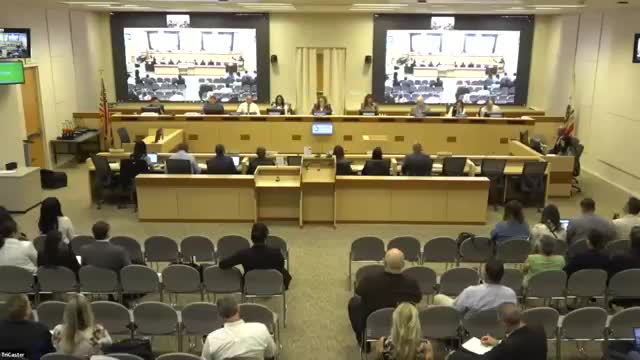
Summary
Executive Director Jessica Grimes presented year‑to‑date totals for proposals and trainees; staff outlined legislative bills AB765, AB1186 and SB470 that could affect ETP operations and reporting.
Executive Director Jessica Grimes opened the May 30 Employment Training Panel meeting with a fiscal‑year snapshot and program highlights, saying ETP had approved more than 232 proposals this fiscal year totaling tens of millions in awards and touching thousands of trainees.
Grimes told the panel that, as of May 2025, ETP had approved 232 proposals valued at approximately $72,000,000 and said “these proposals benefit over 50,000 trainees” (transcript). She highlighted priority activity including Seed 2.5 entrepreneurial grants for immigrant and limited‑English‑proficient entrepreneurs and a partnership with the California Energy Commission for electric vehicle infrastructure training.
Legislative watch Kumani (Kumanu) Armstrong, assistant director and chief counsel, briefed the panel on three bills ETP is tracking in the 2025–26 legislative session: - AB 765 would prohibit Employment Training Fund monies from being used to pay interest or liabilities stemming from federal unemployment‑insurance loans without express legislative authorization, and would require a public report justifying any such use. ETP’s staff indicated the agency remains neutral and will monitor the bill’s progress. - AB 1186 would expand and clarify government code rules for demographic data collection and create a chief statistician position; staff said they will coordinate with IT to ensure ETP’s systems remain compliant if the bill advances. The bill was held under submission as of May 23. - SB 470 would extend Bagley‑Keene teleconference provisions for public meetings; staff reported the bill was ordered for a third reading as of April 29 and ETP will continue to monitor deadlines.
Fiscal context Laura Campbell, chief program operations, described the May panel packet funding amount (roughly $9.5 million on this agenda) and noted that delegation orders (small projects approved under director authority) continue to be used for proposals capped at $75,000. Campbell provided a snapshot of incoming demand: 225 applications in demand with an estimated combined request of roughly $119.4 million broken down by single employer, small business, multiple‑employer contractors and apprenticeships.
Panel members asked several clarifying questions about where funds were sitting relative to this fiscal year’s allocation and about the pipeline of applications. Staff said the agency is within its total allocation for state fiscal year 24‑25.
Ending The executive presentations framed the day’s award decisions and guided several panel members’ line of questioning about wage progression, fringe benefits and curriculum specificity as they reviewed individual proposals.