Get Full Government Meeting Transcripts, Videos, & Alerts Forever!
Get email alerts on the Redevelopment topic
No spam. Unsubscribe anytime.
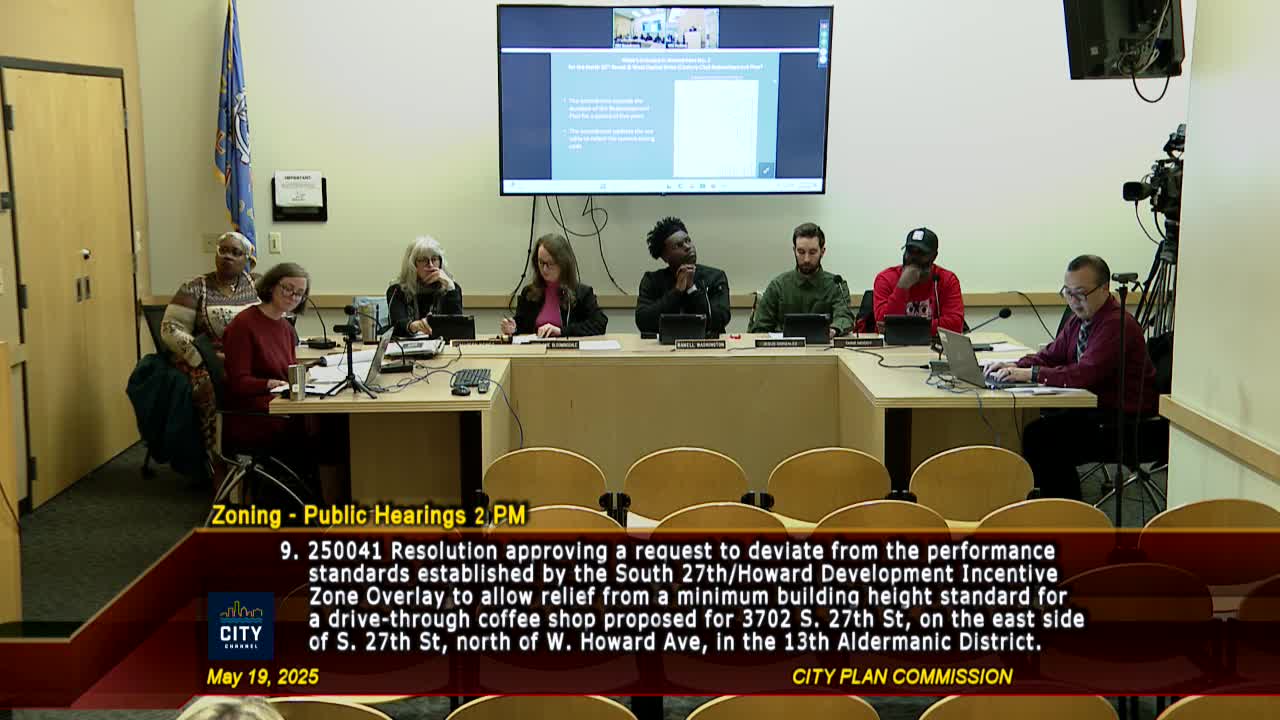
Commission extends Century City redevelopment plan five years and updates use table
Summary
The City Plan Commission approved Amendment No. 2 to the Century City Redevelopment Plan, extending the plan’s timeline five years and updating the plan’s land‑use table to match current zoning and redevelopment goals focused on job creation.
The commission on Monday approved Amendment No. 2 to the North 30th Street/West Capitol Drive (Century City) Redevelopment Plan, extending the plan’s timeline by five years and updating the plan’s zoning/use table.
Benji Timm of the City’s Real Estate staff told commissioners the extension is intended to give staff and partners more time to work with prospective investors, businesses and neighborhood stakeholders to refine the plan. “We just felt five years was enough time to allow us comfortably to work with our partners,” Timm said, noting staff capacity and the complexity of converting an old industrial site to modern industrial uses.
The amendment also aligns the plan’s use table with changes to the city zoning code that have accrued since the plan’s original adoption in 2005. Amy Oath (planning staff) explained the updated table clarifies which uses are permitted, conditional or prohibited inside the redevelopment area so the plan continues to support the stated goal of attracting quality, job‑creating industrial and manufacturing users.
Timm and staff reviewed progress at the site since the plan’s adoption: demolition and environmental cleanup work; private tenants that now include manufacturing and indoor agriculture firms; new utility and fiber connections; and stormwater and neighborhood investments such as Melvina Park. Timm said some 60 developable acres remain at Century City and the site is actively marketed to potential large employers with high energy and infrastructure needs.
Commissioners and staff discussed the plan’s role as a legal tool — it can guide land acquisition, environmental remediation, infrastructure investment and, if necessary, exercise eminent domain. Several commissioners praised the historic cleanup effort and emphasized the importance of targeting family‑sustaining jobs. The commission voted to approve the amendment.