Get Full Government Meeting Transcripts, Videos, & Alerts Forever!
Get email alerts on the Drug Policy topic
No spam. Unsubscribe anytime.
Board passes ‘Recovery First’ ordinance on first reading, enshrining illicit drug‑free remission as policy goal
Summary
The Board approved, on first reading, an ordinance that affirms a drug‑free remission goal as the city’s primary objective for substance use disorder treatment policy; supporters highlighted a four-pillars approach while opponents and some stakeholders sought clearer definitions and protections.
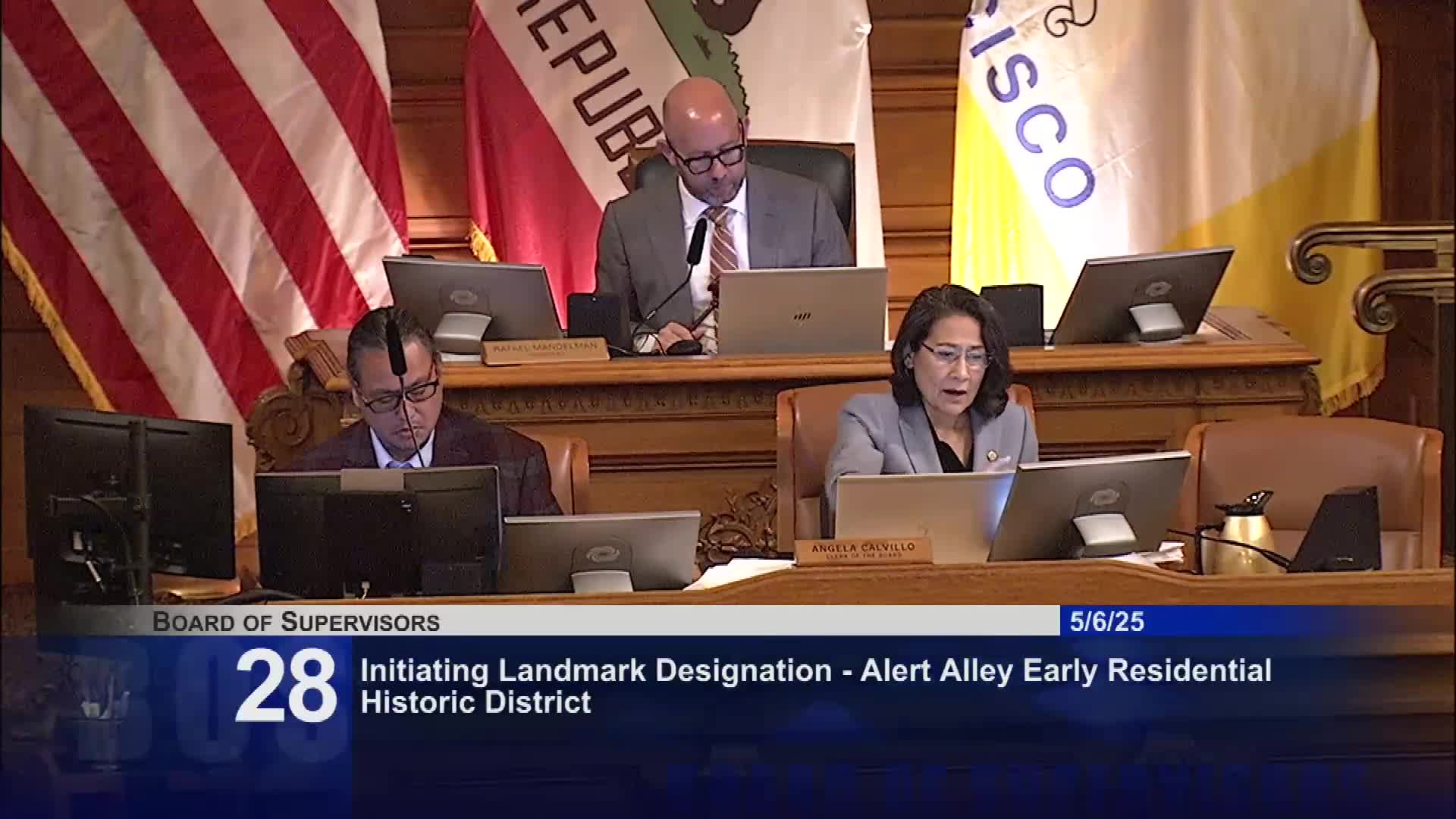
The San Francisco Board of Supervisors passed an ordinance on first reading on May 6 to amend the Administrative Code and establish long‑term remission from substance use disorders as the city's primary policy goal for treating individuals with substance use disorders.
Supervisor Dorsey, the ordinance’s sponsor, said the measure reflects a policy “North Star” for those seeking to live a self‑directed, healthy life free from illicit drug use, and thanked medical professionals and several unions and recovery groups for input and support. He framed the policy as part of a four‑pillars approach — prevention, treatment, harm reduction and enforcement — and acknowledged ongoing debate within the recovery and medical communities about terminology such as “recovery” versus “remission.”
Supervisor Fielder, a cosponsor, emphasized the need for an expansive, inclusive definition of recovery and reiterated that harm‑reduction services such as naloxone distribution should remain part of the city’s response to the overdose crisis.
The measure passed on first reading by an 11–0 roll call. Supervisors who spoke urged parallel work to expand treatment capacity and pursue a hearing on the broader four‑pillars framework. The ordinance’s operative provision is brief; supporters said the language is intended to align the city’s aspirations with clinical goals for patients and to guide future policy and program choices.