Get Full Government Meeting Transcripts, Videos, & Alerts Forever!
Get email alerts on the Data Centers Zoning topic
No spam. Unsubscribe anytime.
Board adopts first phase of data‑center zoning changes and a limited grandfathering resolution
Summary
After weeks of hearings and dozens of public comments, the Board of Supervisors approved a phase‑one zoning and comp‑plan amendment for data centers and adopted a grandfathering resolution with limits, drawing a 5–4 split on key provisions that will allow some pending applications to proceed while subjecting others to further review.
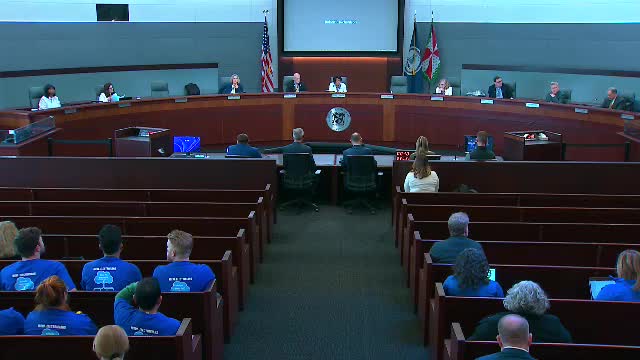
The Loudoun County Board of Supervisors voted on March 18 to adopt the first phase of comprehensive plan and zoning changes for data centers and to enact a limited grandfathering resolution that will allow some active applications to proceed under existing rules while excluding other pending administrative applications from automatic grandfathering.
The items included amendments to the 2019 Comprehensive Plan place types and revisions to the zoning ordinance. The board’s package altered how certain place types are treated and established a grandfathering rule that applies to applications officially accepted by a specified date.
Public commenters from across the business, labor and civic spectrum strongly advocated opposing positions during the March 18 meeting. Supporters — including the Loudoun County Chamber of Commerce, major data‑center operators, trade groups and unions — urged adoption and asked the board to grandfather in administrative and legislative applications accepted by February 12, 2025. Chamber, business and union speakers argued that investments and jobs depend on regulatory predictability and that modest changes should not trigger a lengthy special‑exception process.
Opponents — including residents and community groups — contended the county must regain oversight and flexibility to limit new data centers, citing impacts that include transmission lines, substations, potential environmental effects and visual impacts. Several speakers urged the board to reject broad grandfathering for administrative (by‑right) applications so the board can review pending projects and limit additional growth.
After debate and a series of amendments, the board approved the CPAM/ZOAM phase‑one package but limited grandfathering for administrative applications by excluding those within 500 feet of an existing residential structure. The board also accepted language changes clarifying when a change to a legislative application would be considered a “substantial modification” and therefore not grandfathered.
Vote: The final vote to adopt CPAM/ZOAM Phase 1 and the amended grandfathering resolution passed 5–4. The board recorded four members opposing the grandfathering approach as adopted.
What this means: The approved changes introduce new standards and procedures and create a carve‑out for some pending applications to continue under existing rules, while forcing others to seek special exceptions or to reconfigure proposals to comply with the new 500‑foot separation requirement. Staff was instructed to proceed with the approved text and to carry forward further work in phase‑two for more detailed performance standards and transmission‑line planning.