Get Full Government Meeting Transcripts, Videos, & Alerts Forever!
Get email alerts on the Policy Student Conduct topic
No spam. Unsubscribe anytime.
Board reads updated cell‑phone rules for students to align with new state law; junior high restrictions tightened
Summary
The governing board read revised technology and student code of conduct policies that restrict student use of personal wireless devices during the school day and tighten junior high allowances, citing alignment with ARS 15‑120.05.
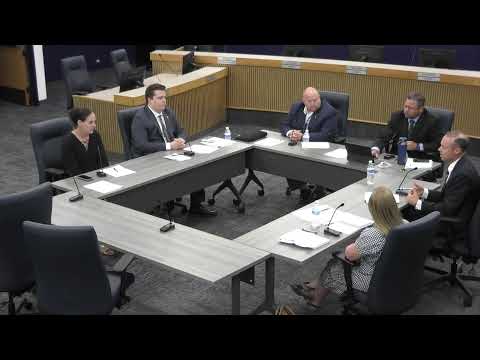
The Gilbert Public Schools governing board read two updated policies to align district rules on student wireless communication devices with recent state law and to standardize campus procedures.
Superintendent Doctor McCord explained on June 10 that policy 3‑403 (technology) and policy 5‑305 (student code of conduct) were updated to reflect the new statute and to set district procedures for allowable device use and teacher‑authorized educational uses. The board approved the read.
Major provisions and classroom practice
The draft procedures say the district will "restrict student use of district‑provided and personal wireless communication devices during the school day," and that students may use devices only as expressly authorized and for approved educational purposes. McCord said the policy specifically limits junior high students from using cell phones during passing periods and at lunch — a change from current junior high practice — while high school students (grades 9–12) may still use devices during passing periods and lunch unless a teacher or supervising staff requires otherwise. For elementary and junior high grades, the procedure characterizes devices as "away for the day" unless permitted for emergency, medical or teacher‑authorized classroom uses.
Why it matters: staff said the change is intended to reduce classroom and campus distractions, protect student privacy and ensure compliance with state law (the superintendent referenced ARS 15‑120.05 as the statutory framework). The district will publish procedures and allow schools to implement teacher‑authorized educational uses and medical/IEP exceptions.
Next steps
Because the board approved the read, the policy process will continue toward final adoption after the usual post‑read period. McCord invited trustees to provide input before a potential final vote; he also said the district will support staff and families with guidance during implementation.
Ending: Board members discussed student social interaction and implementation challenges; trustees said they would monitor campus feedback and allow the district to revise procedures following community input and initial rollouts.