Get Full Government Meeting Transcripts, Videos, & Alerts Forever!
Get email alerts on the Criminal Procedure topic
No spam. Unsubscribe anytime.
Court of Appeals hears state challenge after district court suppressed evidence in roadside stop
Summary
The Utah Court of Appeals heard argument on whether evidence seized after officers removed a man from his vehicle should have been suppressed. The state urged the court to apply the inevitable-discovery doctrine; the appellee said no crime had yet occurred and suppression was required to deter unlawful seizures.
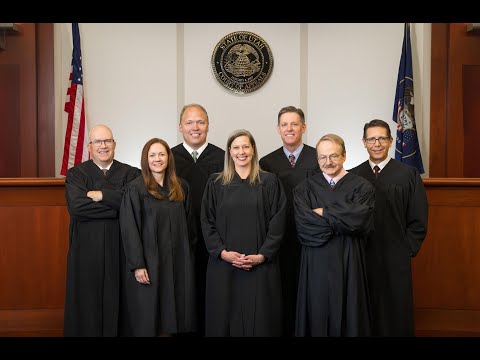
Presiding Judge Michelle Christensen Forrester and Judges Gregory Orme and David Mortensen heard argument in State of Utah v. Abonza over whether evidence gathered after officers removed the defendant from a vehicle should have been suppressed.
The dispute centers on a traffic stop on a rural road in Carbon County where officers observed signs of impairment — watery, glassy eyes; slurred speech; difficulty forming sentences; and the odor of an alcoholic beverage — while the defendant was inside a vehicle. The district court, Judge Don Torgerson found, suppressed the evidence and dismissed the case. The state appealed, arguing the evidence would have been inevitably discovered and urging remand to let the district court decide the doctrine’s applicability.
Why it matters: The court must decide whether evidence obtained after what the district court called an early arrest can be used. The outcome implicates the exclusionary rule’s deterrent purpose and how the inevitable-discovery doctrine applies when officers remove a person from a vehicle before a crime has, in the district court’s view, ripened.
State attorney Tristan Thomas argued the evidence should be admitted because the officers would have discovered the defendant’s impairment in the ordinary course. Thomas told the court that "the evidence was suppressed and Judge Torgerson then dismissed the entire case based off of that order of suppression," and urged that the matter be remanded so the district court can resolve inevitable-discovery questions left undecided below. He also stressed the public‑safety obligations of officers, saying officers "have a duty to protect the community."
Appellee counsel Wendy Brown, representing Hector Abanza, countered that the inevitable‑discovery doctrine does not apply where no crime had occurred at the time of the arrest. "This is not a slight error and this is precisely the type of case where the exclusionary rule will deter future police misconduct," Brown told the court, emphasizing that the arrest here was "the most severe form of a Fourth Amendment seizure" made "without probable cause, without a warrant, without an applicable warrant exception." She said the record shows the district court made a factual finding that, while the defendant sat in the car, he was not yet a danger to himself or others, and the state’s argument asks the court to speculate that a crime would have occurred later.
Counsel debated doctrinal analogies. The state relied on juvenile‑custody precedents where unlawfully obtained evidence was nevertheless found inevitable because an institutional search would have produced the same evidence later; Brown distinguished those cases by pointing to warrants or other concrete processes that would have led to discovery in those precedents, which she said are absent here. The defense pointed out that a page in the record (cited to the court) suppressed a statement that the defendant had been offered a ride home as hearsay, so the record cannot rely on that fact.
The judges asked several hypotheticals aimed at testing the line between reasonable suspicion and probable cause, and whether the state had identified a specific crime that would have been inevitably discovered rather than mere evidence of possible future wrongdoing. The court also questioned the speculative nature of the state’s position that a later, separate crime (for example public intoxication while walking in traffic) would necessarily have occurred.
The Court of Appeals took the matter under advisement and said it would issue a written decision. The judges did not announce a ruling from the bench.
Ending note: The court's written opinion will resolve whether the exclusionary rule or inevitable‑discovery doctrine controls when officers remove an apparently impaired person from a vehicle before a district court found a crime had occurred.