Get Full Government Meeting Transcripts, Videos, & Alerts Forever!
Get email alerts on the Wildfire Policy Study topic
No spam. Unsubscribe anytime.
Lawmakers back study bill to review Montana fire-suppression policy and costs
Summary
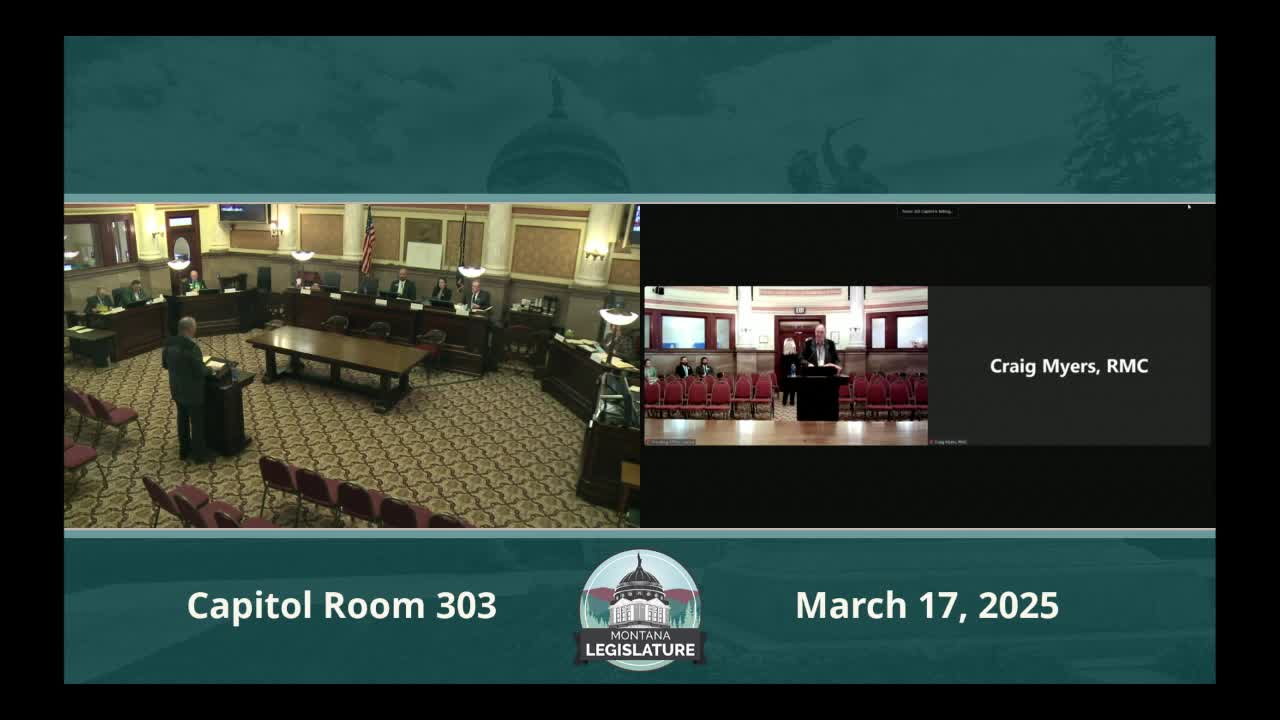
Representative Steve Gist told the Senate Natural Resources Committee that House Bill 70 would require an EQC study of Montana—s wildland fire suppression policies, methods and costs and provide $50,000 for related expenses.
Representative Steve Gist told the Senate Natural Resources Committee that House Bill 70, an Environmental Quality Council (EQC) bill, would require a study of state fire-suppression issues, methods and costs and provide an appropriation to support that work. "If you don't know the past, you don't want to make the same mistakes you had in the past," Gist said, framing the measure as a means to examine policy, partnerships and technical approaches.
Wyatt Frampton, deputy division administrator for Forestry and Trust Lands at the DNRC, said the department provides wildland fire protection on more than 60 million acres and that DNRC "prioritizes aggressive initial attack" and is willing to participate in the study. Montana Farm Bureau Federation and Montana Trout Unlimited representatives also testified in support, urging a multi-stakeholder approach to make efficient use of resources and improve response.
Committee members asked about study scope and spending. Senator Gillespie asked whether rangeland grazing practices would be considered; proponent testimony confirmed grazing would be among the options examined. Senator Flowers asked how the $50,000 figure would be used and whether the scope risks being predetermined by bill language; Representative Gist said the appropriation would cover likely outside costs such as field visits and that he would be open to language changes to make the study approach more neutral.
Gist closed by urging a broad, inclusive study involving stock growers, timber interests, federal partners and other stakeholders. No committee vote was recorded at the hearing.