Get Full Government Meeting Transcripts, Videos, & Alerts Forever!
Get email alerts on the Child Abuse Prevention topic
No spam. Unsubscribe anytime.
Ashe County proclaims April Child Abuse Prevention Month; advocates urge more prevention funding
Summary
The board approved a proclamation designating April as Child Abuse Prevention Month; presenters from Partnership of Ash and the Children's Advocacy Center described prevention efforts, local services and challenges in prosecuting child abuse cases.
Ashe County commissioners unanimously proclaimed April as Child Abuse Prevention Month on March 17 after a presentation by Partnership of Ash and the Children's Advocacy Center.
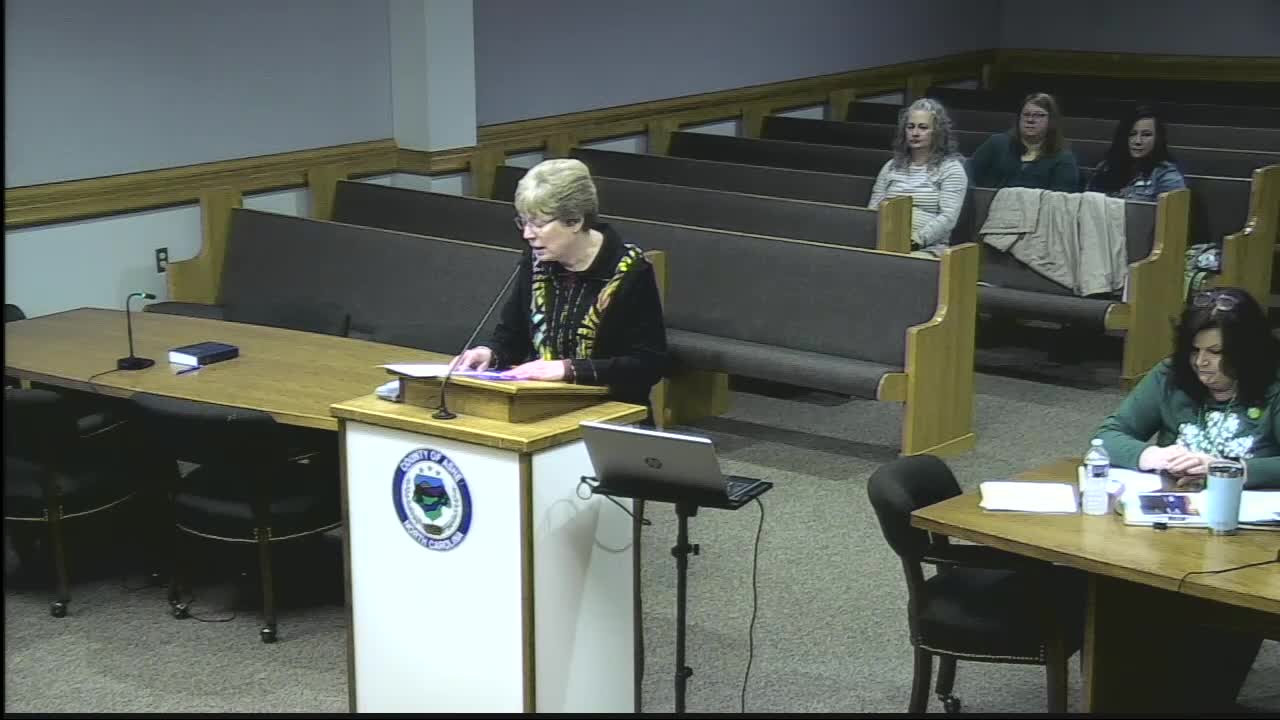
Laurie Hensley, who identified herself as representing Partnership of Ash, read the proclamation outlining the need to support positive childhood experiences, family economic supports and community‑based prevention programs. Hensley asked the board to designate April as Child Abuse Prevention Month; a commissioner moved the proclamation and the board approved it.
Megan Hudson, director of the Children's Advocacy Center in Ashe County, told commissioners there are “definite hiccups in prosecution” of child‑abuse cases in North Carolina and described one legal issue that complicates prosecutions: state law grants accused persons the right to face their accuser, which can lead to plea agreements rather than trials because prosecutors and advocates are reluctant to place children before alleged perpetrators. Hudson said the advocacy center provides services regardless of whether a case goes to court and noted that trauma‑focused cognitive behavioral therapy has been available in Ashe County for two years and is offered free to families served by the nonprofit.
Speakers also noted outreach plans: pinwheels and blue‑ribbon signage will be displayed, and the organizations encouraged residents to wear blue on April 4 as a visible sign of support for prevention. One presenter cited a funding statistic noted in the proclamation that, as written, for every $10 spent only $1.50 goes to prevention; presenters urged citizens to raise awareness with representatives to shift more resources toward prevention.
Commissioners thanked the presenters and acknowledged county support for the local advocacy center, which leases space from the county for $1 and provides counseling and family‑support services locally.