Get Full Government Meeting Transcripts, Videos, & Alerts Forever!
Get email alerts on the Human Tissue Sale Ban topic
No spam. Unsubscribe anytime.
Panel hears bill to ban sale or purchase of human bodies, including fetal tissue; universities, biotech ask clarifying amendments
Summary
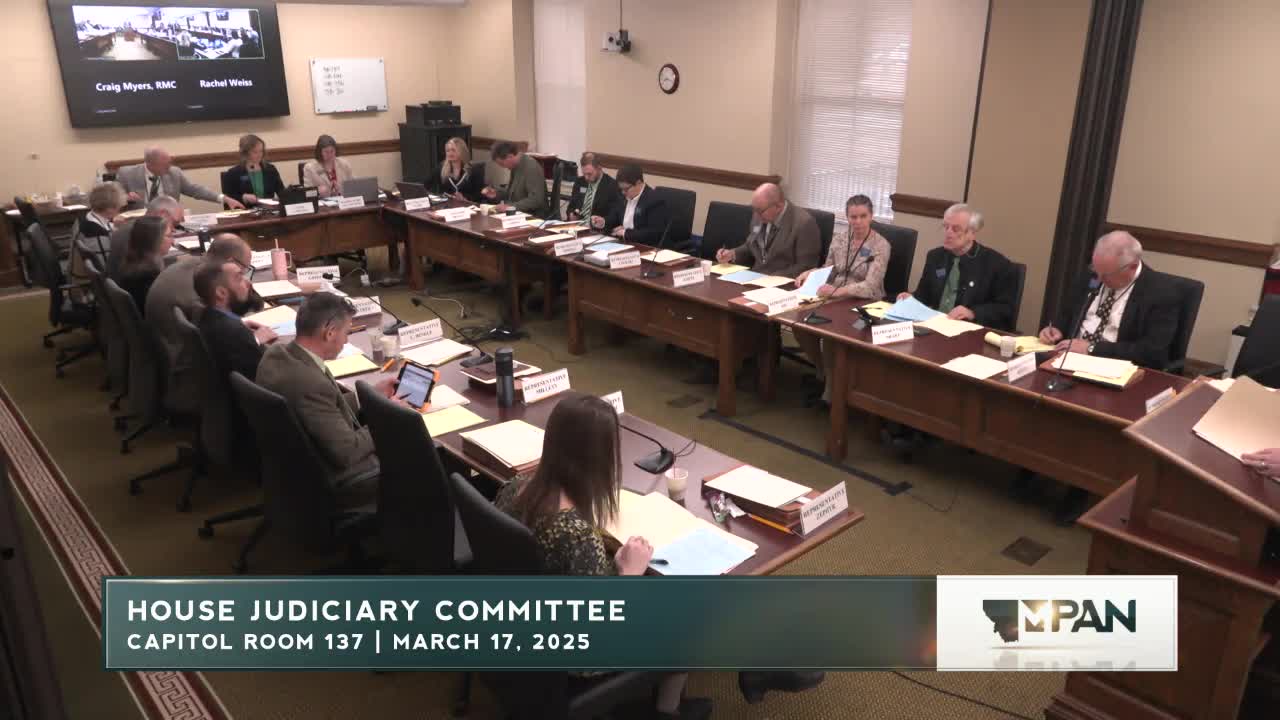
Senate Bill 154 would ban sale or purchase of whole human bodies and human fetal tissue; witnesses for and against the bill told the House Judiciary Committee the sponsor's intent is to prevent commercial markets for fetal remains while opponents sought exemptions for medical education and established lab cell lines.
Senate Bill 154, sponsored in committee by Senator Daniel Emmerich, would prohibit the sale or purchase of whole human bodies and human fetal tissue and amend definitions in the Anatomical Gift Act.
Supporters framed the bill as closing a perceived legal loophole that could permit commerce in fetal tissue. Derek Oestreicher, chief legal counsel for the Montana Family Foundation, told the committee that federal law allows reimbursement for procurement or storage that could function as a loophole and said, "The remains of an unborn child should not be treated as a commodity to be bought and sold." Other proponents, including the Montana Medical Freedom Alliance and Montanans for Life, described national reporting and undercover videos alleging payments and called for state prohibition.
Several witnesses cited specific invoices and payments. Sharon Neeson referred to records she said were released to Judicial Watch showing the National Institutes of Health paid at least $18,100 between December 2016 and August 2018 to a California firm, Advanced Bioscience Resources, for fetal livers and thymuses; she said an individual tissue price in the records was $680, rising to $750 in 2018. Robin Sertell cited federal contracts she said totaled $2.7 million and referenced undercover reporting alleging prices for fetal organs.
Opponents and informational witnesses urged refinement to avoid unintended consequences. Quinn Leighton of Planned Parenthood Advocates of Montana opposed the bill; Liz Whiting of Touro College of Osteopathic Medicine and Joe Thiel, deputy commissioner of higher education for the Montana University System, said the draft could impede legitimate cadaver donations and academic anatomical training and asked for a small amendment to protect donated whole bodies used for medical education. Brian Warren of the Biotechnology Innovation Organization (BIO) requested an amendment clarifying that "human fetal tissue" does not include established laboratory cell lines that have been cultured for decades.
Emmerich said the bill does not criminalize use of existing cell lines and argued it would only bar sale. Committee members heard informational testimony from Life Center Northwest about organ and tissue recovery and asked sponsors and opponents questions about transport, preparation costs and how amendments could be drafted. The committee held the hearing; no committee vote was recorded during the session.