Get Full Government Meeting Transcripts, Videos, & Alerts Forever!
Get email alerts on the Occupational Licensing Private Security topic
No spam. Unsubscribe anytime.
Committee hears bill to loosen employer requirement in private security licensing; industry raises training and liability concerns
Summary
Senate Bill 198 would remove a requirement that private security guards be employed by a private security firm to obtain licensing. Supporters said the change eliminates a "competitor's veto," while security companies and associations raised concerns about training, background checks, oversight and liability.
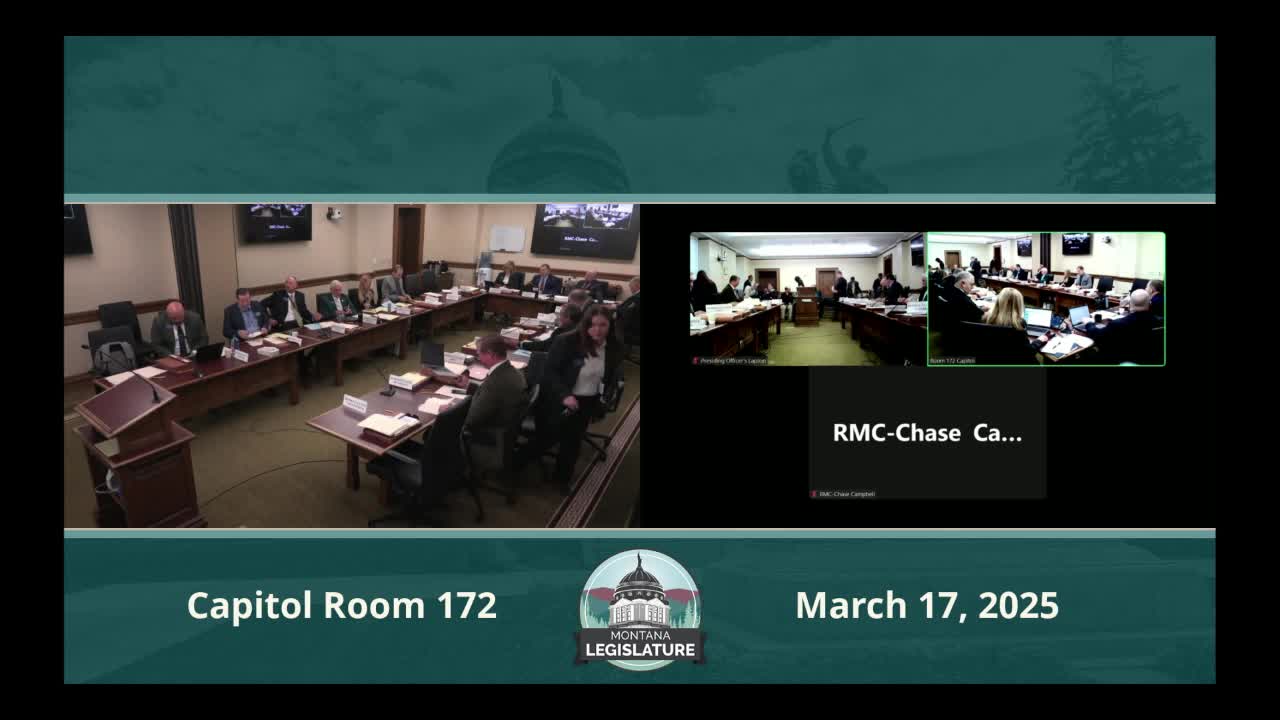
Senator Jeremy Trebis introduced Senate Bill 198 to the House Business and Labor Committee on March 17, explaining the bill would revise private security occupation laws by removing the requirement that a person seeking a private security guard license must be employed by a private security firm.
Trebis told the committee the change is intended to remove what he called a "competitor's veto," where someone unable to secure employment with an existing firm cannot become a licensed guard. He said the bill preserves training and complaint-reporting requirements and is not intended to eliminate background checks or core licensing safeguards.
Why it matters: nut graf Opponents from Montana security firms, trade groups and the Department of Labor said the proposal could erode oversight and consumer protections. They urged clarifying language on training access, background checks for firearms endorsements, oversight of independent licensees and liability insurance requirements.
Opposition testimony Sean Belobradic, identified himself as a security industry practitioner and raised concerns about printing errors in the bill draft that could leave prior requirements ambiguous. Joseph Steele, who runs a security business, warned that removing employer-based licensing would create liability and training gaps and could disadvantage Montana firms by enabling out-of-state or unlicensed providers.
Morgan Ditto, vice president and CFO of Sundown Security, outlined three primary concerns: (1) training requirements rely on employers to provide instruction and the bill does not provide an alternative pathway for applicants who would no longer be attached to an employer; (2) oversight and accountability could be weakened if firms no longer act as gatekeepers; and (3) consumer protections need clarity if individuals are licensed independently.
Kevin Bragg, Bureau Chief for Professional Licensing at the Montana Department of Labor and Industry, testified the bill as printed does not change background check requirements and that current law requires background checks for all licensees; firearm endorsements trigger a separate background check. Bragg said agency rulemaking currently sets liability insurance levels, describing a rule in practice around $500,000 per occurrence and noting the department can enforce compliance under existing statutes.
Committee questions and technical issues Members questioned whether the bill would in practice change fingerprinting or background requirements. Committee staff and the department pointed to printing/formatting issues in the displayed bill copy, and staff said certain changes that had been proposed were later struck and that a corrected printed bill would be distributed.
Industry representatives said the licensing process can take more than a month, which they said leads out-of-state productions or contractors to bring in temporary personnel; opponents argued the bill would not solve that staffing delay and could make it harder for licensed Montana companies to compete. Security firms also described regular, additional training they provide beyond the statutory minimum, including monthly sessions and firearms training several times a year.
What the bill would and would not do Sponsor Trebis said the bill does not remove continuing education, complaint processes, or core licensing requirements. Several opponents sought explicit assurances the bill would retain fingerprinting, firearms background checks and minimum training topic coverage. The Department of Labor said those requirements remain but said it would provide precise statutory citations on background-check authority.
Next steps Committee staff indicated they would reissue corrected bill copies showing which language is stricken and which is added. The transcript does not include final committee action on SB 198.
Ending The hearing left unresolved questions about training delivery, oversight of independent licensees and insurance requirements; industry witnesses urged the committee to reject or amend the bill to preserve consumer protections and consistent training standards.