Get Full Government Meeting Transcripts, Videos, & Alerts Forever!
Get email alerts on the Construction Contractors topic
No spam. Unsubscribe anytime.
Bill would give DLI authority to discipline construction contractors; sponsors aim to curb 'storm‑chasing' bad actors
Summary
House Bill 239 would move construction‑contractor registration into Title 37, define unprofessional conduct and give the Department of Labor and Industry authority to investigate, suspend and revoke contractor registrations to protect consumers from fraud and bad actors.
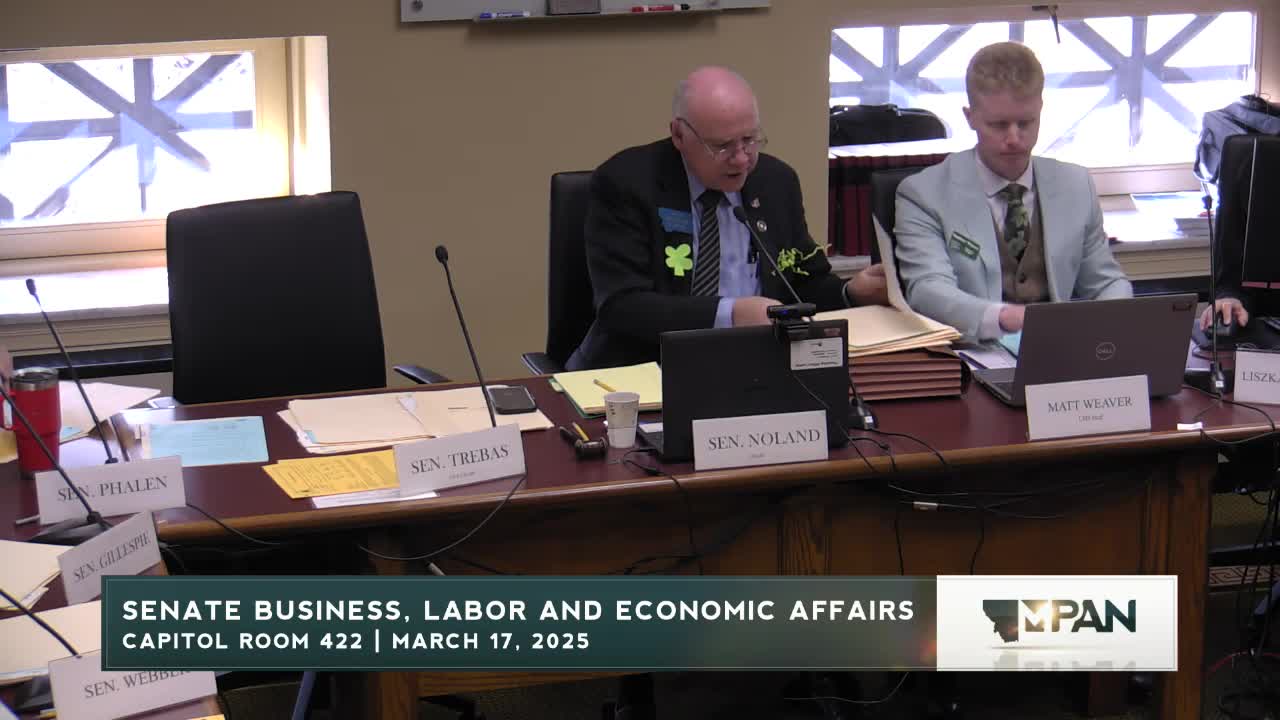
Rep. Teal opened the committee hearing on House Bill 239 by describing widespread consumer complaints of bad actors — including contracting firms that take deposits, perform little or no work, and then leave homeowners unpaid and exposed. He said the current contractor‑registration statute requires registration and workers’ compensation verification but offers the department little enforcement authority when consumers are harmed.
The Department of Labor and Industry staff said HB 239 moves construction contractor registration into Title 37 occupational licensing and inserts a definition of unprofessional conduct that focuses on fraud, misrepresentation and other conduct that harms the public. DLI counsel said the bill is not intended to police craftsmanship or workmanship; rather, the department would act to stop repeat fraud and misrepresentation so that a bad actor who bilks one homeowner cannot move on to the next job.
Proponents included the Montana Contractors Association, Montana State Fund, Montana AFL‑CIO and multiple roofing and remodeling business representatives. Testimony described homeowner stories of contractors taking deposits and abandoning projects; witnesses said discipline, debarment from public contracting and monetary fines are tools to stop ongoing harm.
Opponents were not recorded for this bill at the hearing. Committee members asked about cross‑jurisdiction issues (contractors from out‑of‑state who later become licensed here after alleged misconduct elsewhere), resources for enforcement, and whether the statute creates adequate notice and procedural protections. DLI witnesses said the bill includes existing statutory exceptions for licensed trades that are already regulated elsewhere (for example, electricians) and for independent‑contractor exemptions; it does not change those cross‑references but makes enforcement authority explicit. Sponsors urged a do‑pass recommendation so DLI can respond to consumer complaints more effectively; no formal committee vote was recorded during the hearing.