Get Full Government Meeting Transcripts, Videos, & Alerts Forever!
Get email alerts on the Actual Innocence Reform topic
No spam. Unsubscribe anytime.
Committee deadlocks on 'actual innocence' bill after long debate over process and safeguards
Summary
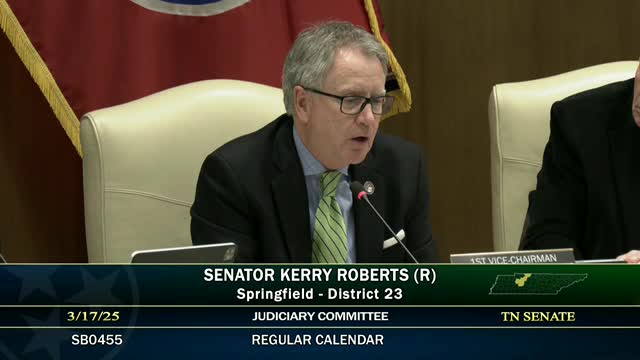
Senate Bill 256, which would create a single post-conviction vehicle for new evidence of innocence (including cases resolved by guilty plea), drew extensive testimony from the Tennessee Innocence Project and opposition from the District Attorneys General Conference. The committee split and the bill remained in committee.
Senate Bill 256, a proposal to create a single post-conviction procedure for new evidence proving actual innocence, failed to advance from the Senate Judiciary Committee after a lengthy hearing that included emotional testimony from an exoneree and legal debate over process safeguards.
The bill, as amended, would consolidate existing paths for presenting newly discovered evidence (scientific and non-scientific) into a single petition allowing a court to consider claims that a convicted person is actually innocent. The legislation would also close a gap for persons who entered guilty pleas and later acquired non-scientific evidence of innocence (for example, a video or eyewitness evidence excluding the defendant). Additionally, the bill would allow district attorneys to initiate innocence petitions when they encounter evidence suggesting a wrongful conviction.
The Tennessee Innocence Project and exoneree Scott Minton testified in favor. Minton described serving 31 years in prison before DNA testing and representation led to his release. Jason Gishner, executive director of the Tennessee Innocence Project, said Tennessee has had 36 known exonerations and the state's nine exonerations through the project averaged more than 26 years served. He said current procedures can leave innocent people without a legal vehicle to pursue exoneration when they entered guilty pleas and pointed to the public-cost implications of keeping innocent people incarcerated.
The Tennessee District Attorneys General Conference opposed the bill in its present form, arguing it would create a third procedural vehicle in addition to post-conviction motions (for scientific evidence) and the writ of error coram nobis (for non-scientific evidence), and would remove procedural safeguards currently required by coram nobis (for example, reasonable diligence requirements and judicial standards for accepting claims). The DAs said those guardrails prevent frivolous litigation and preserve finality for most convictions; they told the committee they had offered a compromise that would permit a prosecutor-initiated plea-centered mechanism but the Innocence Project had rejected it.
Administrative Office of the Courts staff said the bill's principal effect would be to give defendants who pleaded guilty a route to a post-conviction procedure that currently does not exist for non-scientific evidence; staff highlighted the difference in available remedies depending on whether a conviction followed a plea or a trial. Senators pressed both sides about whether prosecutors already have tools (ethics rule 3.8 and local DA review units) to address wrongful convictions and whether the bill's lack of diligence or timing requirements would overwhelm trial courts.
After extended testimony and questions, the committee voted but failed to advance the bill: roll call showed four ayes and four noes. The chair announced the bill stays in committee.
Why it matters: Supporters described the bill as a targeted fix for rare but serious miscarriages of justice that can leave innocent people incarcerated for decades. Opponents argued the proposal removes important procedural checks and could generate a wave of post-conviction litigation without the diligence and standards currently required.
The bill remains in Judiciary for further negotiation.