Get Full Government Meeting Transcripts, Videos, & Alerts Forever!
Get email alerts on the Consumer Protection topic
No spam. Unsubscribe anytime.
Senate concurs in bill to regulate pet insurance after debate on cost impacts
Summary
The Senate concurred in House Bill 78, which establishes a regulatory framework for pet insurance in Montana. Supporters described consumer protections and transparency measures; several senators warned the legislation could raise veterinary costs for uninsured pet owners.
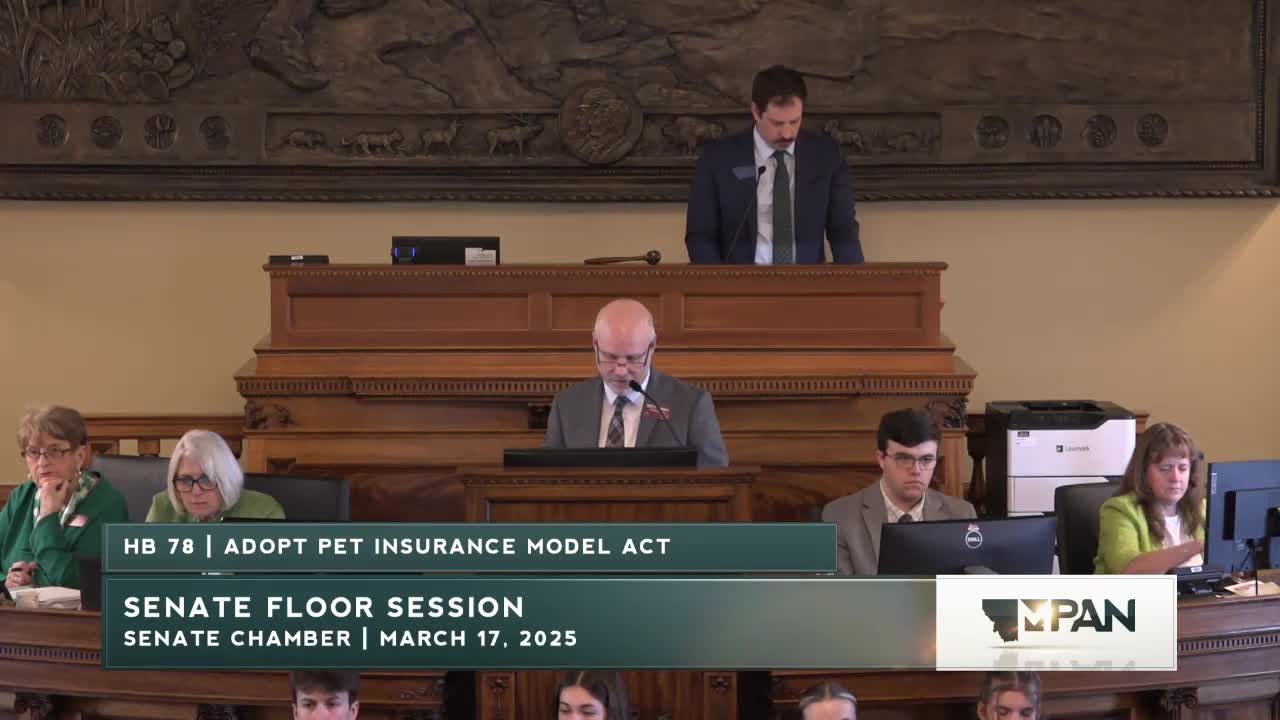
The Montana Senate on March 17 concurred in House Bill 78, a measure that creates a regulatory framework for pet insurance in the state and sets disclosure, policy, wellness-program and training requirements for insurers.
Sponsor Senator Hunter described the bill as a consumer-protection measure that aims to bring transparency and basic safeguards to one of the fastest-growing segments of the insurance market.
Why it matters: Proponents said the bill will protect consumers from misleading policy terms and ensure insurers meet training and disclosure requirements. Opponents warned that insurance commonly raises billing rates at providers and could increase the cost of veterinary care for uninsured pet owners.
On the floor, Senator Hunter said the bill’s “key objectives … are transparency to ensure consumers have a clear understanding of what pet insurance covers and excludes” and to introduce safeguards against misleading practices.
Opponents argued the law could produce unintended price increases at veterinary clinics. Senator Emmerich warned that insurance has driven up costs in human health care and predicted a similar effect for veterinary services. Senator McGillivray said he expected higher prices and urged a no vote.
Questions from other senators led the sponsor to note that the bill excludes horses from the definition of pet and that the auditor’s office would have authority to help consumers in disputes. Senator Mansello and others asked whether existing market practices made the law unnecessary; supporters replied the statute clarifies consumer protections and gives the state insurance auditor enforcement authority.
Action: The Senate concurred in House Bill 78 on second reading by a recorded vote of 29 ayes and 21 nays.
What’s next: With second-reading concurrence, the bill advances to later stages of the legislative process; implementation details — including any rulemaking by the state auditor — will be defined after enactment.