Get Full Government Meeting Transcripts, Videos, & Alerts Forever!
Get email alerts on the Electrician License Access topic
No spam. Unsubscribe anytime.
Lawmakers consider restricting who can demand electricians show licenses at job sites
Summary
House Bill 206 would limit which individuals may request electricians to present licenses on job sites, narrowing currently broad rights to check credentials and aiming to reduce alleged harassment and liability risks on construction sites while preserving inspector access.
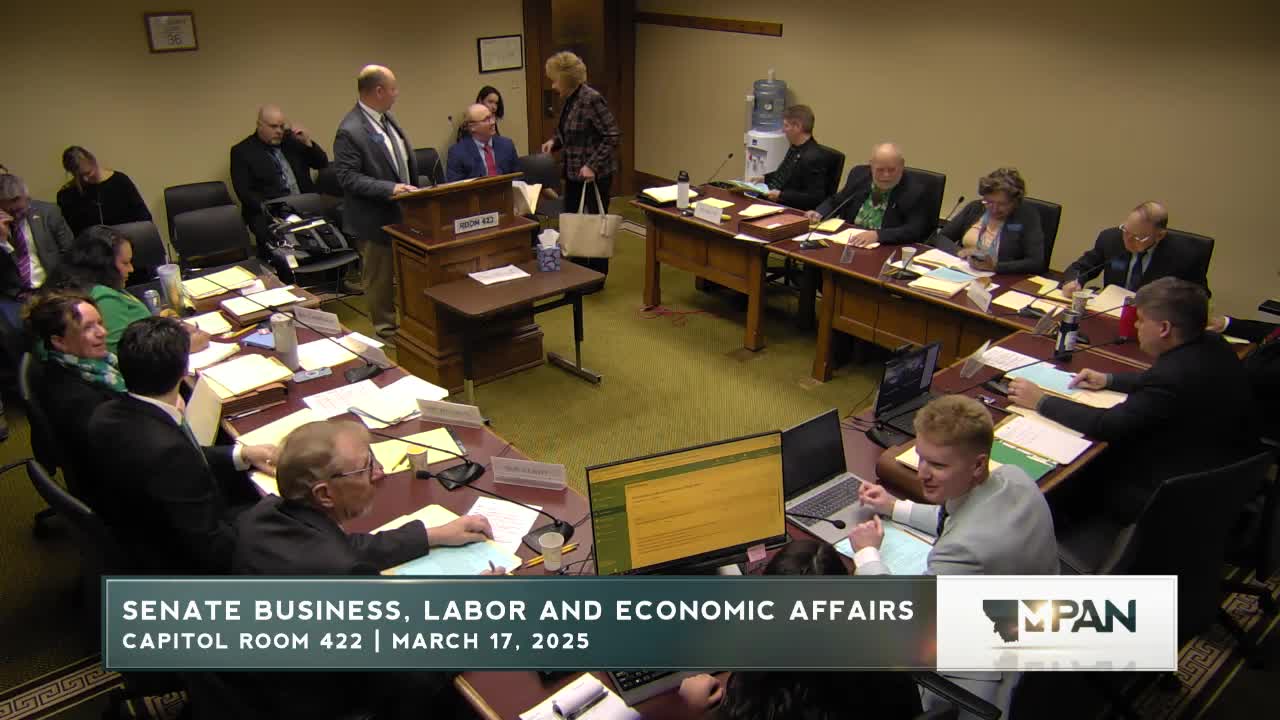
Rep. Mike Vinton presented House Bill 206 to the Senate Business and Labor Committee as a targeted measure to reduce what electricians and contractors say are harassment and safety risks when unauthorized people enter job sites to demand licensing details.
Under current Montana law, witnesses testified, unions, unrelated electricians and private parties can enter a construction site to ask workers to produce their electrical licenses. HB 206 would restrict that authority to those professionally responsible for the job site, state and local inspectors, or electricians who are working on the same job site. Sponsor Vinton said the change is intended to protect job‑site safety, contractor liability and private‑property rights while preserving legitimate inspection authority.
Multiple electricians and trade groups supported the bill, describing instances they called harassment or “surveillance” and telling the committee that unauthorized people sometimes repeatedly visit private job sites, disrupting work and exposing owners and contractors to liability and safety risks. Gerald Nolan, Derek Hedalen and Steven Harness, representing contractors and the Montana Independent Electrical Contractors (Montana IEC), described cases in which they said outside individuals repeatedly checked licenses and interfered with work.
Labor representatives, including Amanda Frickle from the Montana AFL‑CIO, opposed narrowing the right without an amendment. After negotiations, proponents and the AFL‑CIO worked on an amendment to preserve the ability of a licensed electrician working on the same job site to request another electrician’s credentials. Amanda Frickle told senators that keeping the amendment is important for worker safety because electricians who are working side by side need to verify competency and licensing.
Committee questions focused on how often alleged harassment occurs, how local inspection capacity would be affected and whether homeowners would retain the practical ability to verify licenses for work at their residences. Department of Labor and Industry (DLI) staff said the department has 11 full‑time electrical inspectors statewide and 40 certified local jurisdictions; 15 of those jurisdictions have at least one electrical inspector. Proponents said the bill also asks the department to increase participation by local inspectors and training for them to check licenses during routine inspections.
Sponsor Vinton and supporters said the bill would not change the department’s inspection powers and emphasized that complaints about unlicensed practice can still be filed with DLI. The committee concluded the hearing with proponents urging a do‑pass recommendation; opponents urged keeping the ability of outside parties to initiate immediate job‑site checks without contacting DLI first. No formal vote occurred at the hearing.