Get Full Government Meeting Transcripts, Videos, & Alerts Forever!
Get email alerts on the Water Reuse topic
No spam. Unsubscribe anytime.
House amends aquifer recharge pilot to add notices but rejects additional plain-language amendment
Summary
Delegates debated a transparency amendment for a pilot program to inject treated water into an aquifer in Anne Arundel County; the House rejected a plain-language notification amendment but members pressed for clarity on MDE testing and which wells would be notified.
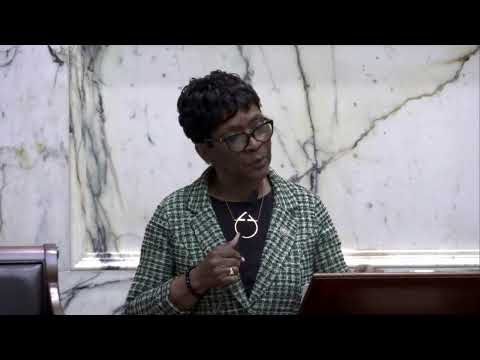
House Bill 1296, establishing an aquifer recharge pilot program in Anne Arundel County, was debated on the floor after a delegate offered an amendment to require plain-language public notice about a pilot that would inject treated water into an aquifer.
The amendment's sponsor said the change would require county websites, newsletters and electronic notices to explain in plain language what the pilot involves, citing past local controversy over unrelated projects and national examples such as Flint, Michigan. The floor leader and committee members said the bill, as amended in committee and by MDE-requested language, already contains notification and reporting requirements; the committee considered the proposed plain-language amendment redundant.
Questions raised and committee response - A delegate asked whether MDE's additional testing and permitting requirements for projects that introduce surface water influence would extend to nearby public water systems and what testing MDE would impose on systems that become subject to the "influence of surface water." The floor leader said the reprint includes additional testing criteria prior to injection, but that the bill is silent on whether MDE will impose broader system-level testing on neighboring public systems. - The floor leader said the reprint requires notice to every well served by the aquifer within a two-hour driving radius; the sponsor sought stronger plain-language requirements but the amendment failed on a roll call (the clerk reported 99 votes in the negative for the plain-language amendment). - Committee and staff described the pilot's treatment process as reverse osmosis; the floor leader said the treated water would be considered potable after reverse osmosis and that MDE would have permitting and revocation authority.
Formal action - Amendment (plain-language notice) moved by delegate (sponsor) to add plain-language outreach requirements to county communications about the pilot. - Outcome: amendment failed on roll call (clerk recorded 99 votes in the negative). - The bill's other committee-requested notification and MDE oversight language remained in the reprint; the bill was ordered printed for third reading.
Ending Delegates pressed for clarity about testing and notice; the committee reprint includes additional permitting and notification but the specific question of whether MDE will impose surface-water-influence testing requirements on neighboring public water systems was left open in the bill text.