Get Full Government Meeting Transcripts, Videos, & Alerts Forever!
Get email alerts on the Property‑outreach topic
No spam. Unsubscribe anytime.
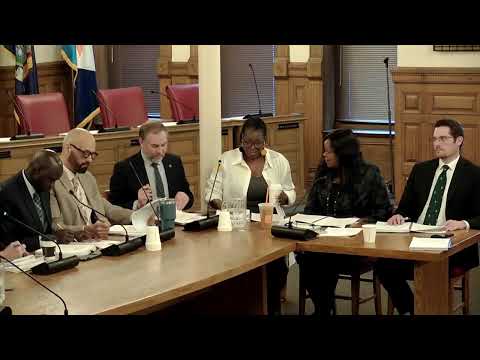
Syracuse City Council holds multiple agenda items, discusses outreach for 2106 Court Street and other properties
Summary
At a study session, Syracuse City Councilors marked dozens of agenda items as held, withdrawn or ready and discussed outreach strategies for properties including 2106 Court Street, where the owner is deceased and heirs are represented; a motion to adjourn was moved and seconded but no vote was recorded in the transcript.
Syracuse City Councilors reviewed agenda readiness for dozens of items at a study session and discussed outreach efforts for properties with unclear ownership, including item 52 (2106 Court Street), where staff said the owner is deceased and heirs have legal representation.
Councilors front‑loaded the meeting by marking many numbered agenda items as ready to move, held (tabled) or withdrawn ahead of the next regular meeting. Council leadership and staff repeatedly said some items would be held pending additional outreach or clarified as withdrawn by sponsors.
The discussion matters because several land‑use and housing‑related items depend on contacting owners or heirs before council action. Kamon Jordan, director of housing and neighborhood planning, told the council that for 2106 Court Street the city has contacted the occupant, learned the owner is deceased, and that heirs are working with an attorney on estate planning. “The owner is deceased, and I think one of the heirs are living in the property currently, and they do have a lawyer and they’re working through estate planning,” Jordan said.
Jordan also described the city’s outreach methods for properties on the agenda: sending letters in advance, calling numbers drawn from water records and code enforcement, and visiting properties between 9 a.m. and 5 p.m. “We are sending letters beforehand, we are calling numbers from water records, from code enforcement, and we’re visiting the property between 9 and 5,” Jordan said. He and councilors discussed additional steps staff use, including obituary searches and other research to locate relatives when direct contact fails.
Several councilors urged closer coordination between council members and staff to reach owners. One councilor suggested involving the city’s community ambassadors to help locate relatives or occupants. Jordan and councilors agreed that combining outreach tactics — door visits, mailed letters and networked community contacts — could reduce missed contacts and clarify whether properties are occupied or abandoned.
On agenda organization, the council identified specific item statuses during the session: item 8A (already tabled/held), items 10–14 (ready unless questions), items 15–20 (items 17 pending committee follow-up), item 19 (data emailed to councilors, marked ready), items 21–29 (ready), item 30 (held), item 36 (described as a local law requiring formal introduction), items 40–41 (41 ready, 40 pending until 1 p.m.), and items 42–73 (a mix of holds, withdrawals and ready items). Councilors and staff said several items were withdrawn by sponsors (examples listed during the session included items 48, 49, 50, 51, 57, 63, 64, 70, 72 and 73) and many items were explicitly held for further follow‑up (examples listed included 53–56, 59–62, 65–69 and 71).
Item 52 (2106 Court Street) was discussed in detail as an example of outreach complexity; Jordan said staff had sent a letter and were awaiting reply, then recommended moving the item forward two weeks to allow additional outreach. A councilor agreed: “Move it forward. Okay. Two weeks,” the councilor said. The council did not record a roll‑call vote on the item in the session transcript.
Near the end of the study session, a councilor asked for a motion to adjourn; a motion and a second were recorded but the transcript ends before the chair announced the result. The audio shows the motion was “So moved” and “Second,” with no vote recorded in the excerpt.
Councilors scheduled a separate meeting on local sidewalk projects and road reconstruction; staff and councilors said those discussions are separate from the items considered during the study session. Several councilors said they would confirm readiness for outstanding items by 1 p.m. on the day of the council meeting.
The session combined routine agenda housekeeping with substantive questions about how the city reaches property owners and heirs before taking enforcement or land‑use action. Staff and councilors emphasized continued outreach and coordination to ensure decisions reflect current ownership and occupancy information.