Get Full Government Meeting Transcripts, Videos, & Alerts Forever!
Get email alerts on the Infrastructure topic
No spam. Unsubscribe anytime.
Finney County accepts HVAC study and directs counselor to negotiate contract for system upgrades
Summary
After a county engineering review found multiple HVAC failures and electrical constraints across four county buildings, commissioners accepted a report from Integrated Consulting Engineers and authorized the county counselor to negotiate a contract to design and deliver corrective work.
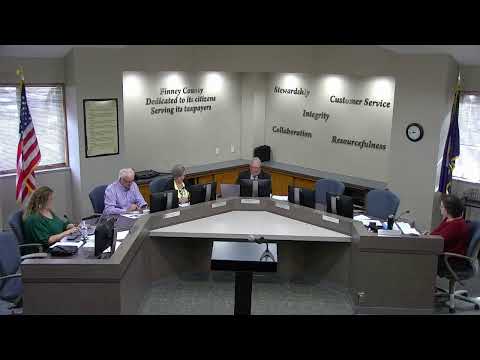
Finney County commissioners voted to accept an engineering evaluation of county HVAC systems and authorized the county counselor to begin negotiating a contract to design and install recommended repairs and upgrades.
The report from Integrated Consulting Engineers (ICE) covered four county facilities — the administration building, the courthouse, the county attorney's office and the public library — and concluded the buildings’ variable refrigerant flow (VRF) heating and cooling systems are undersized or mismatched to interior unit loads. ICE recommended replacing or upsizing outdoor and indoor units, upgrading electrical service in some buildings and pursuing a phased construction schedule. Commissioners moved and seconded the action and approved it by voice vote; the motion carried.
ICE said problems date to the 2018 renovation and are concentrated in the VRF equipment rather than the dedicated outdoor air systems (DOAS). Drew Rose, an electrical engineer with Integrated Consulting Engineers, summarized the company’s findings: at the Administration Building “the cooling load ... are only 75% of what you guys actually need,” and the library “was only providing 56% of the actual load.” The firm gave the county a consolidated corrective budget range of roughly $2.6 million to $2.8 million for all four buildings and recommended staging the work so two buildings could be bid to one contractor and two to another to speed completion.
The report included facility-level estimates and electrical implications: Administration Building corrective work was budgeted at about $625,000–$675,000 (including four new outdoor units and about 24 indoor unit replacements), the courthouse $975,000–$1.1 million (including a recommended electrical service upgrade), the county attorney’s building $260,000–$290,000, and the public library $775,000–$825,000 (including an electrical service upgrade). ICE also flagged a separate electrical-cubicle replacement for the administration building estimated at $80,000–$90,000 and a full-site generator in the $500,000–$600,000 range as optional items for the board to consider.
Rose also warned the county about an EPA phaseout schedule for the R-410A refrigerant used in current equipment: “As of 01/01/2026, we will as a country not be allowed to import any more HVAC equipment that utilizes R410A refrigerant,” he said, and added the county would have until 01/01/2027 to install equipment using that refrigerant. ICE advised the county that lead times for R-410A rooftop/VRF equipment were roughly 1.5–3 months and that delaying work could require purchasing newer-refrigerant systems that may not yet be widely available.
County staff and commissioners discussed phasing, financing and procurement options. ICE recommended two procurement approaches: contractors hold equipment after a design-bid process or the county directly purchases equipment from a manufacturer and then completes installation. Commissioners and staff discussed lease-purchase financing with the state’s Commerce Bank and the timing necessary to place orders well before the EPA import deadline. The board asked the county counselor and staff to prepare contract language and a project timeline and set a follow-up review for April 7 to consider the negotiated engineering/management contract and next steps.
The motion approved at the meeting directed the county counselor to negotiate a contract with ICE to proceed to design and procurement; commissioners emphasized minimizing business interruption during installation and prioritizing buildings based on public use and staff impact.
The county will return to the commission with a contract and a proposed phasing schedule at the next regular meeting so staff can pursue financing and order lead-time-sensitive equipment.