Get Full Government Meeting Transcripts, Videos, & Alerts Forever!
Get email alerts on the Health Freedom topic
No spam. Unsubscribe anytime.
Speakers at health-freedom event urge transparency at FDA, call for confirmation of Robert F. Kennedy Jr.
Summary
At a public gathering, broadcaster and homeopath Robert Scott and consumer-rights attorney Jonathan Emord urged greater transparency at health agencies, criticized pharmaceutical influence, and asked supporters to press senators to confirm Robert F. Kennedy Jr. for a federal health post.
Robert Scott, a longtime broadcaster and homeopath, used a public event to push for greater transparency in federal health agencies and to urge supporters to press their senators to back the confirmation of Robert F. Kennedy Jr. to a top health post.
Scott framed the gathering around what he called a “Make America Healthy Again” (MAHA) agenda, saying the effort seeks to end “America’s chronic disease epidemic” by demanding that agencies release underlying data and by reducing what he described as regulatory capture by industry. “We want basically that ability to replicate, review data, etcetera, and reverse America’s Chronic Disease Epidemic,” Scott said.
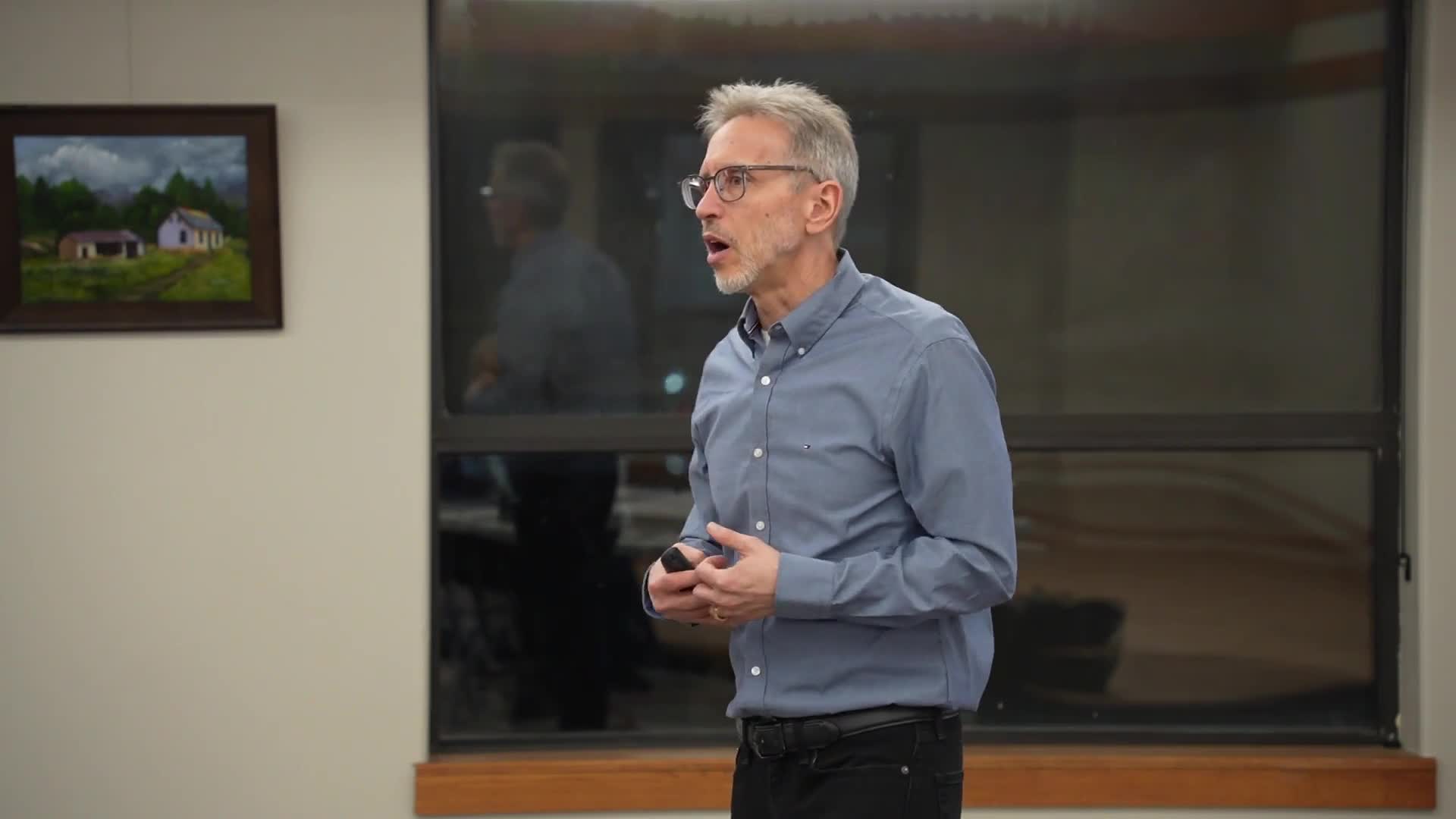
Jonathan Emord, introduced at the event as a long-time litigator on FDA matters, gave a prepared presentation that criticized the Food and Drug Administration’s relationship with the pharmaceutical industry and described several high-profile drug controversies. Emord said the agency had approved some drugs despite safety concerns, citing Vioxx as an example and telling the audience that thousands died and “over 100,000 people had heart attacks” linked to that product in the years after its approval. He also criticized recent approvals of Alzheimer’s drugs that he said showed safety signals in trials.
Speakers directed attendees to take civic action. Emord urged the crowd to contact senators to demand the confirmation of Kennedy, saying that a friendly administration at the Department of Health and Human Services (HHS) and the FDA would change litigation and regulatory outcomes. “Let your senator know, text, email, let them know that you support RFK,” he said.
In his remarks, Scott cited a study he said found that 42% of U.S. adults have nonalcoholic fatty liver disease (NAFLD), and he tied that statistic to broader arguments about diet, pharmaceutical dependence and rising health-care spending. He said HHS “is about $1.7 trillion” and described it as a large portion of federal spending as part of his argument for systemic change.
Both Scott and Emord advocated for allowing broader public discussion of nutritional supplements, homeopathic remedies and other nonpharmaceutical approaches. Scott described historical and legal episodes—including the 1994 Dietary Supplement Health and Education Act and the 1938 Food, Drug, and Cosmetic Act—to argue that regulatory choices had limited what manufacturers and practitioners could say about product benefits.
Speakers also raised concerns about U.S. foreign-aid funding. Scott said money from the U.S. Agency for International Development (USAID), he alleged, had been used to support groups such as the Center for Countering Digital Hate during COVID-era efforts to counter misinformation; he said that funding was used to influence media narratives. These claims were presented as part of a broader critique of what the speakers called “narrative control.”
The event included audience questions on topics ranging from homeopathy and supplement use to vaccines and school policy. Scott and Emord repeatedly characterized the current federal regulatory system as “captured” by industry and promoted transparency and litigation as tools to change it.
The event did not include any formal legislative action or votes. Organizers and speakers asked attendees to advocate directly to elected officials and to consider state-level strategies for “health freedom.”
What was said at the event reflects the speakers’ views and the evidence they cited; the claims about drug harms, disease prevalence and specific funding flows were presented as speaker-cited facts or as conclusions from studies or legal cases they referenced. The event concluded with a request that supporters contact senators about the Kennedy confirmation and with local referrals for practitioners and resources mentioned by the speakers.