Get Full Government Meeting Transcripts, Videos, & Alerts Forever!
Get email alerts on the Infrastructure topic
No spam. Unsubscribe anytime.
City staff outline multi-year street, utility and park projects in draft CIP
Summary
City of Victoria staff gave a multi-year update on construction progress and proposed additions to the capital improvement plan, showing 15 miles of proposed street work in fiscal 2025 and about 15.5 miles proposed for fiscal 2026, and describing utility projects, permitting constraints, and scheduling priorities for 2026–2028.
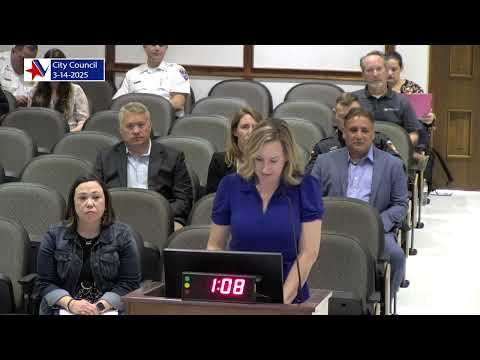
City staff presented a detailed update on the capital improvement plan and construction activity, telling the council where 2024 projects stand, what work staff plan for fiscal 2025–2028 and where the city may need to shift design and construction timing because of staffing, permitting or funding constraints.
Staff member David (identified in the meeting materials as the presenter) said 2024 construction remains under way in several subdivisions and projects and listed upcoming and proposed work in both streets and utilities. He reported work on Tanglewood subdivision Phase 1 is expected to finish in early November; College Park paving and drainage work will begin in April with curb-and-gutter replacement timed to allow road repairs during summer break at St. Joseph High School; and other sub‑projects such as Bridal Ridge Phase 3 and Vista Loma/La Vista sections should be completed in spring when hot‑mix paving is available.
For fiscal year 2025, David said the city proposes about 15 miles of street improvements. He described an awarded residential street maintenance contract and noted that proposals recently closed for the 2025 residential street maintenance project; staff expect to bring a contract recommendation to council at the April 1 meeting. David said borings and pavement thickness testing on Vine Street showed base and asphalt depths that make a hot‑mix overlay a viable cost-saving alternative to full reconstruction for portions of that corridor.
Staff also described water and sewer utility work scheduled or under design. Highlights included a Northeast water-line replacement that is pending a Union Pacific Railroad boring permit (staff said the permit review typically takes about six months after application), a Burrowsville Road reconstruction to concrete pavement to accommodate heavy vehicle traffic, and a Riverside Park boat ramp and kayak design under contract with anticipated grant funding for construction. David identified a proposed engineering design to replace a 16‑inch cast‑iron water line under parts of Commercial Street and told council staff want to bring that design forward earlier than previously scheduled because current staffing levels will not allow in‑house design for that scope.
David described a proposed fiscal‑year 2026 program that includes an estimated 15.5 miles of street improvements and anticipates engineering and right‑of‑way acquisition for Guy Grant Road and North Street Phase 3. He also listed possible utility projects including trenchless sanitary sewer rehabilitation and strategic waterline upsizing, and reiterated that larger outfall, concrete lining and roadside ditch work recommended by the storm drainage update will require significant funding.
Council members asked detailed questions about contractor workload, alleyways and trash pickup, and the possibility of reordering projects to create cost savings or to prioritize work in certain neighborhoods. Staff invited council members to submit specific street candidates for consideration and said staff plan to return in May with refined cost estimates and a finalized CIP for June action.
Staff noted several project constraints and schedule drivers: current staffing and design capacity, contractor availability and workload (staff named Clark Construction and CK Newberry as contractors awarded recent work), permit lead times such as a six‑month Union Pacific review, and the timeline for grants such as a Texas General Land Office (GLO) hazard mitigation process that staff described as unlikely to permit construction before 2026.
No council votes were recorded during the work session on the items described; staff presented the CIP update to solicit feedback and priorities for project sequencing and to collect council suggestions ahead of a May return presentation and June finalization.
Speakers included David (city staff lead on the CIP presentation), and council members and staff who asked clarifying questions about sequencing and alleyway access.