Get Full Government Meeting Transcripts, Videos, & Alerts Forever!
Get email alerts on the Early Childhood topic
No spam. Unsubscribe anytime.
Maryland agency to cap childcare scholarships, lower provider rates amid budget shortfall
Summary
The Maryland State Department of Education told a legislative subcommittee it will freeze new enrollments in the childcare scholarship program beginning May 1, 2025, and adopt lower provider reimbursement rates to keep the program within the FY26 budget amid rapid enrollment growth and an anticipated deficit.
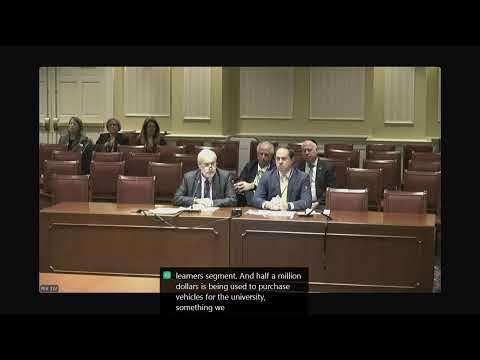
Natalie Andrade, a budget analyst with the Department of Legislative Services, told the Education, Business and Administration Subcommittee that the Maryland State Department of Education’s Division of Early Childhood faces a growing shortfall in the childcare scholarship program and a proposed enrollment cap beginning May 1, 2025.
The DLS fiscal 2026 analysis shows the Division of Early Childhood’s allowance declining by $4.0 million (0.5 percent) to $827.5 million, driven largely by reductions in federal one‑time funds and shifts in program support. DLS reported the childcare scholarship program served an average of 34,147 children per month in fiscal 2024 and that enrollment grew from 15,296 in January 2021 to 42,478 in December 2024 — a 178 percent increase.
DLS said the department notified the General Assembly on Jan. 31, 2025, that it will implement an enrollment freeze beginning May 1 and continuing through September 2025, manage the program at an approximate cap of 40,000 children, and admit new enrollees only as children leave the program. The analysis estimates a monthly attrition rate of 3.5 percent and an estimated total program cost of about $497 million under the cap.
Why this matters: the childcare scholarship program is a primary state subsidy for low‑income families to access licensed child care; rapid growth in participation, expiration of one‑time federal funds and higher program costs have produced a structural funding gap that DLS says requires cost containment measures unless additional funding is provided.
MSDE responded in the hearing. Carrie Wright, State Superintendent of Schools, said the department is committed to implementing the change with supports for providers and families and described several operational steps. “The department will implement multiple strategies including a comprehensive training,” Wright said, adding that new kindergarten readiness assessment training and other professional development will accompany program changes. Christian Tallor, deputy state superintendent for operations and finance, told the committee MSDE plans to reimburse childcare scholarship providers at the 60th percentile of the 2024 market rate survey beginning Sept. 1, 2025, and that the change should not affect families’ co‑payments.
DLS and MSDE provided specific budget details. DLS attributed the FY26 decrease in part to a $30.9 million reduction in general funds for the childcare scholarship program, an $11.6 million decrease tied to the conclusion of a federal Birth to 5 grant, a $4.3 million reduction in federal COVID relief funds and a $2.2 million decline from the end of mandated funding for the therapeutic childcare program. Those reductions were partially offset by a $37.8 million increase in the prekindergarten formula.
Advocates and providers urged caution. Beth Morrow, director of public policy at Maryland Family Network, said the program now serves a record number of children and urged lawmakers to sustain investments. “We do remain concerned that efforts to put a cap on enrollment will restrict families' access to quality childcare,” Morrow said. Chris Push, executive director of the Maryland State Child Care Association, and Ellie Comers of SEIU Local 500 warned that reduced reimbursement rates and administrative strain are driving some providers out of the scholarship program and that workforce investments — including a previously required childcare credential program — are essential.
DLS recommendations and other statutory issues: the analysis notes the fiscal 2026 allowance includes $269.6 million in Blueprint for Maryland’s Future‑mandated early childhood funding (about $236.0 million in special funds). DLS also recommended temporary modifications to statutory phase‑in and per‑pupil schedules to reduce near‑term fiscal pressure (including maintaining a 360 percent federal poverty guideline eligibility cap through FY2030 rather than expanding to 600 percent in FY2027). MSDE “respectfully disagrees” with those DLS recommendations and signaled support for the governor’s allowance.
DLS recommended committee narrative requesting quarterly reports on childcare scholarship enrollment, expenditures and waiting‑list status. MSDE said it can provide data on enrollments, expenditures and any waitlist status and that a childcare supply and demand study is under way and expected in early fall 2025.
What was decided or directed: MSDE has notified the legislature of an enrollment freeze and plans to implement lower provider reimbursement rates (60th percentile) beginning Sept. 1, 2025; MSDE also plans to manage a cap of roughly 40,000 children and implement a waitlist process. DLS requested quarterly reporting; the committee did not vote on statutory changes during the hearing.
Remaining questions and next steps: committee members asked for clarity on how many eligible but unserved children exist statewide (MSDE estimated it currently serves about 15 percent of eligible children and said it would provide further figures), the impact of lower reimbursement rates on provider participation and family co‑payments, and the timeline and monitoring for the new kindergarten readiness assessment. MSDE said the new KRA will begin in fall 2025 and that staff received training in 2024–25. DLS requested the department explain readiness, provider preparedness for the pre‑K sliding‑scale family share model, and to provide quarterly enrollment and expenditure data.
Ending note: committee members, advocates and providers expressed concern that the enrollment cap and lower reimbursement rates could reduce access and drive more providers from the program; MSDE and DLS signaled ongoing data collection and reporting to track implementation and impacts.