Get Full Government Meeting Transcripts, Videos, & Alerts Forever!
Get email alerts on the Prevailing Wage topic
No spam. Unsubscribe anytime.
Columbus council committee proposes prevailing-wage requirement for projects receiving $500,000 or more in city incentives
Summary
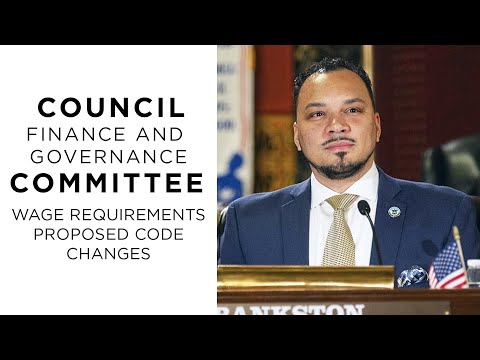
A vice chair of the Columbus City Council economic development committee (name not specified) on Tuesday outlined proposed legislation that would require private commercial or industrial construction or renovation projects receiving $500,000 or more in city financial support to pay Ohio prevailing wage rates and benefits.
A vice chair of the Columbus City Council economic development committee (name not specified) on Tuesday outlined proposed legislation that would require private commercial or industrial construction or renovation projects receiving $500,000 or more in city financial support to pay Ohio—s prevailing wage rates and benefits to laborers and mechanics working on those projects.
The proposal would also require recipients of those incentives to meet and confer with the City of Columbus Office of Diversity and Inclusion to discuss partnering with local workforce-development organizations and establishing goals for using small regional businesses during construction.
The legislation was presented during a committee hearing featuring questions from several council members and one public speaker, Dorsey Hager, executive secretary-treasurer of the Columbus and Central Ohio Building and Construction Trades Council, who testified in support of the measure. No final vote was recorded.
The proposal extends protections that already apply to city-owned construction projects, the committee presenter said, by covering private projects that receive substantial city support. "Workers on city owned projects are already provided prevailing wage protections, which includes retirement benefits, health benefits, and overtime," the presenter said. "When the city makes deep investments in private, commercial, and industrial, projects, I believe that that same standard should be adhered to on those projects as well."
Under the draft language described to the committee, the threshold is the amount of city investment only; projects receiving less than $500,000 in city support would be exempt. The presenter said the $500,000 figure was chosen after reviewing the last five years of local incentive awards and finding it to be a "middle ground" that typically corresponds to larger commercial and industrial projects that are million-dollar undertakings in total cost.
The ordinance as described would exclude projects using community reinvestment tax abatements for affordable housing or tax-increment financing (TIF) agreements, which the presenter said would exempt nearly all incentivized housing construction from the requirement. The draft assigns enforcement responsibility to the city's Labor Commission, which would accept complaints and conduct inspections; the presenter said the commission could recommend debarment from city contracts for up to three years if it found a violation. Covered entities could appeal to the Franklin County Court of Common Pleas, according to the presenter.
The companion measure described would require recipients of $500,000 or more in city incentives to meet with the Office of Diversity and Inclusion to discuss hiring goals for small regional businesses and advance coordination with workforce-development agencies so training can be timed to job opportunities. The presenter cited a local roundtable hosted during Black History Month and said workforce agencies are sometimes contacted months after project announcements, limiting their ability to stand up timely training programs.
Dorsey Hager, who represents 22 local unions and about 18,000 regional tradespeople, told the committee that the measure would raise standards for workers and help prevent "lowballing bids that are based on underpaid labor." "Requiring private entities who receive over $500,000 from the city in support of a construction or renovation project to pay prevailing wage on that project will ensure that workers on that project are paid the local industry standard wages and benefits and rates set by the state of Ohio," Hager said.
Council members questioned several implementation details. Council member Weich asked how the $500,000 threshold was selected; the presenter replied it was based on a review of past incentive levels and is intended to capture larger projects without applying to smaller awards. Council member Beatty asked why the requirement should be mandatory rather than negotiated on a case-by-case basis; the presenter said a standing requirement would provide certainty and reduce the gray areas that can arise during deal negotiations.
Members also raised potential loopholes and unintended consequences. Committee members asked whether soft costs (for example, architects or engineering fees) or reimbursements for work done before a grant is awarded could be structured to avoid triggering the requirement, and whether phased projects that receive city funds for only one phase would be covered in subsequent phases. The presenter acknowledged those concerns and said the draft attempts to mirror federal guidance (for example, the Davis-Bacon framework) on related issues and that the city would need to work with the Department of Development and legal counsel to address subdivisions of projects, tracking of soft-cost allocations, and timing of reimbursements.
Council members asked about competitiveness with surrounding jurisdictions; the presenter said some Ohio programs, including JobsOhio, have living-wage-type requirements and that several local authorities already impose wage standards on their projects. The presenter also said the City would pursue stakeholder engagement and additional public hearings before finalizing the ordinance.
No vote was taken at the hearing. The presenter said the committee expects further stakeholder engagement and at least one more public hearing before the legislation is brought forward for formal council action. "It's my goal that we'd like to see some movement on this legislation like this year," the presenter said.
The hearing included discussion of administrative implementation and education: the Labor Commission would handle enforcement and could provide outreach to help smaller contractors comply, and the Office of Diversity and Inclusion would help connect contractors and workforce providers. The presenter gave a contact phone number and an email address for members of the public to submit comments or questions about the draft.
The committee adjourned with the matter pending further hearings and stakeholder work.