
Teaching hospitals warn cuts and match requirements could shrink family-medicine residency slots
Get AI-powered insights, summaries, and transcripts
Sign Up Free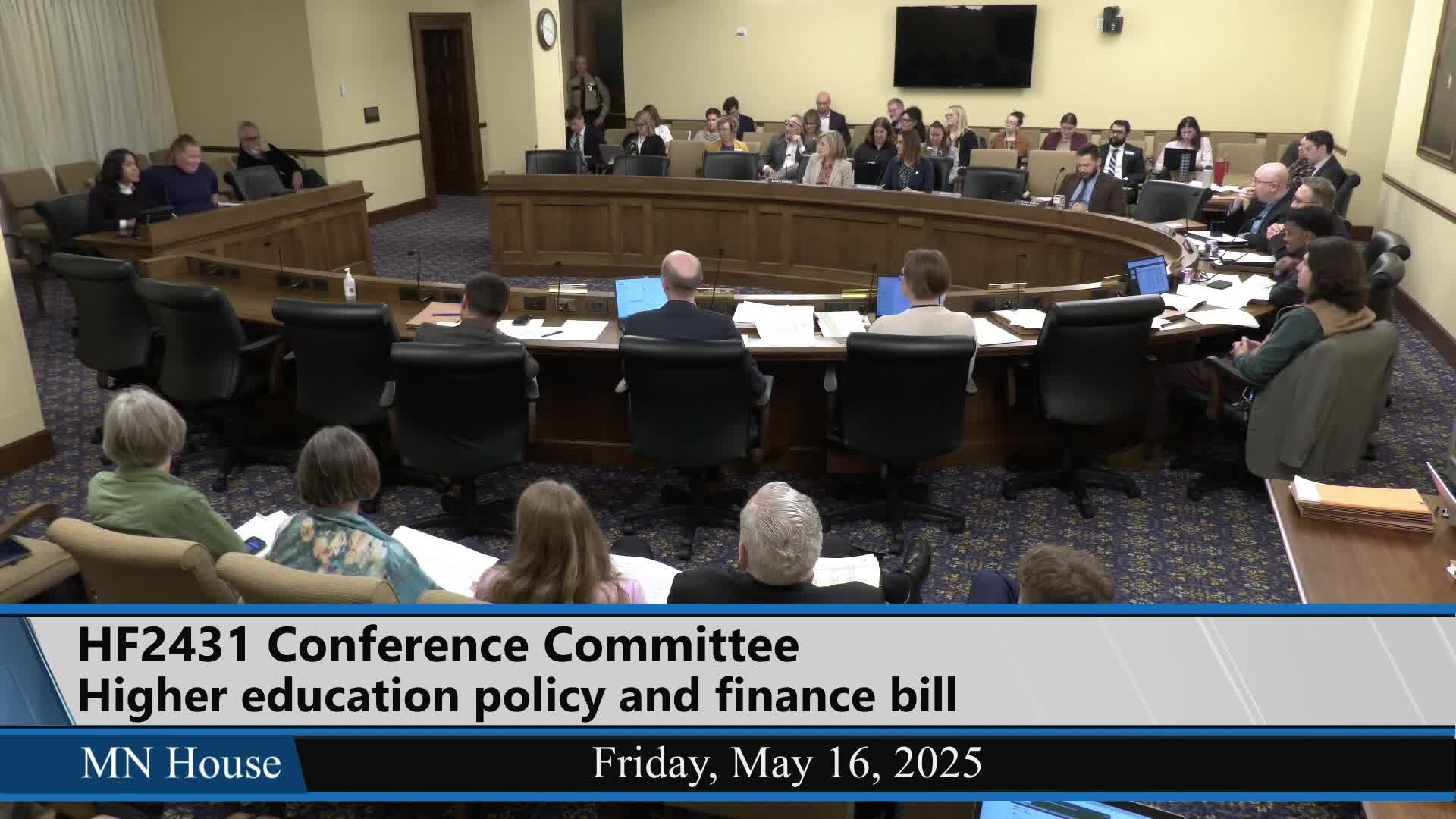
Summary
Hennepin Healthcare, Mayo Clinic and United/Allina testimony described residency training costs and urged the conference committee to maintain or fully fund state grants rather than add 100% matching requirements or steep reductions.
Representatives of Hennepin Healthcare, Mayo Clinic and the United Family Medicine Residency Program told the conference committee on May 16 that state reductions or new match requirements for graduate medical education would force programs to cut residency slots.
Jessica Wahaca, advocacy engagement manager at Hennepin Healthcare, told conferees Hennepin receives $645,000 annually from the Office of Higher Education to support its family medicine residency — about $19,000 per resident — but that the actual cost to train one resident at Hennepin is roughly $188,000 per year. "Hennepin Healthcare is contributing nearly $161,654 per trainee per year in unfunded costs," she said, and that reducing state support would likely force Hennepin to reduce class size by two to three residents.
Dalton Danielson of Alliant Health, speaking for the United Family Medicine Residency Program, said Allina (United) already leverages substantial system resources and estimated the cost per resident at just under $250,000. Danielson said the state grant is a "significant investment" and that earlier expansions were contingent on legislative funding; he urged conferees to accept full funding.
Nikki Valender of Mayo Clinic noted Mayo Clinic has previously received state support for family-medicine residency training and said state funding represents a modest share of overall program costs, with the institution carrying the balance.
Committee members pressed for more detailed budget testimony from teaching hospitals and asked conferees to consider the impact on primary-care supply and on training capacity in rural and underserved areas if programs reduce slots. No formal action was taken; staff said they would invite hospitals back for additional testimony as negotiations continue.