Get Full Government Meeting Transcripts, Videos, & Alerts Forever!
Get email alerts on the Substance Abuse topic
No spam. Unsubscribe anytime.
Substance‑abuse budget includes opioid grants and proposed fund swaps to meet federal administrative cap
Summary
The Department of Health and Welfare outlined opioid settlement and Millennium Fund spending and proposed shifting fund sources to comply with a federal 5% administrative/ personnel cap on the substance‑use block grant.
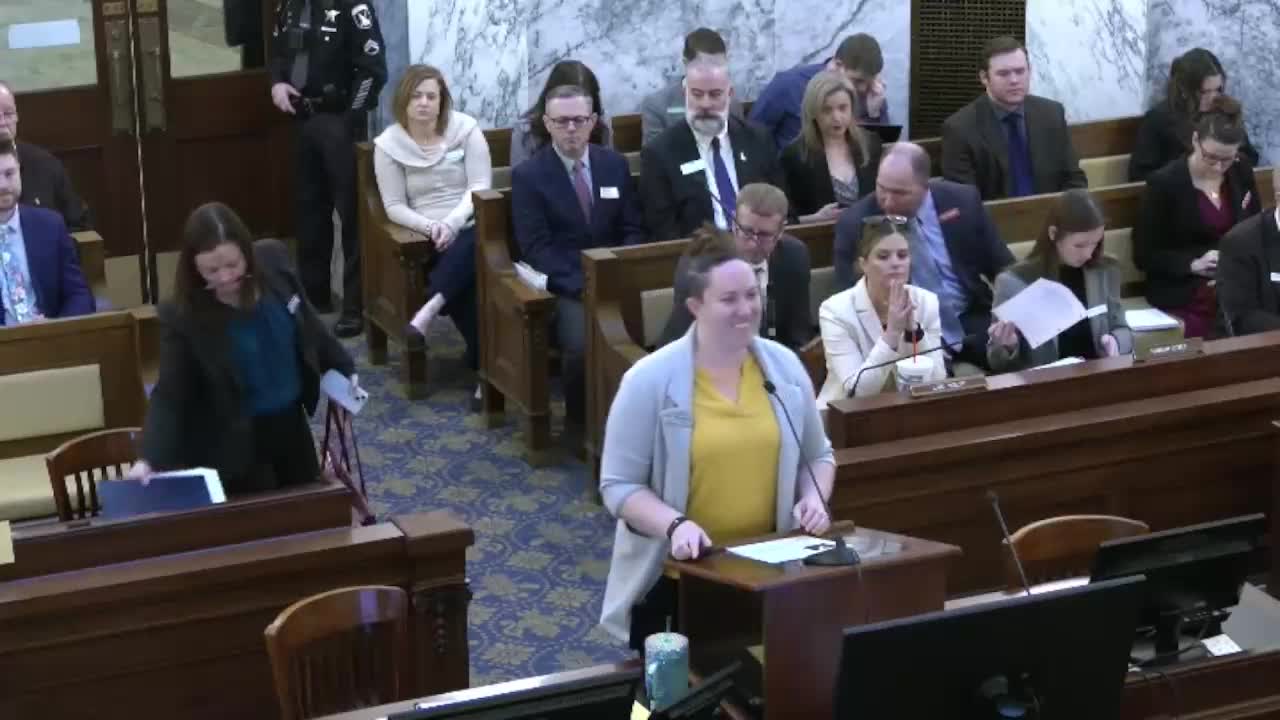
Alex Williamson presented the Substance Abuse Treatment and Prevention budget to the Joint Finance‑Appropriations Committee, outlining recent one‑time and ongoing appropriations and a proposed fund‑source swap to comply with federal rules.
The division received an $8,000,000 state opioid response grant that was made ongoing, and FY24 included $2,500,000 one‑time prevention funds and $8,300,000 in COVID relief funds in earlier years. For FY25, the legislature appropriated $1,600,000 ongoing—about $1,350,000 of that was Millennium Income Fund dollars for community‑based recovery centers and $250,000 for the Idaho Drug Free Youth program. A $1,200,000 one‑time appropriation was added for opioid‑settlement recommendations.
Because federal guidance limits administrative/personnel spending under the substance‑use block grant to 5%, the department is on a corrective action plan with the Substance Abuse and Mental Health Services Administration (SAMHSA). To remain compliant while maintaining staffing, the department asked the legislature for authority to shift $533,900 from liquor‑control (dedicated) funds to pay personnel costs and, at the same time, move $673,900 from personnel on the federal fund to trustee and benefit payments so the federal share of personnel stays under the 5% cap. Ms. Williamson explained the requested swaps as fund‑source reallocations rather than net increases in total spending.
Senator Cook questioned that approach, characterizing it as shifting money to avoid a federal admonition. Director Adams said the department is a pass‑through for some settlement funds and that it had proposed reductions in FTP where feasible; he emphasized the department reduced TechHelp FTPs or made net reductions in other examples to balance internal resources. Adams said the agency proposed a net reduction of four FTP in the budgeted program that houses some of these Millenium Fund activities and that some grant funding that previously supported positions has declined, prompting requests to sustain essential roles.
Committee members requested written follow‑up on program performance and the status of Boise State University and drug‑prevention grants that were funded as pass‑throughs. The director said programmatic entities that received pass‑through grants operate independently of the department and that the department does not exercise operational control over those programs.