Get Full Government Meeting Transcripts, Videos, & Alerts Forever!
Get email alerts on the Cooperatives topic
No spam. Unsubscribe anytime.
Philadelphia Council declares 2025 the Year of Cooperatives and calls for city support
Summary
Philadelphia City Council on Feb. 2025 adopted a resolution declaring 2025 the Year of Cooperatives and asked city agencies to explore tools to support worker- and community-owned businesses. The measure drew testimony from local cooperative leaders and worker‑cooperative advocates.
Philadelphia City Council on Feb. 2025 unanimously adopted a resolution declaring 2025 the “Year of Cooperatives” and called on the City of Philadelphia to explore options to support the development and resilience of local cooperative businesses. Councilmember Nicholas O'Rourke sponsored the resolution and led a brief ceremony recognizing several local cooperatives and cooperative support organizations.
The measure, introduced and read into the record by O'Rourke, asked city departments to consider tools such as technical assistance, contractor preferences, research supports, and partnerships with anchor institutions to grow cooperatives across neighborhoods. The resolution explicitly notes the United Nations designation of 2025 as the International Year of Cooperatives and requests that an engrossed copy be presented to the Philadelphia Area Cooperative Alliance.
Why it matters: proponents said cooperatives offer an alternative model of ownership that can keep wealth local and build worker power. Supporters testified that co-ops tend to retain workers longer, provide higher wages and benefits in many cases, and are “resilient” in downturns. The resolution does not itself create funding or procurement set‑asides; it is a policy statement asking the city to explore options and coordinate with existing cooperative support networks.
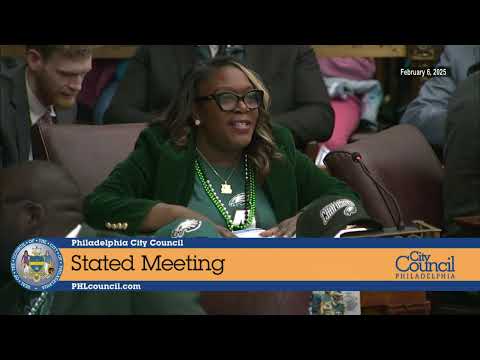
Speakers representing local co-ops and cooperative networks addressed council before the vote. Carmen Guerrero, owner of MASA Cooperativa, described MASA as an immigrant-led food cooperative that aims to preserve indigenous corn varieties and provide ownership opportunities for undocumented workers: “Each individual has power in the cooperative as an owner, so we bridal our best selves to the project,” Guerrero said. Terrell Cannon, an owner of Home Care Associates, a home-care worker cooperative, recounted starting as an aide and credited the co-op structure with enabling career advancement: “In our co-op, the workers are the board. The workers make the decisions,” Cannon said.
Representatives of cooperative support organizations urged the council to move beyond recognition to practical supports. Cori Reedy of the Philadelphia Area Cooperative Alliance said worker co-ops are “two-thirds more likely to succeed than the average U.S. company” and called for city programs to seed start-ups and provide technical assistance. Mo Manclang of the U.S. Federation of Worker Cooperatives said cooperatives are especially valuable to Black, brown and immigrant communities and frontline workers.
Councilmember O'Rourke framed the resolution as part of a broader push to “reframe” local economic development from sole-founder entrepreneurship toward democratic ownership. Minority leader Kendra Brooks and other council members joined O'Rourke at the podium for the presentation. After testimony, the council voted to adopt the resolution.
What the resolution does not do: it does not appropriate funds, nor does it change procurement rules or create a procurement preference. It requests that city staff “explore all options” to support cooperatives and share findings; any concrete program, budget allocation, or procurement preference would require separate legislation or administrative action.
Next steps and context: supporters asked the city to consider technical assistance, relationships with anchor institutions, contractor preferences, and targeted outreach. Several cooperative leaders invited councilmembers to visit cooperative businesses and participate in ongoing technical‑assistance projects. The resolution was adopted at the session and an engrossed copy was to be delivered to the Philadelphia Area Cooperative Alliance.
Ending: Councilmembers and cooperative leaders posed for a group photograph at the front of the chamber after the vote; proponents said they will follow up with staff to translate the resolution’s request to specific proposals for administration and committee consideration.