Get Full Government Meeting Transcripts, Videos, & Alerts Forever!
Get email alerts on the State Budget Technical Corrections topic
No spam. Unsubscribe anytime.
JFAC corrects fund allocations for broadband, DEQ and Health & Welfare accounting errors
Summary
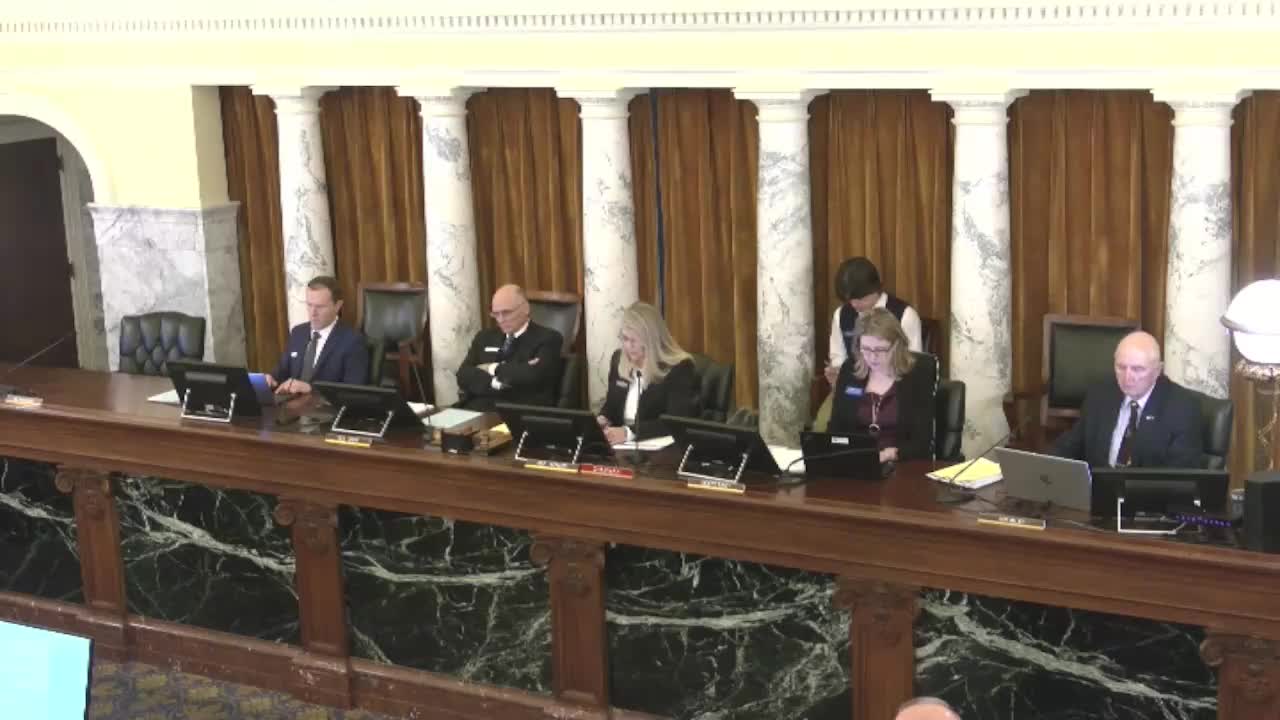
The Joint Finance and Appropriations Committee on Jan. 17 voted unanimously on technical corrections to move reappropriated broadband funds into the Broadband Office, fix a DEQ appropriation transfer, and reclassify two Health & Welfare expenditures.
The Joint Finance and Appropriations Committee unanimously approved a set of technical corrections on Jan. 17 to move previously misposted funds and correct expenditure classifications in several agencies.
The committee voted first to move $291,737,000 in reappropriated funds out of a Department of Commerce program and into the newly designated Broadband Office so those dollars can be tracked separately. Janet Jessup, budget and policy analyst with Legislative Services, told the panel the broadband office had been added to Commerce after last year’s reappropriation, so the funds landed in the commerce program rather than the broadband office. Representative Handy moved the removal and subsequent re‑addition; both motions carried with a combined recorded total of 20 ayes, 0 nays.
The panel next approved a $2,000,000 transfer from the general fund to the Department of Environmental Quality general fund to correct an appropriation that had been recorded as a reduction to DEQ’s general fund rather than as a transfer into it. Ms. Jessup said the action would “make the agency whole.” Senator Woodward moved the transfer; the motion passed on a unanimous recorded vote (20 ayes, 0 nays).
Separately, the committee approved two reclassifications in the Department of Health and Welfare. For the Substance Abuse Treatment and Prevention program, $160,000 from the Idaho Millennium Income Fund will move from the trustee and benefit payments category into operating expenditures so the amounts can be used for contracts; similarly, $240,000 tied to the central tumor registry was moved into operating expenditures for the Physical Health Services program. Ms. Jessup explained state appropriation rules treat contract payments as operating expenditures, so the changes align accounting with practice. Representative Price moved both motions; each passed unanimously (recorded as 20 ayes, 0 nays).
Why it matters: These were bookkeeping and classification fixes, not policy changes. Committee staff said the net dollar effect to the budget is zero in the broadband correction and these corrections restore the intended accounting lines so the Legislature and the public can track spending in the correct program and expenditure categories.
The committee recorded roll call votes for each motion; the clerks’ tallies and the motions’ text will be reflected in the appropriation bill language drafted after committee review.