Get Full Government Meeting Transcripts, Videos, & Alerts Forever!
Get email alerts on the Juvenile Registry School Notifications topic
No spam. Unsubscribe anytime.
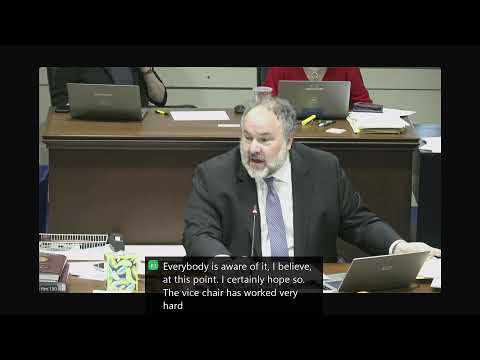
Committee rejects amendment to expand juvenile registry; approves House Bill 1265 as amended
Summary
At a Saturday Judiciary Committee meeting, delegates debated an amendment to House Bill 1265 that would have expanded which juvenile offenses are reportable to schools and lengthened registry retention. The amendment failed on a voice/hand vote, but the committee approved the bill as amended by Ways and Means.
At a Saturday session of the Judiciary Committee, delegates debated an amendment to House Bill 1265 that would have widened the juvenile-offender registry, required certain offenses to be reportable to schools and required registrants to remain on a juvenile registry until age 21. The amendment, offered by Delegate Grammer, was defeated; the committee then approved the bill as amended by Ways and Means.
The amendment sought three changes: (1) expand coverage from "part of 3,307" to all of 3,307 (statutory subsection referenced in committee discussion); (2) make the full 3,307 offense a reportable offense so school systems would be notified; and (3) require that a juvenile registrant remain on the juvenile registry until they age out at 21. Delegate Grammer described the measure as intended to close a gap officials said allowed a youth accused of sexually assaulting very young children to be placed back in a public school without the local system's knowledge. "The file, it's all completely confidential," Grammer said, arguing that confidentiality of the registry does not prevent schools from being informed in appropriate cases.
Supporters said the amendment would address a specific case in which family members and local officials said they were not informed about a juvenile’s prior charge when the youth returned to school. Opponents and some members of the committee said the amendment raised broader questions that merited separate legislation rather than a last-minute addition. "What do we do with the children? Where are they going to go? That's why I'm saying...that needs to be considered with intention and focus," said Delegate Pasteur, urging a standalone bill to address placement and services for juveniles who commit certain offenses.
The chair noted that the bill is dually assigned to Ways and Means and Judiciary and urged the committee to oppose the amendment so the matter could proceed through the full process. Delegate Schmidt asked for clarification about whether 18- or 19-year-olds in school could be affected; Grammer said the provision applies when the victim is under 14 and the offender is at least four years older than the victim, and that a range of ages could therefore be implicated depending on the facts of a case.
After debate, delegates voted on Grammer's amendment; members raised their hands in a counted vote: 7 in favor, 11 opposed, and the amendment was defeated. The committee then considered House Bill 1265 as amended by Ways and Means; after further brief remarks and recorded votes, the committee adopted a favorable motion and passed the bill as amended. Several delegates who spoke during the roll call reiterated concerns that some offenses (including second-degree assault, certain motor vehicle thefts and first-degree burglary) were removed from the list of reportable offenses in the current draft and said that omission informed their votes.
The committee will transmit the bill as approved by the committee toward floor consideration with the Ways and Means amendments attached. The panel paused its session after concluding action on the bill.