Lifetime Citizen Portal Access — AI Briefings, Alerts & Unlimited Follows
Health committee hears competing views on bill to move suicide‑prevention commission leadership to ASSMCA; federal grants and public‑health role cited
Loading...
Summary
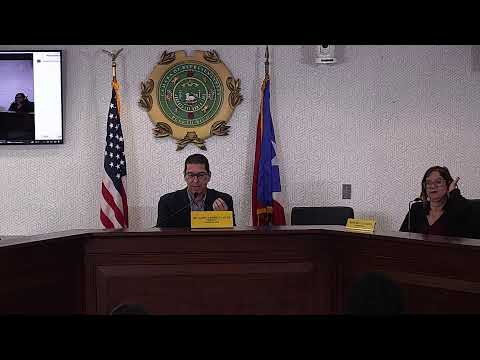
House Health Committee members on March 14 received testimony for and against House Bill 236, which would change the statutory leadership of the Comisión para la Prevención del Suicidio.
House Health Committee members on March 14 received testimony for and against House Bill 236, which would change the statutory leadership of the Comisión para la Prevención del Suicidio. Representative Gabriel Rodríguez Aguiló, chair of the committee, presided over the hearing and directed agency witnesses to provide documentation about recent federal grants and budgets within five business days.
The bill would alter articles of existing law that govern the commission’s structure and duties. Department of Health officials argued the commission should remain within the Departamento de Salud because suicide, they said, is a public‑health problem that requires epidemiological surveillance and interagency coordination. The Administración de Servicios de Salud Mental y Contra la Adicción (ASSMCA) submitted a written analysis and provided witnesses who described ASSMCA’s operational role in crisis response and the line known as Línea Paz/988.
Why it matters: witnesses told the committee that federal grants and program funding now assigned to the commission substantially increased its budget and operational tools, while proponents and opponents disagree about whether shifting statutory leadership would help or harm prevention efforts and whether federal funding would be at risk if leadership changed.
Department of Health testimony
Dr. Naida Román Vázquez, director of the Comisión para la Prevención del Suicidio at the Departamento de Salud, told the committee that the commission’s work treats suicide as a “health‑public” problem and that maintaining the commission under the department preserves that framing. “El suicidio es un fenómeno complejo y multifactorial... Prevenir el suicidio requiere de un enfoque de salud pública,” Román said, adding that the commission has strengthened epidemiologic surveillance to include nonfatal attempts and emergency‑room visits as well as mortality data.
Román also cited the commission’s data: “Desde el año dos mil hasta febrero del veinte veinticinco hemos perdido siete mil ciento sesenta y tres vidas puertorriqueñas por el suicidio,” she said, and noted Puerto Rico’s overall age‑adjusted suicide rate (7.8 per 100,000) and higher municipal rates such as Culebra (21.7 per 100,000) and Aibonito (19.0 per 100,000). She described a newly implemented surveillance system and said those data enable targeted interventions in municipalities the commission identified as priorities.
ASSMCA testimony and services
Dr. Montserrat T. Allende, who identified herself as director of Línea Paz and a representative of ASSMCA’s administration, described ASSMCA’s crisis services and public outreach and recited statistics for the line and mobile teams. According to testimony submitted to the committee, between 2001 and 2024 the line handled about 983,531 calls related to suicidal behavior and received 4,745,757 total calls; the written material and witnesses also described a 24/7 Spanish‑language response tied to the national 988 crisis line (service launched July 16, 2022) and a mobile crisis‑team network the agency says includes 10 teams covering Puerto Rico’s 78 municipalities.
ASSMCA’s written submission — entered into the record during the hearing — concluded that ASSMCA does not recommend approval of the bill as currently drafted, arguing the Departamento de Salud should continue to be the agency responsible for implementation of suicide‑prevention policy. The document noted that ASSMCA has operational capacity to collaborate on prevention and intervention but that the statutory responsibility for public‑health policy rests with the department (it cited Ley 67‑1993 and Ley 27‑1999 in its analysis).
Federal grants and budget changes
Both witnesses described recent federal grant awards tied to suicide‑prevention work. Committee testimony and written materials said the commission’s baseline annual budget was about $330,000 and that combined federal awards have raised available resources to approximately $1.6 million. Witnesses gave grant details to the committee: SAMHSA (identified in testimony as a federal grant source) reportedly provides about $400,000 annually and the Centers for Disease Control and Prevention (CDC) award about $931,000; the CDC grant was described as running through 2027 and the SAMHSA award through 2026. Dr. Román said the awards were competitive and that Puerto Rico’s commission competed successfully with state health departments.
Committee directions and information requests
Chair Gabriel Rodríguez Aguiló told witnesses the committee would require documentation to substantiate funding and program claims. Rodríguez Aguiló instructed the commission and ASSMCA to provide, within five business days, “la evidencia de las partidas de los fondos federales; los nombres de los programas y los fondos que van a estar disponibles para la comisión; los contratos que tenga la comisión; el presupuesto que se le ha asignado en los últimos cinco años, incluyendo fondos federales y fondos estatales;” he also requested records of promotional spending and the commission’s recent meeting frequency and attendance. “Le vamos a dar cinco días laborables,” the chair said during the hearing.
Other points from the hearing
- Department and ASSMCA witnesses emphasized that the commission and ASSMCA currently coordinate on campaigns and services, but they described different institutional roles: the commission collects and analyzes surveillance data and crafts public‑health strategy, while ASSMCA operates the crisis line, mobile teams and direct intervention services.
- Witnesses described initiatives the commission or ASSMCA are implementing or planning: a web platform and municipal map for safe firearm storage locations, an index of municipal vulnerability to suicide, a youth prevention clinic at Río Piedras for ages 10–24, and planned targeted activities in Aibonito, Adjuntas, Camuy, Orocovis, Rincón, Vieques and Culebra.
- Several legislators pressed for transparency, attendance records and evidence of interagency coordination; Representative Denis Márquez and others stressed the need to include community stakeholders (including faith‑based groups) in the commission’s membership and to ensure the commission’s plan of action is filed with the legislature as required by law.
No formal vote was taken during the hearing. The committee kept the record open for the requested documents and indicated it will use that information in follow‑up deliberations.
What comes next
Committee members said they will review the documents requested from the commission and ASSMCA and continue the dialogue before deciding whether to advance House Bill 236 or pursue targeted amendments to the commission’s statute. The committee chair also invited agency representatives to a March 21 convening where the commission planned to unveil its new web platform and additional materials.
Sources: committee hearing testimony and written submissions by the Departamento de Salud and ASSMCA, March 14, 2025; in‑hearing statements by Representative Gabriel Rodríguez Aguiló, Dr. Naida Román Vázquez (director, Comisión para la Prevención del Suicidio, Departamento de Salud) and Dr. Montserrat T. Allende (director, Línea Paz, ASSMCA).