Get Full Government Meeting Transcripts, Videos, & Alerts Forever!
Get email alerts on the 340B Program Reporting And Protections topic
No spam. Unsubscribe anytime.
Committee approves 340B reporting, one-year manufacturer protections in Senate Bill 153
Summary
The Committee on Health Services passed Senate Bill 153 as amended to adopt protections for 340B covered entities and require hospitals to report 340B-related data to state agencies. The protections will sunset after one year; reporting requirements will continue.
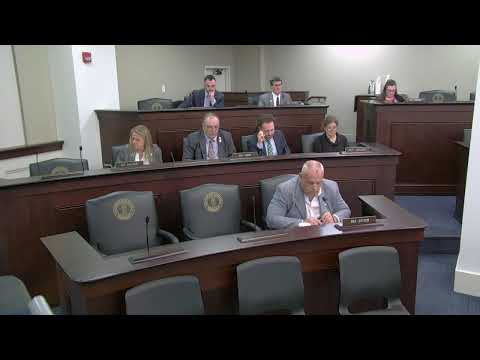
FRANKFORT, Ky. — The Committee on Health Services on March 14, 2025 voted to pass Senate Bill 153 as amended, adopting language from Senate Bill 14 that prohibits pharmaceutical manufacturers from discriminating against 340B covered entities and that establishes new state reporting requirements for those entities.
The substitute deleted the original provisions of SB 153 and inserted the Senate Bill 14 text, including a one-year sunset on the new manufacturer-protection provisions and a continuing reporting requirement for 340B covered entities, committee Chair Representative Kim Mosier said. "The substitute that we have before us tonight deletes all of the original provisions of the bill ... and, in its place we are adding the provisions of Senate Bill 14, which prohibits the discrimination, by a pharmaceutical manufacturer against a 340B covered entity and it will add a new section of KRS Chapter 216 to establish reporting requirements for the 340B covered entities," Mosier said.
Why it matters: supporters said the reporting will give state and federal policymakers data to assess how 340B savings are passed to communities and whether program protections are needed. Opponents and some members voiced concern that the bill could impose reporting burdens on hospitals and that the temporary protection could leave questions unresolved after the sunset.
What the bill requires and how state agencies will use the information
Under the committee substitute, eligible nonprofit hospitals designated as 340B covered entities must submit a report that includes total operating cost and itemized cost components, a narrative of community investments, and other metrics described in the bill. Mosier told the committee the protections included in Senate Bill 14 will "sunset after 1 year" to allow the Legislature to review data by July 1, 2026 and to adjust the state approach depending on any federal changes.
Mosier said the reporting would inform both state and federal decision-making. "This provision on the...protections will sunset after 1 year. It will allow us to take a look at the data by July first of 2026 and ... renew the provision," she said. "This reporting that we're requiring here will help the Federal Government make policy decisions as they look at possible reforms."
Stephanie Bates of the Office of Health Data Analytics at the Legislative Research Commission told the committee the information would be available to the General Assembly. "The idea is that the ... bill would allow the information to come here to LRC to serve the General Assembly as well," Bates said.
Members asked for specifics about the reporting items and who must report. The bill requires an itemized accounting for operating costs. Mosier said the language calls for "the total operating cost of the nonprofit hospital, including an itemized cost report for the following" and that the bill does not separately delineate outpatient versus inpatient in its definition of total operating cost. A member asked whether the reporting applies to federally qualified health centers; the chair confirmed the reporting requirement applies to hospitals and not to FQHCs.
Questions and concerns from members
Members repeatedly raised concerns about administrative burden and potential unintended consequences for rural hospitals. Representative Wilner, while voting yes for committee passage, said he had heard worries from constituents. He relayed a text from a rural health care contact and said, "this is gonna kill, rural healthcare, and I need to understand what that means," and added he might change his vote on the House floor.
Other members said they supported merging the two measures to preserve protections for hospitals while adding reporting for oversight, but several said they were uneasy that the statutory protections would expire after one year while the reporting requirement would continue.
Vote and next steps
Representative Bratcher made the motion to pass SB 153 as amended by the committee substitute. The committee passed the bill with a favorable report and adopted a title amendment. During the roll call and subsequent explanations, the following members recorded their positions in committee:
- Representative Bridal — Yes - Representative Burke — Yes - Representative Calloway — Yes - Representative Camell — Yes - Representative Dodson — Yes (reluctant) - Representative Duvall — Yes - Representative Fleming — Passed (abstain) - Representative Gordon — Yes (with reservations) - Representative Holloway — Yes - Representative Neighbors — Yes (reserved right to change on floor) - Representative Proctor — Yes - Representative Rayburn — Yes - Representative Raymer — Yes - Representative Wilner — Yes (may change on floor) - Chair Representative Kim Mosier — Yes
The committee chair announced that "Senate Bill 153 with House Committee Sub 2 passes with favorable expression" and the committee adjourned.
Votes at a glance: SB 153 (as amended)
Motion: Passage of Senate Bill 153 as amended by House Committee Sub 2 (substitute incorporates Senate Bill 14 protections and reporting requirements for 340B covered entities). Mover: Representative Bratcher. Second: not specified on the record. Outcome: Approved by committee with favorable recommendation; title amendment adopted.
What remains unclear from committee discussion
Committee members asked whether the required data set will capture capital investments (for example, hospital construction) and whether existing federal reporting already covers portions of the requested information. Mosier and staff said a narrative element is required and that the reporting form could be adjusted in future sessions if it does not capture needed information. The first reporting deadline referenced in committee was December 15 of this year; the committee intends to review the reporting results and may propose statutory changes during the 2026 session if warranted.