Get Full Government Meeting Transcripts, Videos, & Alerts Forever!
Get email alerts on the Humanitarian Crises Global topic
No spam. Unsubscribe anytime.
U.N. reports large displacements, cholera surge and Gaza aid halt; emergency funds allocated
Summary
U.N. agencies reported nearly 370,000 people fled parts of South Kivu since early February, a growing cholera outbreak with more than 240 cases and 10 deaths, and that aid into Gaza is halted; the Central Emergency Response Fund allocated $750,000 to help contain cholera.
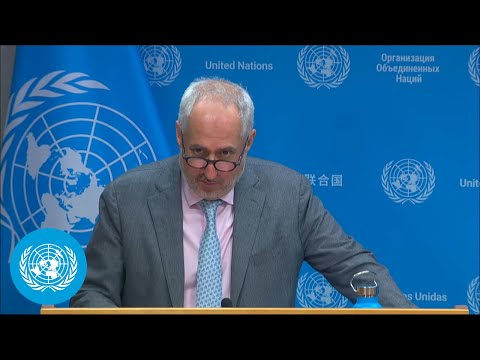
The United Nations said clashes and insecurity in eastern Democratic Republic of the Congo have forced nearly 370,000 people to flee their homes since early February and that a cholera outbreak is growing, while operations to move aid into Gaza remain blocked, the U.N. spokesperson said.
U.N. humanitarian partners reported that continued violence in South Kivu's Uvira and Fizi territories has driven mass displacement. Local partners told the briefing that nearly 400 cases of sexual violence were reported in Uvira between Feb. 9 and Feb. 25, and that nearly 370,000 people had fled since early February. The U.N. said a cholera outbreak had registered more than 240 cases and 10 deaths as of March 10, with partners estimating new cases were doubling weekly in the affected area.
The Central Emergency Response Fund (CERF) allocated $750,000 to help prevent the cholera outbreak in North Kivu from spreading, the briefing said. Funds will support UNICEF, the World Health Organization and partner organizations to provide water, sanitation, hygiene and health services.
In Gaza, the Office for the Coordination of Humanitarian Affairs (OCHA) said the halt of aid into the enclave had reached a twelfth consecutive day and that all border crossing points were closed to humanitarian and commercial supplies. The World Food Programme reported it has about 63,000 metric tons of food stored or in transit in the region; the briefing said that is equivalent to two to three months of distributions for about 1,100,000 people, and that WFP can sustain active bakeries and community kitchens for roughly one month and provide ready-to-eat parcels for more than half a million people for about two weeks, pending authorization to enter the strip.
The briefing also covered rising settler violence and demolitions in the West Bank: OCHA said operations and movement restrictions were increasing food insecurity and that more than 2,000 Palestinians have been displaced in the West Bank over the past two years because of violence and access restrictions. In the Central African Republic, U.N. peacekeepers helped launch the second and third phases of voter registration covering nine of 20 prefectures and overseas centers, providing logistical support and security for registration teams.
Why it matters: The U.N. framed these developments as urgent humanitarian priorities requiring increased access, protection and funding. The spokesperson appealed for more resources and improved humanitarian access to contain outbreaks and serve displaced populations.
Ending: U.N. agencies said partners remain on the ground delivering services where possible and are appealing to member states and donors for increased support and access to affected populations.