Get Full Government Meeting Transcripts, Videos, & Alerts Forever!
Get email alerts on the U Visas Sensitive Locations topic
No spam. Unsubscribe anytime.
Committee backs bill standardizing U-Visa certifications, directs attorney general to issue guidance on "sensitive locations"
Summary
House Bill 579, addressing U-visa certification procedures and guidance for federal immigration enforcement at sensitive locations such as schools and hospitals, was amended and reported favorably by the Judiciary Committee after debate and an adopted amendment.
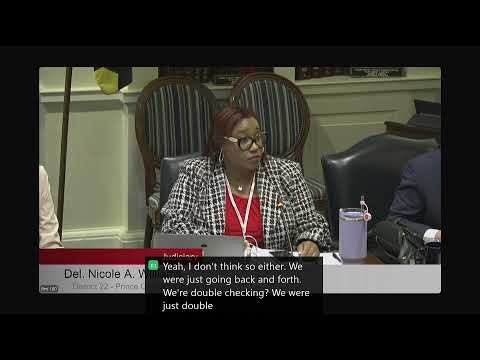
The House Judiciary Committee on March 14 adopted amendments and moved House Bill 579 forward. The bill has two principal parts: standardizing state procedures for certifiers handling U-visa applicants and directing the attorney general to issue guidance on immigration enforcement at so-called "sensitive locations."
Delegate Embry, who spoke to the U-visa portion, said the bill reinforces federal guidelines while recognizing local differences. She described amendments that incorporate technical corrections and two provisions from a related bill by Delegate Solomon: requiring certifiers to address non-English speakers and shortening response times for certifying agencies.
"The amendments we accepted all of the MSBA technical amendments, and reworded ... not very substantive," Embry said. "We added in the 2 provisions of [Delegate Solomon's bill] ... require that certifiers have a process deal with non English speakers and the second was shortening the time that certifying agencies have to respond."
Delegate Moon described the sensitive-locations component. The amendment clarifies that the existing Criminal Procedure §2-104 duty to notify local law enforcement includes federal immigration enforcement actions at sensitive locations, and it directs the attorney general to develop guidelines that minimize public exposure to risk and disruption of services when enforcement actions involving firearms occur.
"For those locations, the attorney general guidelines are to maximize public safety and minimize public exposure to violence or accidents from immigration enforcement conducted using firearms at sensitive locations," Moon said, listing schools, public libraries, health-care facilities, shelters and places of worship as examples the bill uses for "sensitive locations."
Committee members approved the amendments after questions about scope, whether private schools were included, and how the guidelines would treat public versus nonpublic portions of a facility. The amendment vote was recorded in committee; the transcript shows the amendment adopted after a roll call (amendment recorded as adopted with 15 in favor and 4 opposed on the amendment count recorded earlier in the session). The committee moved the bill to a favorable report as amended.
Supporters told the committee the changes protect service delivery at schools, hospitals and libraries while clarifying notification duties; others asked for data on current notification practice. The bill tasks the attorney general with drafting guidance that also addresses limiting liability exposure for public and private institutions and coordinating communications between federal and state/local officials.
The bill now advances to the House floor.