
Grain Valley superintendent flags protested taxes, snow-day makeups and two state bills that could affect school funding
Get AI-powered insights, summaries, and transcripts
Sign Up Free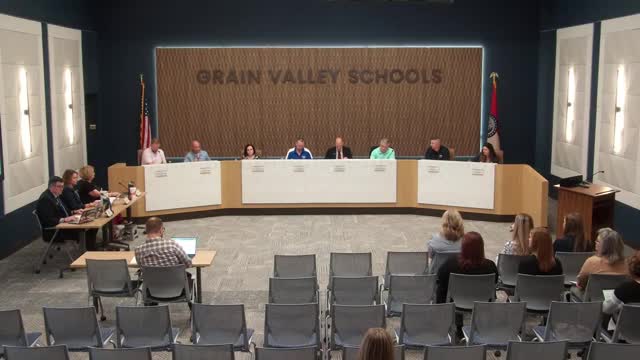
Summary
Superintendent Dr. Willey told the Grain Valley R-V board local revenues are behind due to protested property taxes, outlined plans for making up snow days, and highlighted two Missouri House bills — HB816 and HB629 — that could meaningfully change local school revenues.
Dr. Willey, presenting the superintendent's report, told the Grain Valley R-V Board of Education that year-to-date operating revenues and expenses are generally on track but local revenues lag because the county is holding roughly $500,000 in protested property taxes.
Willey said the district is comfortable overall but noted the timing creates a “little asterisk” in revenue charts: protested taxes are collected by the county but not distributed while the protest is resolved. He also warned the district will likely make another health-insurance overage payment before fiscal year-end.
The district will make up recent snow days by holding classes on several additional dates, Willey said, including Presidents Day and certain April and May dates; some of those makeup dates will be three-hour early releases. He added that both middle schools will serve as polling places for an upcoming election and that the district has plans to separate voting traffic from student activity.
Willey summarized two state bills of interest. He said House Bill 816 would prohibit county assessors from assessing a motor vehicle for more than it was assessed the previous year; that change is intended to prevent sharp year-over-year spikes in vehicle assessments that occurred during the pandemic. Willey described HB816 as “for the greater good” while noting it has some fiscal impact for schools in rare years when assessments spike.
He said House Bill 629 would change how personal property is treated for school revenues in two ways: first, it would prevent increases in the aggregate valuation of personal property from being treated as “new construction” for levy calculations beginning January 2027; second, it would drop the assessment rate for personal property from one-third of true value to 30% beginning January 1, 2026. Willey said that the 30% provision would effectively reduce revenue for the district — he estimated the change could have meant about $1.1 million less revenue in the current year, roughly equivalent to 18 teacher salaries.
Willey said both bills had passed the House and were in the Senate at the time of the meeting and that the district would continue to monitor legislation and report back to the board.
No board action was taken on the legislative items during the presentation.